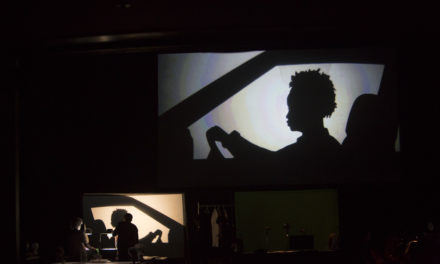
Cost of Living, onstage at Milan’s Franco Parenti Theatre as I write, is an audacious play, delving into themes such as our care for people with severe disabilities, our responsibility towards them, the difficulties that arise in relationships when one person becomes unable to lead an independent life and the other finds her or himself in the role of caretaker. The double meaning of the title, which has been kept in English in the Italian translation, points both to the financial issues involved when a person is disabled, as well as the impact a severe disability has on the person and the people closest to them.
The set is divided into two distinct areas, where two parallel stories unfold. On the left is in an upper-class living room-cum-bathroom, where John, a wealthy academic who suffers from cerebral palsy and Jess, a working-class caregiver, meet. As the action begins, Jess shows up for the first time and is immediately confronted by her employer\patient, who reels off a long list of daily tasks which she must accomplished. She is initially hesitant and embarrassed, but gradually gains confidence as she undresses her patient, washes him, and dresses him in clean clothes. The minimalist set (by Margherita Palli) includes a shower and running water, which makes the bathroom routine extremely realistic.
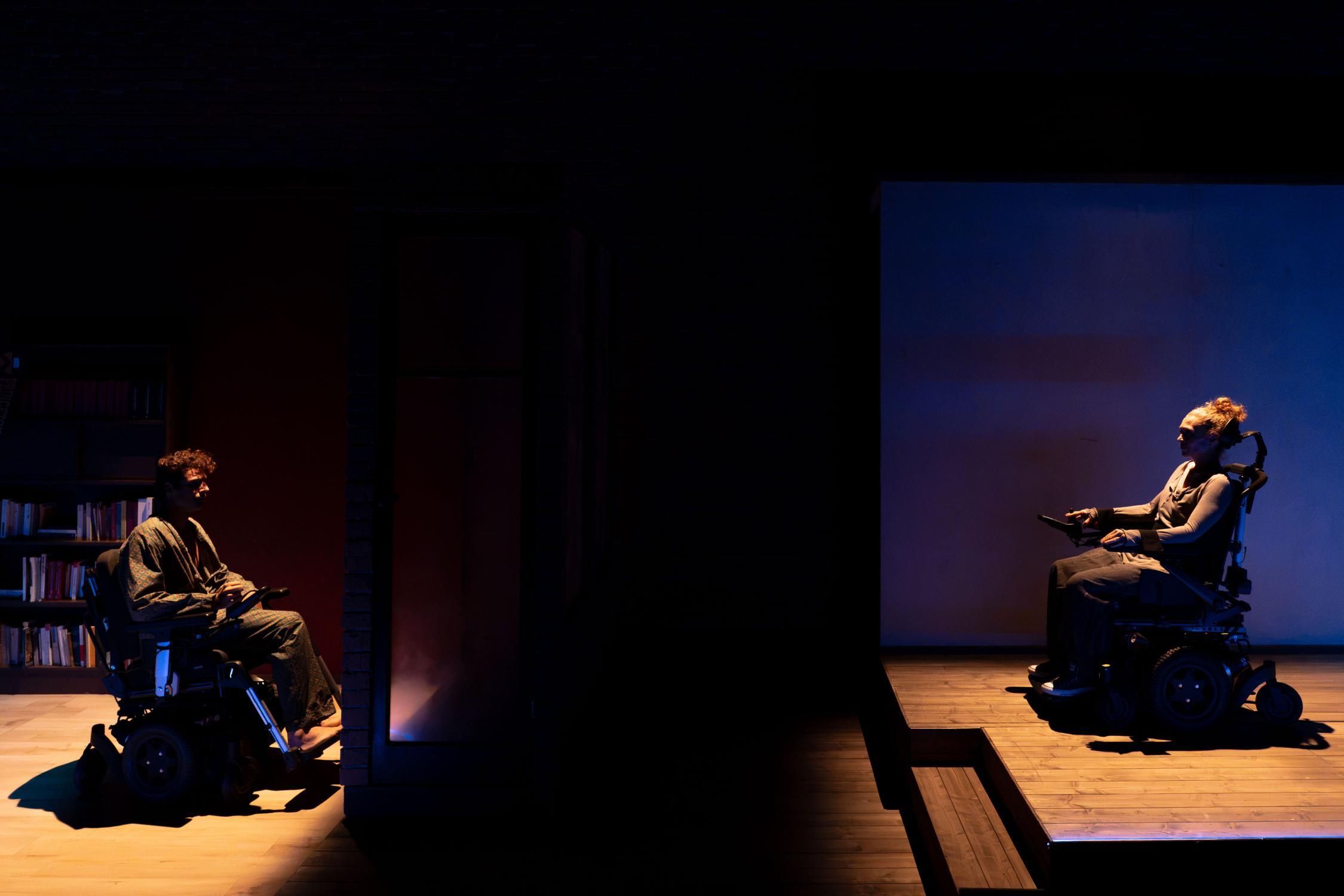
Filippo Lai and Sara Bertelà in Cost of Living by Martyna Majok. Directed by Raphael Tobia Vogel. Photo credits: Anna La Naia.
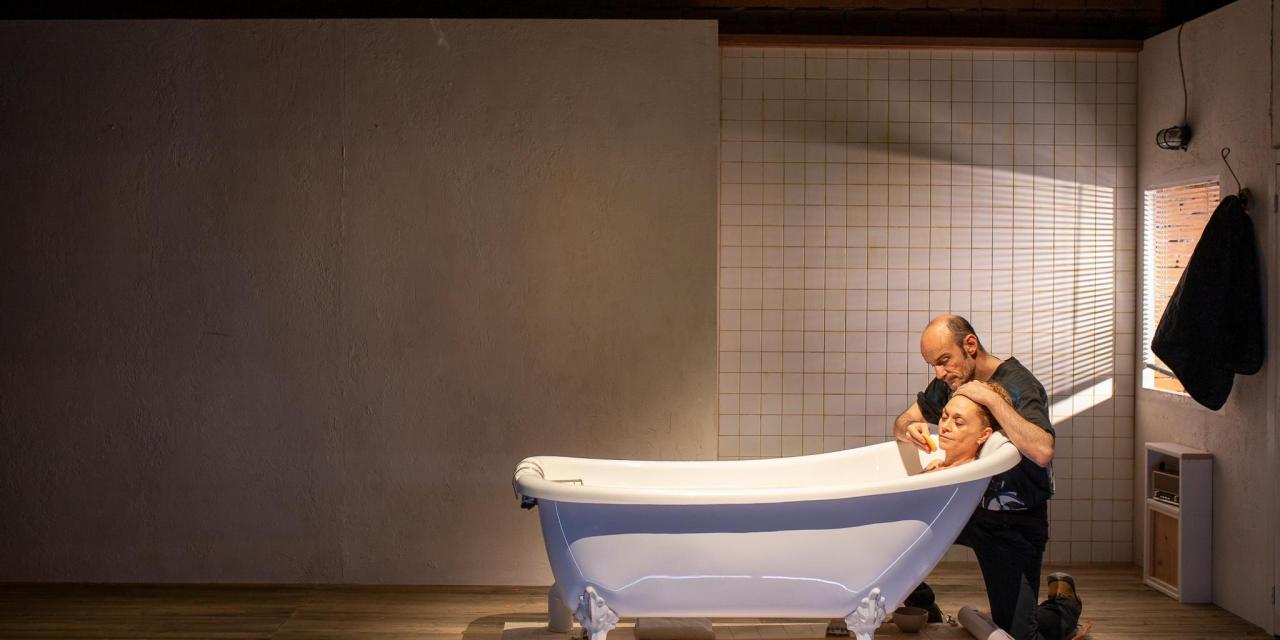
Instead, the right side of the stage represents a working-class home, where Ani and her former husband Eddie, a former lorry driver, are coming to terms with her almost total paralysis, following a terrible accident. Confined to a wheelchair, her head held high, Ani propels herself around the stage, making abrupt, unexpected turns, reflecting her frustration and anger at how her life has turned out. Instead, the sudden and unexpected appearance onstage of a bathtub, where Ani is immersed and being washed by Eddie, evokes a moment of deep intimacy, when the difficulties he encounters in his new role surface, as does her strength mixed with fragility.
Back to the righthand set, Jess grows attached to John, organizing a dinner with him, outside her usual working hours, only to be coldly rebuffed as she awkwardly clutches a bottle of wine in her hand. It is only towards the end of the play that that the two stories intertwine, when Jess enters the working-class home, seeking shelter for the night. Eddie, who is mourning his deceased wife, offers to put the young woman up, but she leaves, going back into the darkness. This brief encounter between two desperate people brought the action to an abrupt end. I couldn’t help feeling that their encounter could have been developed. What happens to people who have been caregivers when the person they have been caring for dies or goes away? Still, perhaps this is stuff for another play.
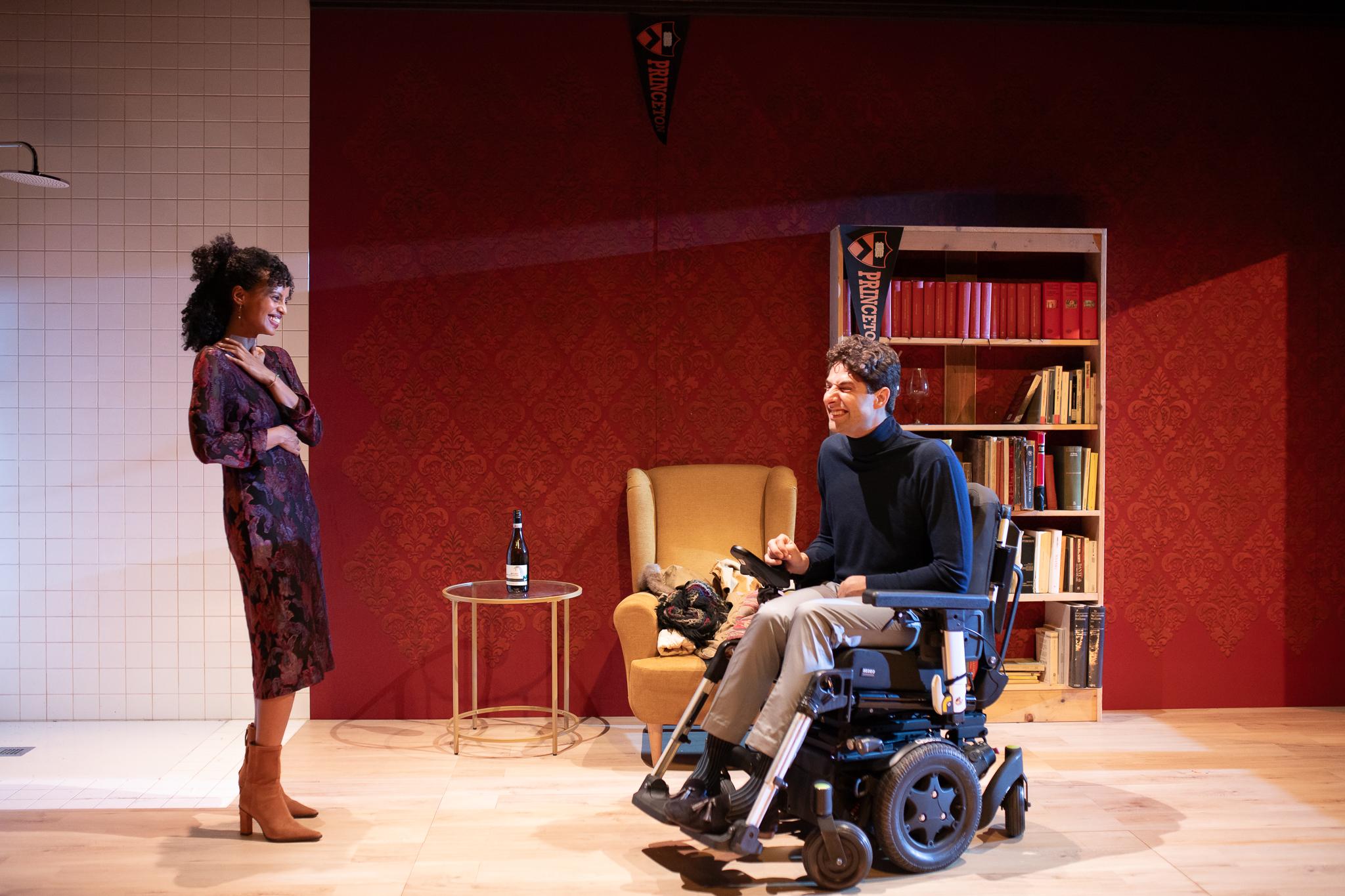
Martina Sammarco and Filippo Lai in Cost of Living by Martyna Majok. Directed by Raphael Tobia Vogel.
Director Raphael Toby Vogel’s sensitive staging focuses on the tiniest gestures and movement, facial expressions and tone of voice of the four characters, thereby deftly highlighting the complex, often taut, ever-shifting dynamics between caregiver and the person cared for. The cast, composed by Sara Bertelà, Filippo Lai, Pietro Micci, and Martina Sammarco, gave truly remarkable performances. What emerges is a production which lingers in the mind, as perhaps one remembers one’s own experience of caring, and at a broader level the need for governments to take these issues onboard.
This Italian production of Polish-American writer, Martyna Majok’s Pulitzer award winning play Cost of Living, which opened in America in 2016, is running from 14 October to 15 November at the Franco Parenti Theatre in Milan.
This post was written by the author in their personal capacity.The opinions expressed in this article are the author’s own and do not reflect the view of The Theatre Times, their staff or collaborators.
This post was written by Margaret Rose.
The views expressed here belong to the author and do not necessarily reflect our views and opinions.