Dramaturgical Flow – An interview with a world class theatre maker – Mr. Çağlar Yiğitoğulları (Berlin, Germany; Istanbul, Turkey; Cluj-Napoca, Romania) – The Body, Ritual, Exile and the Human Condition
Çağlar Yiğitoğulları is a very particular Turkish-born multidisciplinary performer and theatre-maker who lives, works and creates in Germany (Berlin-Hamburg), and, in a very unique manner collaborates with one of the most significant theatres in Europe – National Theatre “Lucian Blaga” Cluj-Napoca, Romania. Moving between theatre, performance art, and video, his uncompromising work pushes the body to its physical, emotional, and existential limits. Exploring exile, identity, spirituality, ritual, violence and mortality, he transforms vulnerability into confrontation, challenging audiences to question the boundaries between the human, the spiritual and the unknown. More information here.
Ivanka Apostolova Baskar: The Body as Witness – Your work explores the body as a site of memory, conflict and transformation. What can the body express that language cannot?
Caglar Yigitogullari: Throughout my career, I’ve had the privilege of travelling extensively with my work. Eventually, I found myself living in Germany as an artist in exile. And, in a way, nothing was left but the body. My interest has always been in the physical dimension of acting and performing. The body became the one thing I carried with me wherever I went. And the body remembers. It expresses. It speaks on its own. Of course, language is part of the body, too. But I believe the body can express things that spoken language cannot fully convey. Sometimes, what the body communicates is far more powerful than words. The scars, the lines on the forehead, the sweat, the tears, the beauty and the ugliness of the body all of these carry expressions and histories that I have rarely encountered in spoken language. The body tells stories even when we remain silent. And the body is political. Even if you deny it, even if you don’t intend to make a political statement, the body itself becomes political. The body you inhabit, the body you carry through the world, the body that has been shaped by its experiences and circumstances, all of these carry meaning. You don’t necessarily have to speak for the body to speak. Sometimes, simply being there is already a political act.
IAB: The Horse and the Limits of Humanity – In Critical Zone and But What Happened to the Horse, the horse becomes a powerful image. What does the animal reveal about human violence, vulnerability and the limits of representation?
CY: In those a works, the animal was metaphor for the human condition. I often create a universe somewhere between fiction and reality, and telling a story through another living being allows me to create a kind of alienation effect. It gives me a way to approach the real subject I want to explore from a different angle. You know, when you are the author, the storyteller, and the performer of your own work, you need a certain distance from the story you are telling. But the distance I’m talking about is different from the alienation effect Brecht developed in relation to the audience. For me, it is a distance between myself and the story itself. It allows me to step outside my own perspective without losing my personal connection to the material. That’s why I often invite an animal, or another living being, to become the storyteller in my work. It creates a space in between: between myself and the character, between reality and fiction, between what I want to say and what the audience might hear. Through this other being, I can approach something deeply human without having to speak about it directly.
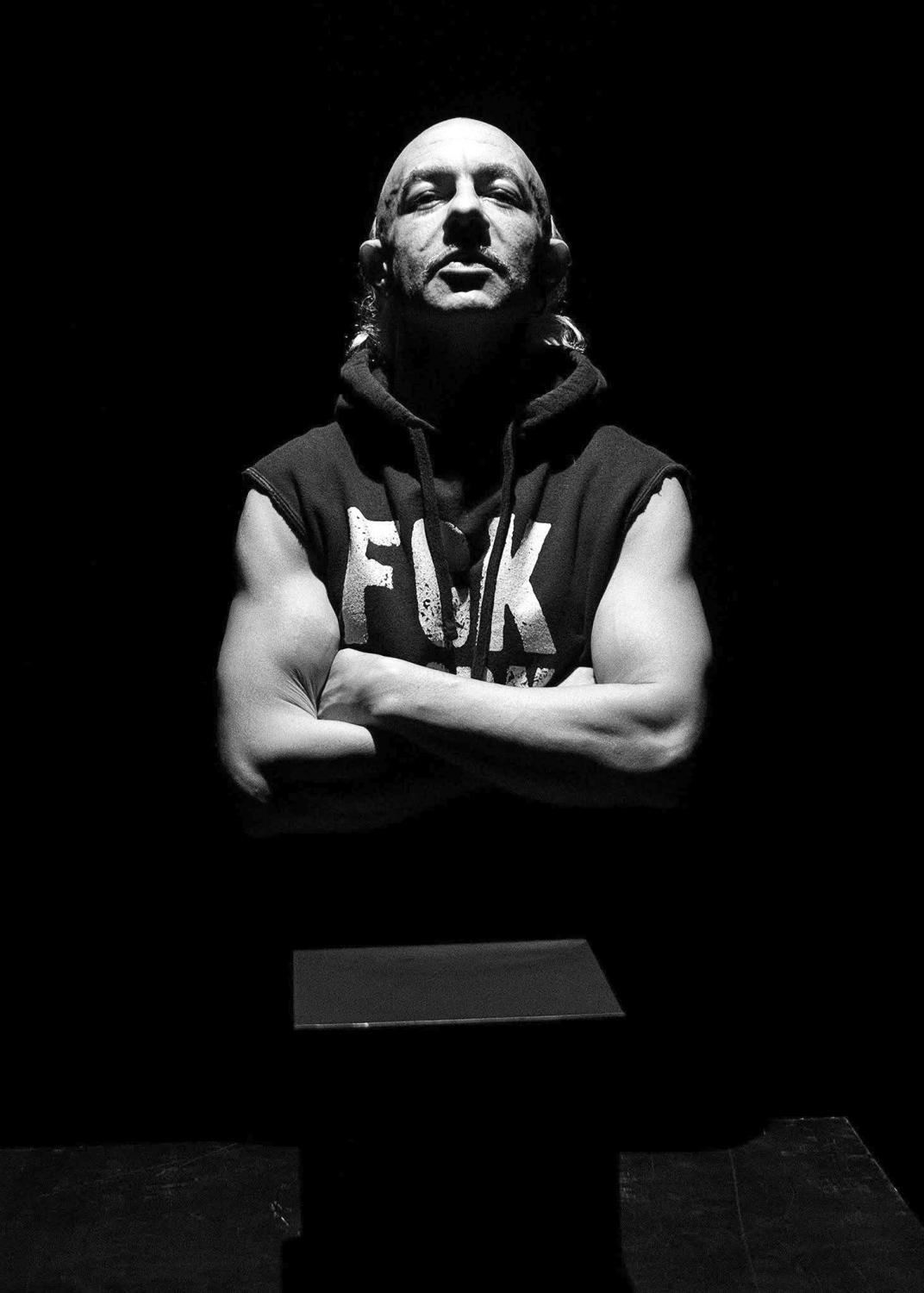
Photo credits: Çağlar Yiğitoğulları Archive.
IAB: Emotional Intensity and Artistic Depth – Your performances demand extraordinary emotional intensity from performers and audiences alike. How do you build such depth, and how much research, preparation and inner work does it take to reach that level of truth on stage?
CY: First of all, I work a lot. A lot. And a large part of my practice consists of sitting, thinking, questioning, and searching. After working for 15 years at Istanbul City Theatre, I gradually lost interest in the idea of entertaining an audience. My approach is almost the opposite. I want to disturb, to provoke, to create situations that encourage people to think more deeply and perhaps question what they take for granted. That is why I deliberately create physical and emotional challenges, both for myself and for the performers I work with. I want to push us towards a point where representation and pretense become difficult, perhaps even impossible. I’m interested in real people, real stories, and real moments – moments in which something actually happens here and now, rather than something simply being reproduced or demonstrated. For me, the audience has the privilege of witnessing these moments as they unfold. They are not watching something that has already happened and is being repeated for them. They are present while something is happening, and what happens is never entirely separate from the physical and emotional condition of the performer at that particular moment. In a way, I’m searching for an anti-theatrical form of theatre. I’m interested in what happens when we move away from the question of how to pretend or how to perform something, and instead create the conditions for an act to emerge in the moment itself. The act may be repeated every night, but it can never be exactly the same, because the performer is never exactly the same. Their body, their emotions, their exhaustion, their vulnerability, their resistance, all of these affect what happens. That’s where my interest lies: in the possibility that, even within a rehearsed structure, something real can happen that neither the performer nor the audience can fully predict.
IAB: Heimat Lost: The Meaning of Home – In Heimat Lost, exile and identity become personal and political questions. Can we ever truly belong to a place, or is home something we continually reinvent?
CY: As I mentioned in my previous answer, Heimat was a metaphor in that work, referring to the idea of home. But I was telling the story of someone who was lost, and his name was Heimat. I don’t know how other people experience this word. Perhaps for most people, it works the other way around: they have a sense of belonging, and Heimat gives that feeling a name. But I have never really felt that I belonged somewhere. Even when I lived in the country I called home, I felt like a stranger. I never felt that I truly belonged there. I have always felt part of a small community of friends, but I have never identified strongly with a national identity or anything like that. I don’t belong to any particular place, and I don’t think there is a place that could fully represent who I am. And I’m telling you this after having travelled through more than 25 countries. So, for me, there is no point in longing for a place to belong to. And that’s okay. In fact, it gives me a certain freedom and strength to be who I am and to do the work I do. I don’t have to represent a place or an identity. I can create my own world through my work.
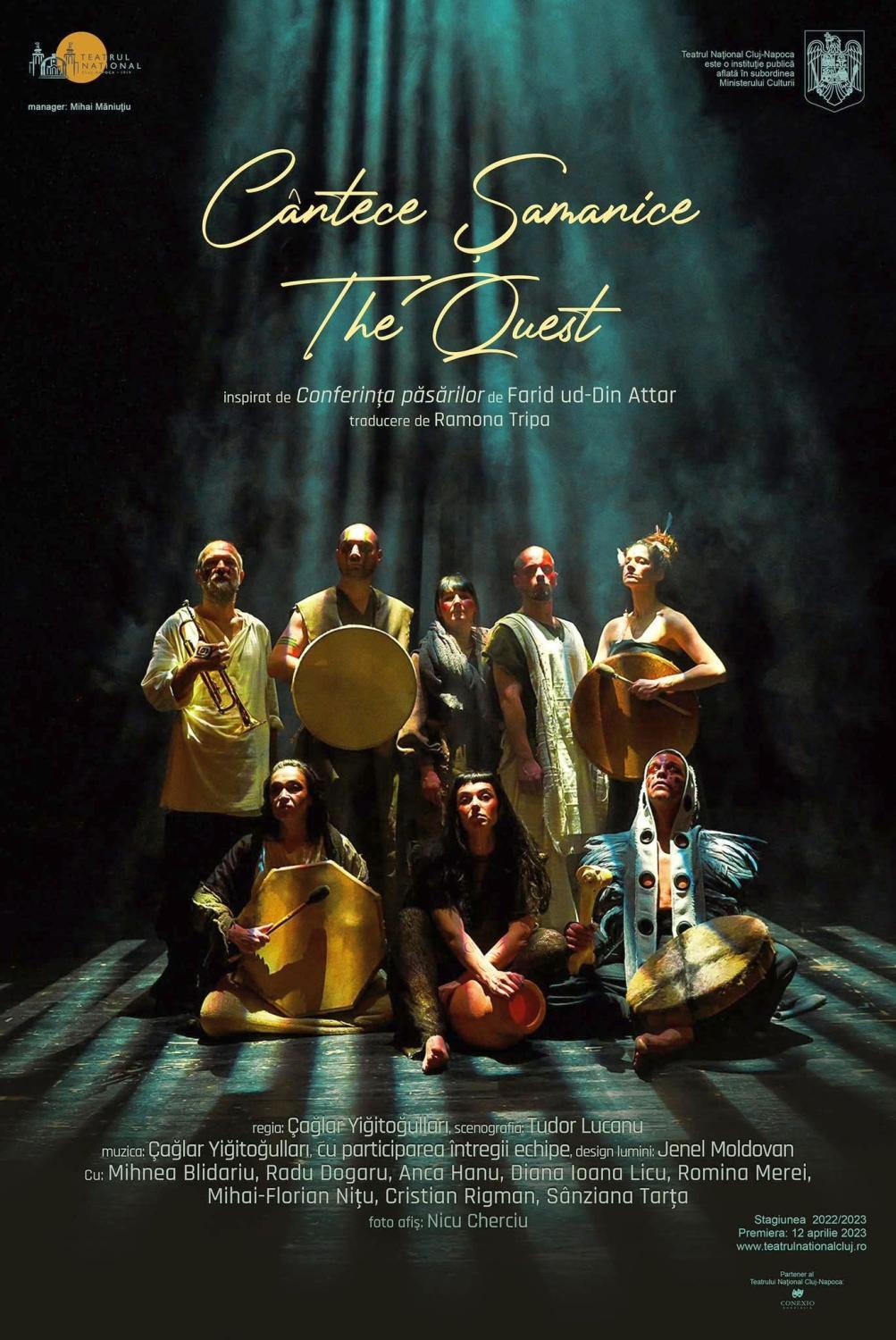
Photo credits: Teatrul Naţional Cluj-Napoca.
IAB: Cântece Șamanice / The Quest (2023): Ritual and Rebellion – Inspired by Farid ud-Din Attar’s The Conference of the Birds, The Quest transforms spiritual searching into a physical and ritual experience. What does the journey reveal when the seeker becomes the destination?
CY: For me, there is a huge difference between not belonging to a geographical place and belonging culturally. I may not feel that I belong to any particular place, but I feel deeply connected to the cultural codes of the East. They are part of me, emotionally and culturally.
Storytelling is deeply rooted in these traditions. In contexts where speaking openly can be forbidden or dangerous, oral storytelling becomes a way of carrying and transmitting stories, experiences, and emotions. Stories survive through the voice, through the body, and through the act of telling. The spiritual dimension of this tradition has always touched me deeply. It was one of the inspirations for the first part of my Quest Trilogy, which drew on The Conference of the Birds. But, as with the entire trilogy, I didn’t want simply to reproduce an existing spiritual text or tradition. I wanted to bring my own perspective into it. For me, one of the great human tragedies lies in the gap between what we know and what we actually do. We know so much, we understand so much, and yet we often act so little. That contradiction is something I keep returning to in my work. It is where the spiritual meets the human condition: not simply in what we believe or understand, but in what we are willing to do with that knowledge.
IAB: The Body at the Edge – Your performances confront physical extremity and vulnerability. Where do you draw the line between artistic risk and the spectacle of suffering?
CY: As we discussed at the beginning, the body is political. For me, taking risks serves not only as a form of alienation, but also has another, equally important purpose. These are the moments when the spectator is confronted with the physical reality of the person, the artist, on stage. It goes beyond simply provoking or irritating the audience. Because I am both the storyteller and the subject of my work, risk and pain – whether through physical endurance, blood, or other forms of exposure – become a language through which the body can speak loudly. The body doesn’t just represent something; it bears the consequences of what is happening in the moment. And the truth is, I suffer anyway, whether I am performing on stage or walking down the street. We live in a time of suffering. Just look at the world around us. What is so wrong about witnessing a suffering person on stage? Why should it be less tolerable to see suffering in a theatre than to watch images of thousands of children and women being killed on a screen?
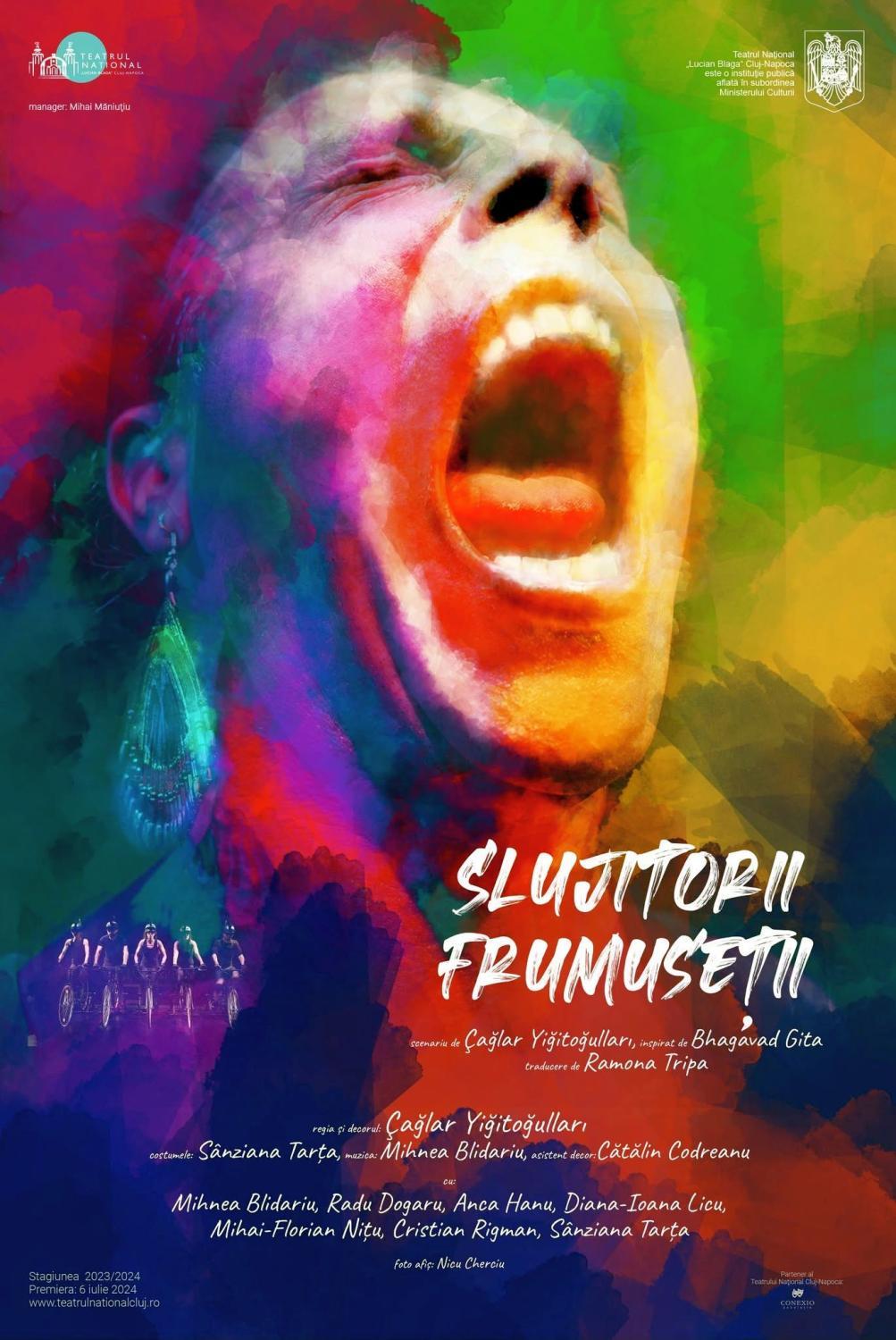
Photo credits: Teatrul Naţional Cluj-Napoca.
IAB: Slujitorii Frumuseții (2024): Beauty and Responsibility – Drawing inspiration from the Bhagavad Gita, this production explores leadership, moral dilemmas and responsibility. Can beauty become an ethical force in a world shaped by conflict?
CY: With my adaptation of the Bhagavad Gita, I wanted to focus on the human ethics of war. You probably know the basic premise of this part of the Mahabharata: it is a dialogue between Krishna and Arjuna, in which Krishna persuades Arjuna to go to war, even though he must fight against members of his own family. While trying to create a poetic language for the piece, I became increasingly interested in the dilemma between theory and practice. What we know, what we believe, and how we actually act do not always align. This contradiction becomes particularly painful when it comes to the killing of innocent people. How can we reconcile our ethical principles with the reality of our actions? I gave the project the title The Servants of Beauty. I borrowed this expression from Jan Fabre, who uses it to describe his performers. By using it as the title of my own work, I wanted to emphasize that the performers themselves were the real beauty of everything happening on stage. They generated the light by continuously pedaling bicycles, created live music, and sustained the performance through their physical labor. Beauty was not something decorative or separate from the action; it was something they produced through their bodies, their effort, and their presence. And yes, I believe beauty has the potential to become an ethical force, one that can change the world, especially when it emerges through the work of artists. This is one of the reasons I believe in theatre and continue to practice it.
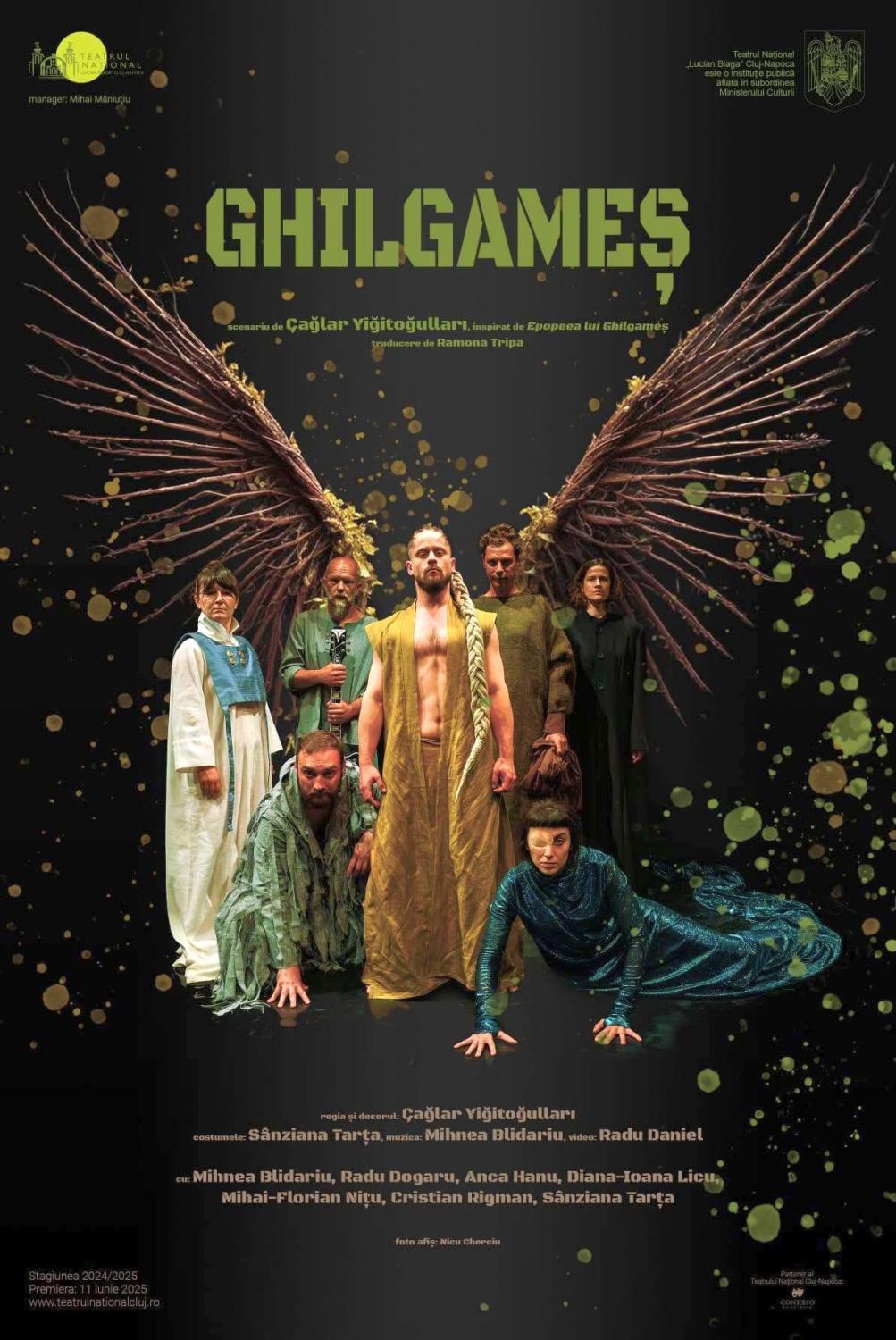
Photo credits: Teatrul Naţional Cluj-Napoca.
IAB: Ghilgameș (2025): Death and Immortality – In Gilgameș, the search for immortality confronts the inevitability of death and the loss of Enkidu. Can theatre help us face mortality, or can it only make our fear visible?
CY: Homo sapiens means the human being who knows. I used to tell my actors that we know one thing for certain: that we are going to die. And perhaps this is the tragedy of humanity as a species that knows. We are conscious of our mortality, yet there is no way to escape it or change this fundamental reality of being human. We can talk about it. And sometimes, perhaps, all we can do is sit together and cry about it. But I believe the role of artists is to remind us of what we already know, to bring that knowledge back into our consciousness, and to ask how we can live with it. That is why I chose Gilgameș as the final part of my Quest Trilogy. In my adaptation, the story ends with Gilgamesh setting out on a quest to find a way to make Enkidu immortal. And, in a way, as we continue to tell their story today, he has succeeded. Enkidu is still here, thousands of years later, through the story that carries his name. Everything perishes. But stories remain.
IAB: Three Productions, One Artistic Journey – From The Quest to Slujitorii Frumuseții and Ghilgameș, you move from spiritual searching to moral responsibility and mortality. Did this trilogy develop as a conscious artistic journey, and what connects its three worlds?
CY: As I briefly mentioned in my previous answer, the trilogy begins with a quest and ends with a quest. Just as we develop our artistic language, we are constantly searching. The quest is never really about reaching a destination. It is the journey itself that gives the ending its meaning. I think this is what we strive for as artists and as a theatre community: not necessarily to find the answers, but to keep searching, questioning, and moving forward together.
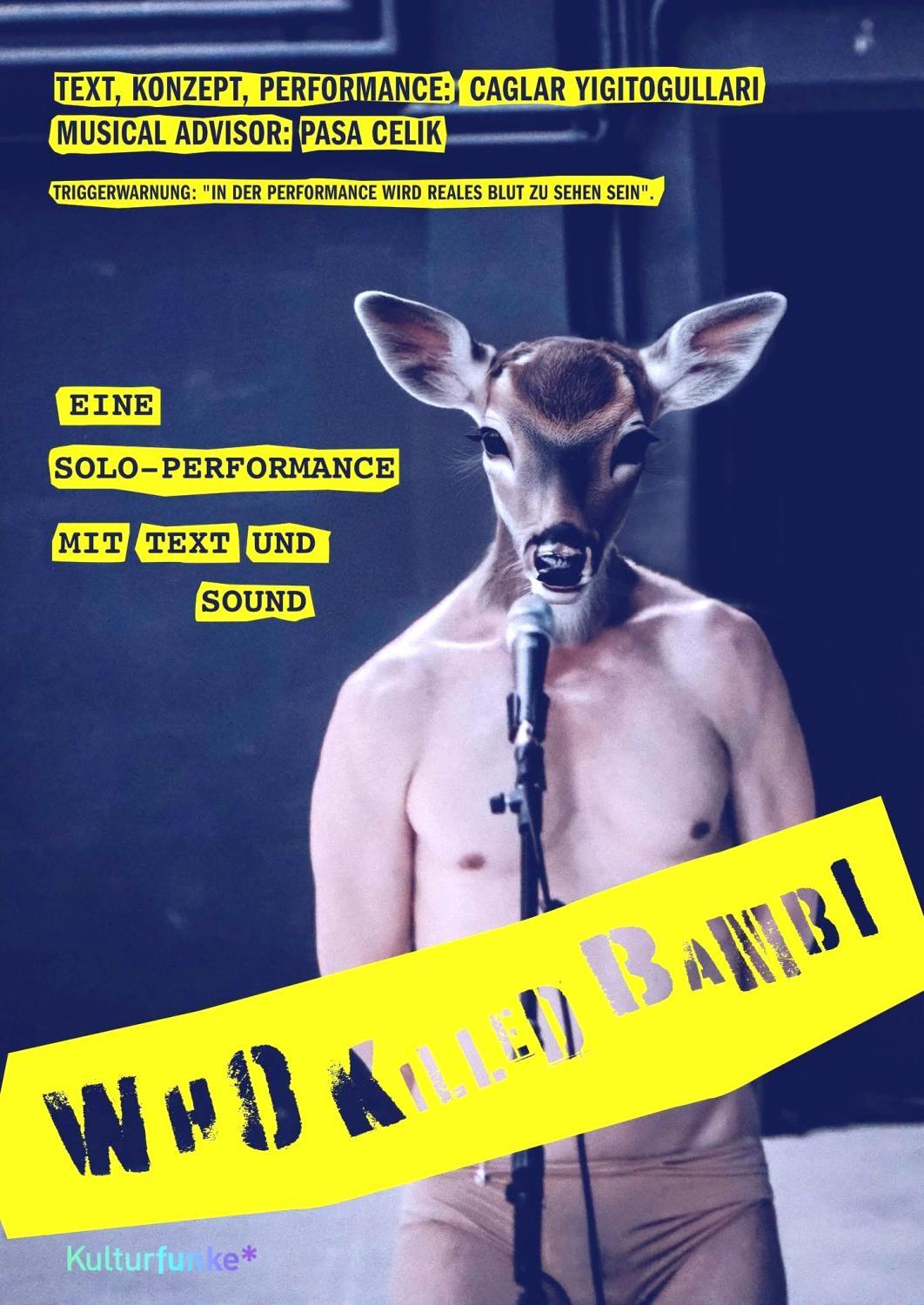
Photo credits: Christian Bartsch.
IAB: How to Cry: The Visibility of Pain – In How to Cry, live performance, camera, and video intersect. In a world saturated with images of suffering, what does it mean to make emotion visible on stage?
CY: How to Cry was a project I was invited to take part in. In a way, it became an opportunity for me to observe how people in Europe, and particularly in German society, can distance themselves from their emotions, just as they often maintain a certain distance from one another in their everyday lives. In this project, crying was a concept and something that was supposed to happen on stage in every performance. But images of suffering are already everywhere. Unfortunately, we don’t have to look very far to find them. In How to Cry, however, crying remained, to a certain extent, a concept. I should also clarify that this was not my work as a whole; I was one of the performers involved in the project.
IAB: Exile, Identity, and Collaboration – Having worked across Turkey, Europe and Australia, how have cultural displacement and international collaboration transformed your artistic language?
CY: Actually, I came to love the fact that I no longer perform in my own language. Performing in English and German, without trying to adopt a particular accent, gives me a certain freedom. From the very beginning, I can tell the audience: I am not one of you. I am the other. I am the outsider. And I don’t try to be or sound like everyone else. This is a freedom I have claimed for myself, and I have made it part of my artistic concept. In a way, my work is always the story of the “other,” of someone who stands outside, who observes from a different position, and who perhaps sees things differently precisely because they don’t fully belong. I have also learned much more through moving between different places, collaborating with other artists, and encountering different cultures and theatre practices than I ever could have learned through my formal acting education alone. These experiences have shaped me as an artist. They have allowed me to develop a diverse artistic language and to bring something unexpected to the stage, something that emerges from the many influences, encounters, and experiences I carry with me.
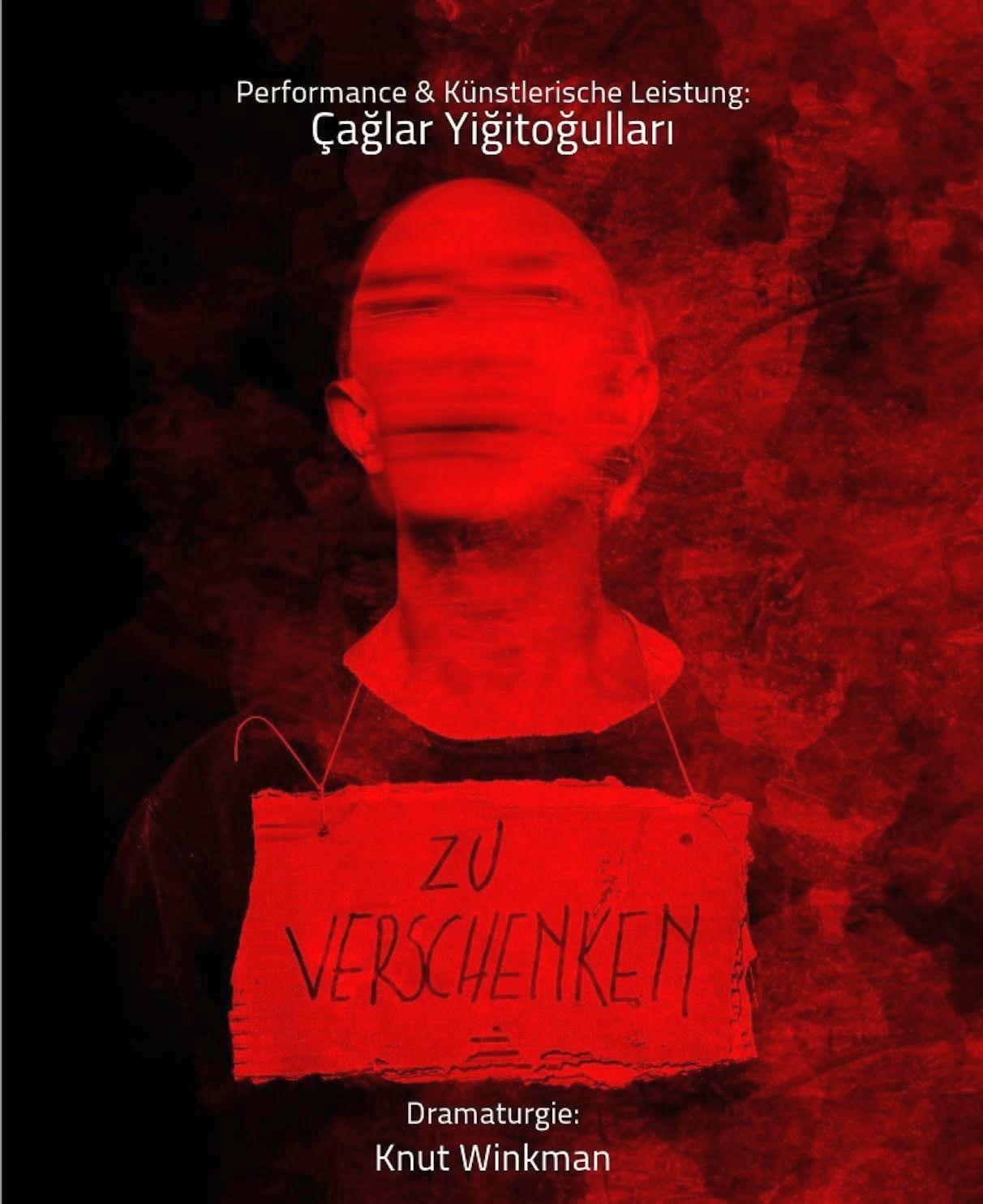
Photo credits: Theater Lübeck.
IAB: Who’s Talking? The Politics of Voice -Who has the right to speak, and whose voice remains unheard? How can theatre challenge the structures that determine whose stories matter?
CY: In the short film project Who’s Talking, created for the Puppet Museum in Lübeck, Germany, I used a text from Charlie Chaplin’s brilliant film The Great Dictator, in which he declares that he is not the person who should be a leader. In my concept, the leader of a country cannot sleep. Late at night, he secretly enters the puppet museum, where he uses the puppets and other objects to confess who he really is and the crimes he has committed. Behind the public image of a leader, there is a person who can no longer escape the truth about himself. I come from, and still belong to a subcultural attitude. For me, anyone who dares to speak, anyone who raises their voice, has the right to be heard. Freedom is never simply given to us; it has to be taken. I believe conventional theatre is dead, and I find it deeply problematic that its institutional structures, with their financial and political power, dominate and marginalize independent artistic practices. That is why I work with a punk mentality, embracing the DIY principle – do it yourself – even if you only know three chords on your instrument. For me, it is not about being perfect. It is about daring to make work, continuing to produce, and refusing to stop. This is how I feel that I exist, that I have a voice, and that I can be heard. I believe theatre has the potential to challenge everything. As you know better than I do, political power can also occupy publicly funded cultural institutions and silence them, allowing them to produce little more than entertainment. This is another reason I value being underground and independent. Of course, that comes with its own challenges, but I would rather continue creating on my own terms than give up the freedom to question, provoke, and speak.
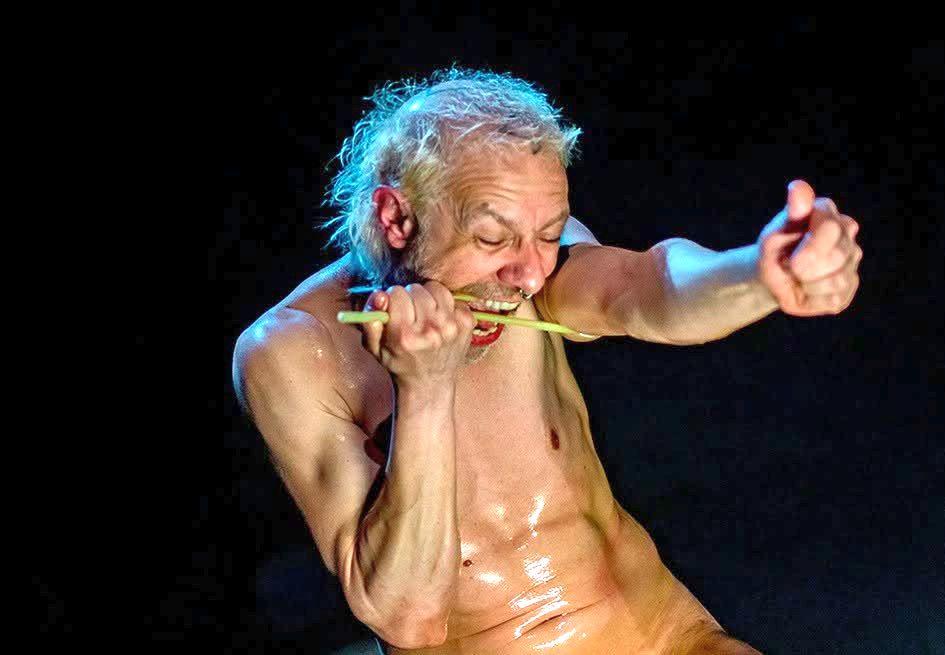
Photo credits: Çağlar Yiğitoğulları Archive.
IAB: Looking back at your formative experience with Jan Fabre and your more recent artistic journey with Mihai Măniuțiu, what remains of that original fire in the artist you have become today and how has it transformed along the way?
CY: What remains is me. What you see is a combination of this and that. What you make of it – good or bad – is up to you.
IAB: The Next Critical Zone – After exploring ritual, exile, myth, the animal body, and mortality, what remains artistically dangerous for you? What are you still afraid to confront?
CY: This is the concept behind my new work, Thus Nietzsche Met Zarathustra, which will premiere in Germany in November. The piece begins with a statement: “You are what you carry.” And it ends with the biggest fear I have: not being able to do or carry everything I would like to. I am afraid of so many things around me. Of what is happening in the world, of the wars that surround us and those happening further away, and of the rise of the AfD and the return of Nazi ideology in Germany. I am afraid of what the future might bring, and of how much we might lose along the way. But there is one thing I believe will remain: the story.
We have to keep telling our stories. And we have to keep listening to one another. Because, perhaps, when everything else becomes uncertain, storytelling is one of the few things we can still carry with us and pass on to someone else.
IAB: Thank you very much, dear Çağlar Yiğitoğulları.
(Hamburg/Berlin/Cluj-Napoca/Skopje, 2026/2025/2024)
This post was written by the author in their personal capacity.The opinions expressed in this article are the author’s own and do not reflect the view of The Theatre Times, their staff or collaborators.
This post was written by Ivanka Apostolova Baskar.
The views expressed here belong to the author and do not necessarily reflect our views and opinions.