The 30th Istanbul Theatre Festival, held from October 22 to December 3, 2026, marks its 30th edition. Bringing together Turkish and international theater companies and artists across different venues in Istanbul, this year’s program includes theater productions, contemporary dance, and other performances. Particularly notable is Lacrima (2024), a theatrical production directed by Caroline Guiela Nguyen. These features of the festival not only highlight the diversity of contemporary performing arts but also point to the growing importance of international artistic collaboration.
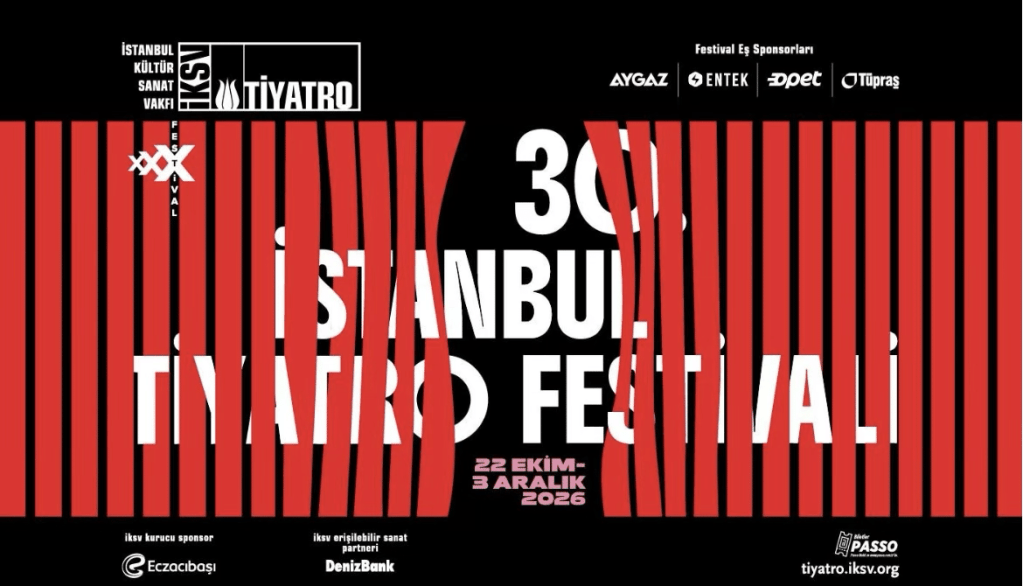
Official poster of the 30th Istanbul Theatre Festival (2026). Courtesy of İKSV.
The Istanbul Theatre Festival was established in 1989. Since then, it has played an important role in Türkiye’s cultural and theatrical life. It has evolved from an event within the International Istanbul Festival into an internationally recognized performing arts festival. The festival has consistently brought both Turkish and international theater productions to audiences. Over time, it has expanded beyond its national context, extending its presence internationally. It has also embraced contemporary performance, interdisciplinary approaches, and international co-productions. This year’s edition therefore provides an opportunity to consider how theater continues to respond to changing artistic, cultural, and social conditions at both national and international levels.
Memory and the Reconstruction of the Past
One of the most visible threads running through this year’s program is the exploration of memory and forgetting, alongside the relationship between past and present. For example, Ve Ateş Bizi Tüketiyor (And the Fire Consumes Us) (2026), directed by Mehmet Birkiye, explores the relationship between memory, identity, and forgetting through an elderly man’s night-time journey through Istanbul. Another example is Sanatçısı Belirsiz: İvi Buradaydı (Ivi Was Here) (2026), written by Çiğdem Erdöl, which brings the past into the present through the forgotten life and artistic legacy of Istanbul-born Rum (Greek Orthodox) painter Ivi Stangali.
Similarly, En Son Neyi Unuttuğumu Hatırlamıyorum (I Don’t Remember the Last Thing I Forgot) (2026), conceived and directed by Taldans, explores the relationship between archival materials, the body, and performance, presenting the past not merely as a fixed record but as a dynamic process of reconstructing identity and cultural history. Taken together, these productions suggest that memory is an active process of reconstruction rather than simply preserving the past.
Adaptation and Intermedial Transformation
Another significant feature of the festival program is the adaptation and reinterpretation of canonical literary classics. Suzie Miller’s dramatic work Anna K (2026), an adaptation of Leo Tolstoy’s Anna Karenina (1878), represents an ontological transformation of the original narrative, reconfiguring love and marriage through gender-based violence in a contemporary social world shaped by digital culture and social media. Another notable production is a modern theatrical adaptation of J. M. Coetzee’s novel Elizabeth Costello (2026), which explores themes including authorship, ethics, and representation. This dramatic piece also reflects the relationship between literature and performance.
Similarly, Oscar Wilde’s masterpiece The Picture of Dorian Gray (1890), reconstructed in theatrical form by Kerem Kurdoğlu and Mehmet Birkiye, addresses the issues of beauty and desire in relation to morality, suggesting a close relationship between art and its audience. In this regard, adaptation becomes a process of mediality in which different narrative techniques are reconfigured and brought into dialogue.
Istanbul as a Space of Performance
This year’s festival program is closely engaged with the past and connected to the city of Istanbul, one of the most historically significant cities in the world. Therefore, Istanbul’s urban memory and cultural identity play a significant role in productions such as Ve Ateş Bizi Tüketiyor (And the Fire Consumes Us). As seen in this example, the city does not simply appear as a geographical setting or a passive backdrop; instead, it becomes an active participant in constructing and shaping memory and identity. In this dramatic work, Istanbul is an active element in the protagonist’s experience of both remembering and forgetting.
Similarly, Istanbul Mon Amour: Love > Hate < Love (2026), written and directed by Murat Mahmutyazıcıoğlu, brings performance into the urban spaces of Kadıköy. Through three interconnected stories, the performance explores the relationship between the city, memory, and belonging. By connecting artistic works with the urban landscape and everyday spaces of the city, the festival invites audiences to reconsider the relationship between urban space, personal memory, and the city’s collective history.
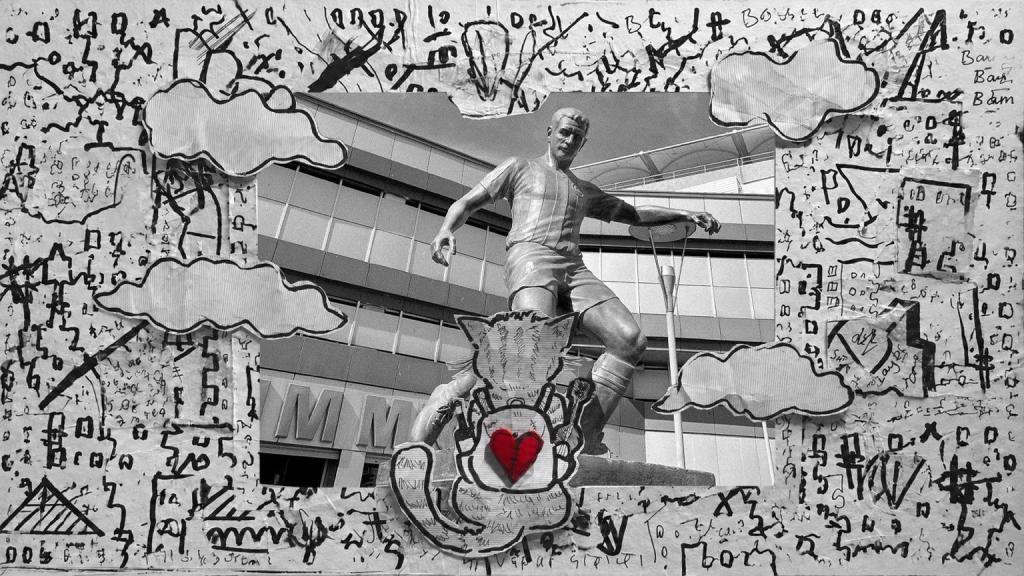
Istanbul Mon Amour: Love > Hate < Love (2026), written and directed by Murat Mahmutyazıcıoğlu. Promotional image courtesy of İKSV / 30th Istanbul Theatre Festival.
Language, Power, and Belonging
Several productions selected for the program also highlight themes including language, migration, identity, and communication. Language: No Broblem (2024) by Marah Haj Hussein addresses issues such as linguistic oppression, displacement, colonialism, identity, and resistance, while Ad Infinitum’s Last Rites (2024), co-created by Ramesh Meyyappan and George Mann, explores deafness, communication, silence, loss, and family relationships, focusing on communication barriers and the problematic relationship between a father and his deaf son.
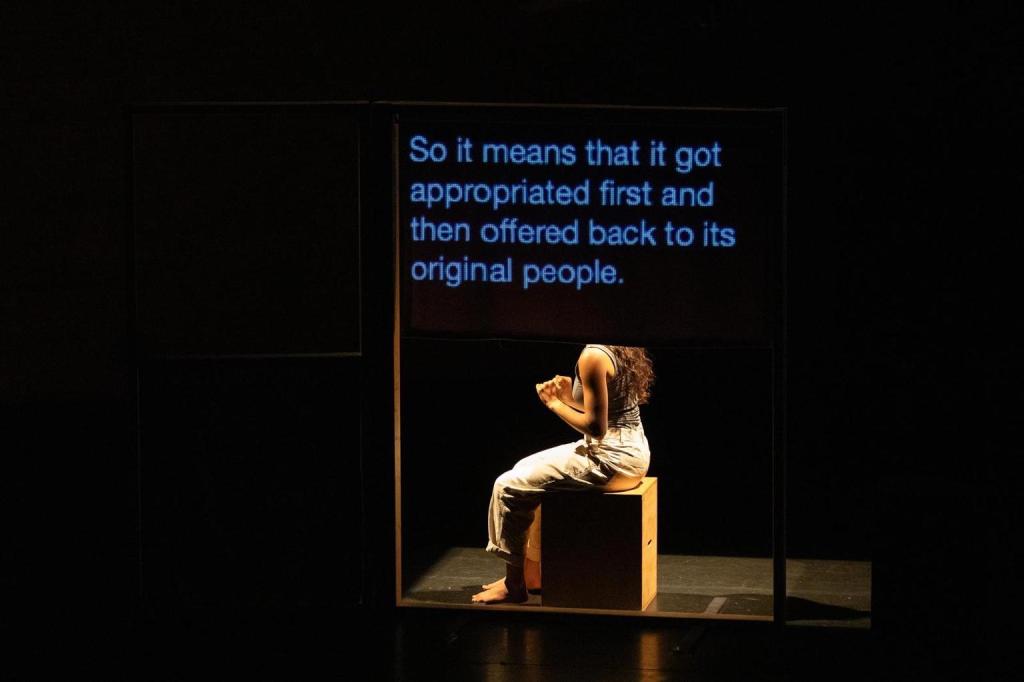
Language: No Broblem (2024), by Marah Haj Hussein. Photo: Myrto Grigoriou. Courtesy of İKSV / 30th Istanbul Theatre Festival.
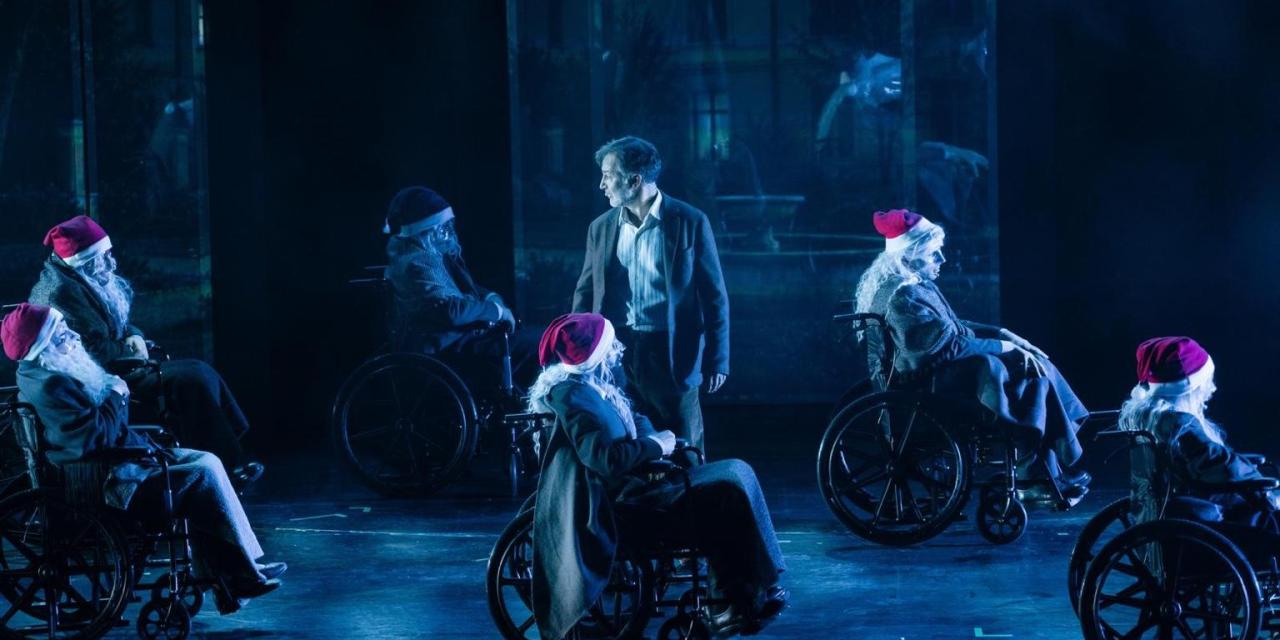
Lacrima (2024) by Caroline Guiela Nguyen is also a notable example. The piece questions the struggles of communication through the use of French, Tamil, English, and French Sign Language across an international network of labor.

Lacrima (2024), directed by Caroline Guiela Nguyen. Photo: Mete Kaan Özdilek. Courtesy of İKSV / 30th Istanbul Theatre Festival.
What connects these works is their concern with the relationship between language, power, identity, and belonging. In this regard, power relations, cultural identity, exclusion, and the possibility of communication across boundaries are deeply reconsidered, rather than language being approached merely as a matter of linguistic diversity.
Turkish Theater and International Exchange
Taken together, the festival’s position in Turkish theater is significant in many ways, and its importance continues to grow for several reasons. With 11 Turkish productions alongside 6 international productions, it continues to provide a space for dialogue between local and global performance cultures. Furthermore, it serves as a platform for cultural exchange and artistic collaboration. By maintaining a balance between local artistic productions and international theatrical exchange, the festival builds a cultural bridge connecting Turkish theater with the international performing arts community.
The 30th edition of the Istanbul Theatre Festival presents a critical transition in the festival’s artistic and institutional development. As one chapter in its history closes, a new phase of both artistic and theatrical exploration begins. The festival appears to be at an important point in its history, opening up further artistic possibilities for the future. Since its establishment in 1989, the festival has developed a rich history, and this year’s program suggests a continuing commitment to cultural exchange, artistic diversity, and contemporary theatrical innovation.
By presenting a diverse range of themes such as memory, forgetting, and belonging through revisiting and reconstructing the past, the festival closely engages with contemporary global concerns.
Looking both backward to its historical legacy and forward to international collaboration and new forms of artistic expression on stage, the festival opens a new phase in the development of Turkish theater and its international connections.
This post was written by the author in their personal capacity.The opinions expressed in this article are the author’s own and do not reflect the view of The Theatre Times, their staff or collaborators.