An interview with a deeply thoughtful European theatre director Valbona Xibri (Albania/Italy).
Valbona Xibri is an independent theatre director born in Tirana, Albania, and currently based in Brescia, Italy. A graduate in Theatre Directing from the Academy of Fine Arts in Tirana, she holds a postgraduate degree in Animation and Training in Volunteering and International Cooperation from the Catholic University of the Sacred Heart in Brescia. Working between Italy and Albania, Xibri has developed a distinctive theatrical language at the intersection of performance, memory, identity, and intercultural dialogue. Her practice engages diverse communities, including migrants, refugees, incarcerated people, and young people, exploring theatre as a space for empathy, visibility, and social transformation. Her internationally acclaimed production Burrnesha (Sworn Virgin), inspired by the Albanian tradition of women assuming male social identities, has been presented at festivals across Europe, the United States, Africa, and Asia, earning awards for Best Director and Best Dramaturgy at the SITFY International Festival in Kraków, Poland. Her work bridges cultural specificity and universal human questions, challenging conventions through an experimental and deeply human approach to theatre.
Ivanka Apostolova Baskar: How has living and working between Albania and Italy transformed your artistic identity and your language as a theatre director?
Valbona Xibri: Living divided between Albania and Italy made me realize one fundamental thing: identity isn’t a fixed point on a map, but an ongoing conversation between who you were and who you are becoming. Albania is in my roots, in my gut, in my emotional memory; Italy gave me a view from afar, that sense of distance you need to truly understand yourself. In this space in between, I learned that in theatre you don’t always need words: silences, gestures, the rhythm of breathing, and bodies speak for themselves. My theatre is born right there, in that subtle crack between feeling at home and feeling uprooted. I’m not interested in explaining one culture to another. I’m interested in creating a moment where people look each other in the eye and discover something about the other but above all, something about themselves they didn’t know yet.
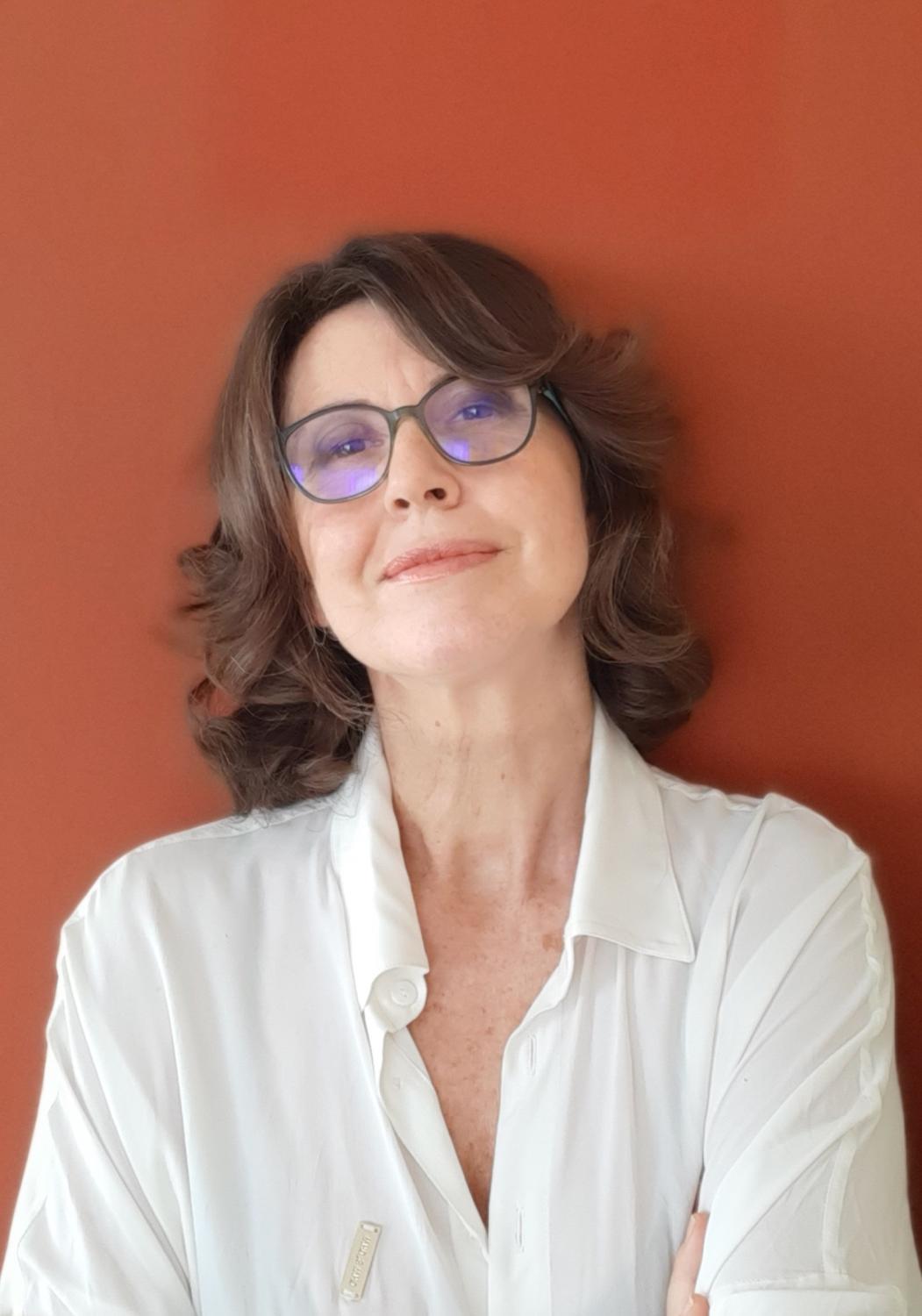
Photo credits: Valbona Xibri.
IAB: Your work often gives visibility to marginalized voices. How do you transform other people’s stories into theatre without taking ownership of their experiences?
VX: It all starts with listening. But truly listening is an act of immense responsibility. Another person’s pain doesn’t automatically become art just because I was lucky or privileged enough to encounter it: I work with human beings, not with their wounds. Heaven forbid we use other people’s lives as decoration for a director’s “vision.” Through dialogue, improvisation, and collective creation, I look for a form that safeguards and protects the dignity of the person in front of me. I can never claim to own someone else’s truth; I can only create a safe space, a threshold upon which that truth can finally be taken seriously and heard. The question I carry inside me every day is simple and demanding: who is speaking right now? Who actually has the right to tell this story?
IAB: In Burrnesha, a deeply rooted Albanian tradition opens up universal questions of identity, freedom, and resistance. How do you balance cultural specificity with universal meaning?
VX: I always start with faces, with real stories, because the universal doesn’t exist unless it has flesh and bones. The burrneshe come from a harsh Albanian tradition in which certain women chose, or had to choose to become men in the eyes of society to survive and have rights in a patriarchal world. I don’t look at this tradition as an exotic folkloric relic, nor as an easy slogan for empowerment. I am fascinated by its open wounds: freedom and constraint, sacrifice, the immense price one pays to belong to something or to break free from it. On stage, the body of a burrneshë becomes the site upon which society has written its rules, but also the space where those very rules shatter. The story originates in Albania, yes, but the toil and courage it takes to live true to oneself are things that concern us all.
Photo credits: Valbona Xibri.
IAB: You have worked with refugees, migrants, incarcerated people, and vulnerable communities. What can theatre offer that social institutions often cannot?
VX: Theatre doesn’t work miracles, and it shouldn’t try to replace social services, lawyers, schools, or politics. I’d be dishonest if I said otherwise. However, theatre knows how to do one thing that institutions often forget: see the person before their label. A refugee isn’t just an asylum claim; a prisoner isn’t just their crime; a migrant isn’t just a passport or a journey on a dinghy. On stage, categories fall away. People become visible again for what they dream, for how they move, for their contradictions. Theatre creates a small, temporary community where listening becomes an act of love and recognition. Sometimes change begins with something tiny: someone who has always been spoken for by others finally finds their own voice. It doesn’t solve their life, but it changes forever how they look at themselves in the mirror, and how others look at them.

Photo credits: Valbona Xibri.
IAB: You have collaborated on several projects with the wonderfully inspiring Ukrainian actress Maryna Ivashchenko. What do you discover, create, and achieve together and what is it about your artistic connection that makes you want to return to this shared creative journey?
VX: Working with Maryna is a continuous process of discovery. It’s the beauty of what happens when two worlds meet without needing to erase each other to understand one another. Maryna is Ukrainian, and we met in Italy during a dance-theatre project where I was directing the theatrical performance. At first, we communicated in English because she didn’t feel ready to express herself in Italian yet. We were two artists with different roots and languages finding ourselves in Italy, but we immediately realized we shared something deep: a solid, rigorous background in theatre, and above all, the exact same intellectual honesty. Together, we look for what emerges in the space between us: an unexpected movement, the truth of a silence, the spark that ignites when bringing different memories together. Artistic affinity for me doesn’t mean agreeing on everything; it means sharing the same hunger of curiosity toward the other, the willingness to let yourself be touched and transformed by the person standing in front of you. I keep coming back to work with Maryna because with her, the creative process remains alive, fresh, and unpredictable. Together, we manage to invent a stage language that, on our own, we would have never dreamed of finding.

Photo credits: Valbona Xibri.
IAB: How has your encounter with Odin Teatret and practitioners such as Eugenio Barba influenced your understanding of the actor’s body, presence, and stage language?
VX: Encountering Odin Teatret and Eugenio Barba opened my eyes: an actor’s body isn’t a mere vessel for reciting a text, it is a living source of meaning. It’s an architecture of energy, intentions, and resistances. I realized that the slightest shift in weight can tell the story of an inner war, and that a pause made at the right moment can shout louder than a three-page monologue. This journey taught me precision, care for physical movement, and the search for an inner necessity behind every gesture. It pushed me to go beyond the usual psychological explanations: on stage, the body shouldn’t just “act out” life, it must make the audience feel it on their skin.
IAB: Working in a language other than your mother tongue can be both a limitation and a creative challenge. Has this experience changed the way you direct, write, or communicate on stage?
VX: Working in a language that isn’t my native one taught me to trust everything that exists before and beyond words. When verbal language stumbles, you hold onto the body, the rhythm, the gazes, the silence. I learned to listen with greater humility and to seek what is truly essential. Expressing yourself in a foreign language makes you feel vulnerable, stripped down, but it also gives you incredible freedom: it tears you away from clichés and ingrained habits. Theatre begins where words can no longer reach. We might not speak the same language, but we can breathe together, share a rhythm, a gesture, a moment of pure presence. And that is where real connection happens.

Photo credits: Valbona Xibri.
IAB: Your productions move between documentary material, collective memory, movement, music, and visual storytelling. What is the first impulse that tells you a story must become theatre?
VX: Usually, it’s a question that starts knocking in your head and won’t leave you alone. It can come from a story heard on the street, an image, a wound in history, or a reality that everyone pretends not to see. I don’t immediately ask myself how to stage it, but why we need to encounter it right now. I ask myself what theatre can do that a newspaper article or a TV debate cannot. When I realize that a story needs breathing bodies, sound, physical presence, and not just simple explanations… well, then I know it has to become theatre. When it demands to be lived, not just told.
IAB: What does intercultural theatre require beyond bringing people from different backgrounds into the same room?
VX: Bringing people from different countries into the same room is only the first step and the easiest one. True intercultural theatre demands the courage to question power dynamics: who sets the rules? Which language do we consider “primary?” Who is expected to adapt to whom? Making culture together doesn’t mean erasing differences or hosting a multicultural celebration that glosses over real issues. It means sitting with misunderstandings, navigating complexities, and learning to stay together without turning the other person into a cliché. I want living, evolving identities to meet on stage. Theatre only makes sense when no one is forced to give up a piece of who they are just to say “this place belongs to me, too.”

Photo credits: Valbona Xibri.
IAB: As an independent director working across different cultural and institutional contexts, how do you protect your artistic freedom while building sustainable collaborations?
VX: Being independent doesn’t mean isolating yourself; it means choosing who to walk with without selling your soul. It means knowing how to negotiate, having patience, but also having crystal-clear clarity on what is non-negotiable. I look for collaborators and institutions that see theatre not as a product to be churned out quickly, but as a space of responsibility and artistic exploration. I believe in taking time, in genuine human relationships, and in projects born out of real urgency rather than fleeting trends. To me, sustainability isn’t just about paying the bills: it’s about reaching the end of the day without having lost the reason why I chose this path in the first place. I have to protect my theatre’s right to be imperfect, human, and, if necessary, uncomfortable.
IAB: If theatre is an encounter that can transform both performers and audiences, what is the one question you believe theatre must dare to ask today?
VX: The question we must have the courage to ask ourselves today is this: Who are we truly willing to recognize as our equal, as a fully human being? And what are we prepared to change about our own lives once we have looked them in the eye? We live in a society that is extremely adept at categorizing people, slapping labels on them, and turning human suffering into numbers and charts. Theatre must bring us back right there: in front of a breathing body, a voice, a gaze that you cannot dismiss with a category. I don’t expect a performance to offer ready-made answers. But if the audience leaves the hall carrying a healthy doubt, a question that keeps them company on their way home, then we’ve done something meaningful. For me, theatre isn’t an escape from reality, it is the one place where we find the courage to look it in the face and try, together, to change it.
IAB: Thank you very much, dear Valbona Xibri.
(Brescia/Skopje, 2026)
This post was written by the author in their personal capacity.The opinions expressed in this article are the author’s own and do not reflect the view of The Theatre Times, their staff or collaborators.
This post was written by Ivanka Apostolova Baskar.
The views expressed here belong to the author and do not necessarily reflect our views and opinions.