An interview with Prof. Tatjana Filipovska (Skopje, Republic of North Macedonia/UKIM Skopje), an art historian whose research explores the micro and macro perspectives of the Modern Era (Mannerism, Baroque, Rococo).
Professor Tatjana Filipovska, PhD, is a Professor of Art History at the Institute of Art History and Archaeology, Faculty of Philosophy, Ss. Cyril and Methodius University in Skopje. She has been a member of the Institute since 1988 and has been a Full Professor since 2016. She holds a PhD in Art History and Archaeology, with a dissertation on The Festive Scene in Eighteenth-Century Venetian Painting. Her research focuses primarily on Italian Early Modern art, particularly eighteenth-century Venetian painting, genre painting and vedutismo. A central strand of her scholarly work explores the dialogue between the visual arts and the performing arts, as well as the sociological and cultural dimensions of European art in the Modern Era, including Mannerism, Baroque, and Rococo. Professor Filipovska has also held numerous academic and institutional responsibilities, including directing the Doctoral Program in Art History and Archaeology since 2017. More information – http://fzf.ukim.edu.mk/profesori-3-2-8-2-2/
Ivanka Apostolova Baskar: The Baroque Ellipse as Theatre: A Geometry of Vision or a Technology of Power – what is your opinion?
Tatjana Filipovska: I would say both. As a geometric form, the ellipse was employed by Baroque architects to enliven space, accentuate the sculptural quality of a building, and introduce a sense of dynamism and drama. Of course, it was only one of the components contributing to these effects. The theatricality of the interiors achieved by Baroque architects was also part of the Vatican’s Counter-Reformation program, aimed at turning away from the earthly and striving towards the heavenly. Yet, the ellipse was not merely an aesthetic innovation in Baroque sacred architecture; it also had a practical application in the design of ancient Roman amphitheatres, while the Renaissance architect Andrea Palladio employed its form in the construction of the Teatro Olimpico in Vicenza. Essentially, the elliptical amphitheatre offered a compromise between stage visibility, capacity, circulation, and structural advantage.
IAB: Professor Filipovska, if Renaissance perspective was conceived as a rational instrument of ordering the world, could the Baroque ellipse be interpreted as its theatrical antithesis, a spatial device designed not merely to guide vision but to destabilize it? To what extent might the elliptical forms of Baroque architecture, painting and stage design constitute a shared visual grammar whose ultimate purpose was the choreography of spectatorship itself?
TF: The Baroque style demonstrates a powerful sense of unity and coherence across all artistic spheres; it creates an illusionistic unity of space, introduces dynamism, and appears to draw the audience into it. During the Renaissance, theatrical scenography was consistent with a rational understanding of space and, as such, was recognizable to the audience equally suggestive, but distanced from it. Thus, the concept is different, but the Baroque is not necessarily more theatrical.
IAB: Horror Vacui and the Stage: When Does Decoration Become Performance?
TF: The decoration merely complements the performance, defining it in greater detail.
IAB: In both Baroque interiors and theatrical scenography, horror vacui appears less as a decorative impulse than as an ontological refusal of emptiness. Could we argue that the saturated surfaces of Baroque churches and palaces functioned as permanent theatres, where stucco, ornament, and illusion performed continuously in the absence of actors? In this sense, is horror vacui fundamentally a theatrical phenomenon before it is an artistic one?
TF: I would not agree. Without actors, there is no performance. The Baroque interior or stage manifests a prevailing illusionism combined with pronounced ornamentation, offering the audience a spectacular experience, with a tendency to integrate it into the space. By contrast, in a simple, uncluttered interior in the Protestant world, the audience itself makes the performance; the stage belongs to them. On the theatrical stage, however, without Baroque effects and ornamentation, the audience’s attention is focused on the actors’ performance.
IAB: Gilded Stucco and Theatrical Light: The Birth of Immersive Space – what is your opinion?
TF: Absolutely, yes, if you are referring to the Baroque interior. I have already addressed this above.
IAB: Your work repeatedly explores the dialogue between visual and performing arts. How might we rethink eighteenth-century gilded stucco not merely as ornament but as a proto-scenographic technology? Could the reflective interaction between gold surfaces and candlelight be considered an early form of immersive theatre, anticipating modern concerns with audience participation and sensory environments?
TF: Indeed, the artistic experience of the seventeenth century also allows for such an impression, while at the same time demonstrating that gilded stucco decoration is not essential to achieving the effect of the audience participating in the activities taking place on stage. Caravaggio’s paintings are evidence of this. It seems that the role of lighting is dominant here.
IAB: Mannerism and Mise-en-Scène: Did Theatre Learn from Painting or Painting from Theatre?
TF: Most likely, they followed that path together, which is hardly surprising, given the fact that painters were, and continue to be, creators of theatrical scenography.
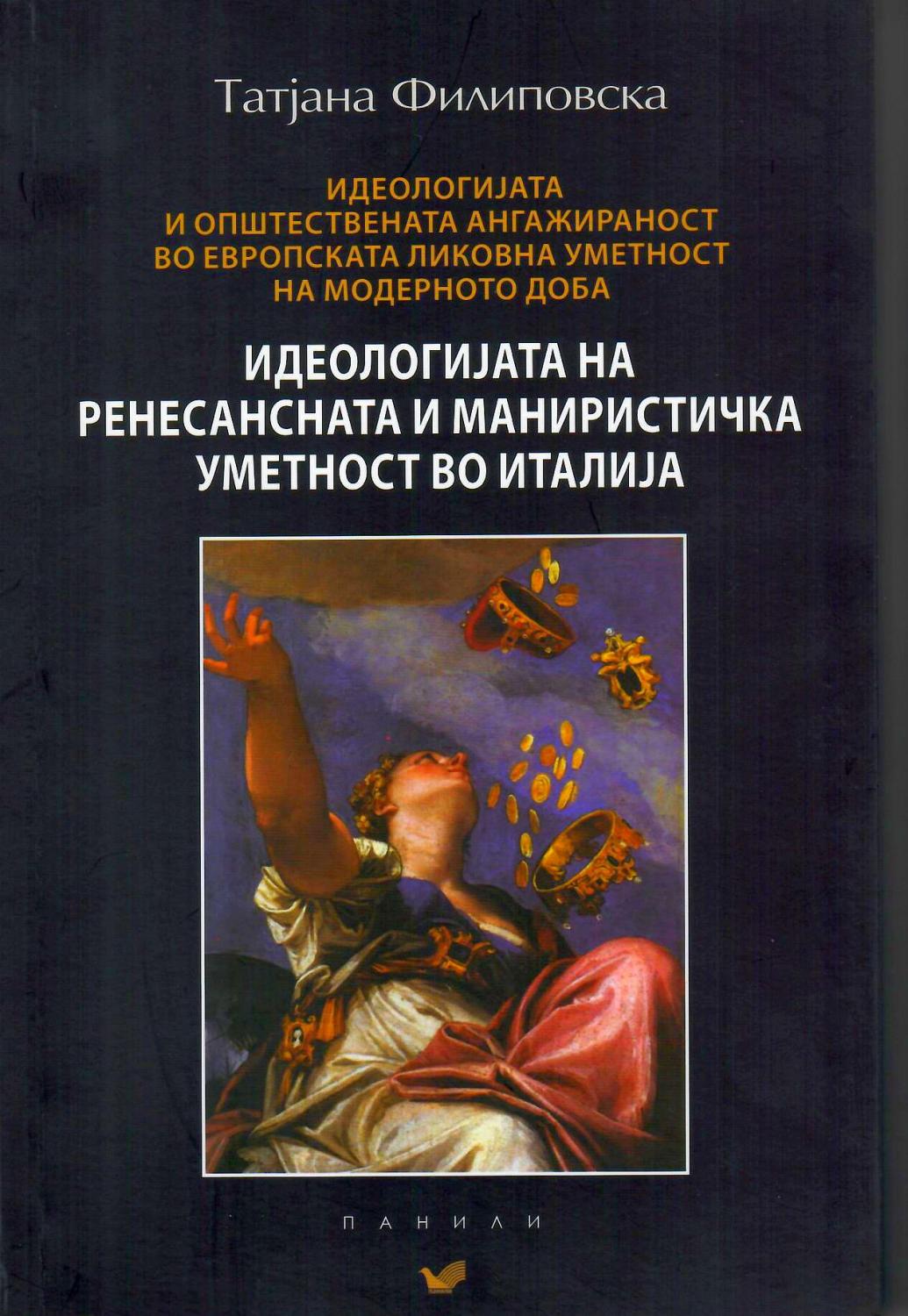
Photo credits: Tatjana Filipovska.
IAB: The artificial poses, compressed spaces and psychological ambiguities of Mannerist painting often resemble frozen theatrical performances. Do you believe Mannerism generated a new theatrical consciousness within painting itself, or should we instead view it as evidence of a broader cultural shift in which theatre and painting simultaneously developed a common language of artifice?
TF: Mannerist painting achieves a sense of interactivity that continues into the Baroque era. This means that it erases the boundary (the frame) between the painted representation and the audience, creating the impression of its connection with the scene. Nevertheless, this tendency cannot be attributed exclusively to the theatrical experience; rather, we would view it as a kind of “bringing the painting to life,” involving artifice and elegant poses characteristic of the cultural climate of the period.
IAB: The Choreography of Gesture: From Byzantine Hieraticism to Rococo Movement – what is your opinion?
TF: You have cited two extremes, although there are also parallels between them, for example, in the playful quality of the line. The frescoes in the churches of Kurbinovo and Nerezi display a sense of playfulness, gestures, and emotions, even though they are chronologically far removed from Rococo examples. I would conclude that no strict boundary can be drawn in this respect.
IAB: If we compare the static sacred gesture of Byzantine and Post-Byzantine imagery in Macedonia with the exuberant bodily dynamism of Renaissance, Baroque and Rococo painting, are we witnessing merely stylistic evolution, or a profound transformation in the understanding of the body as a theatrical instrument? How does the migration from sacred stillness to secular movement alter the spectator’s role?
TF: Here, we are dealing with fundamental stylistic differences between the art of Western and Eastern Christianity. The East relies on spirituality, whereas the West follows the path of mimesis. The movement towards a closer representation of reality in Western art from the Renaissance onwards signifies a movement closer to life itself. Theatre is grounded in life and movement; hence, the viewer tends to experience Western art to a greater extent in a “theatrical” way and can more readily recognize themselves within it.
IAB: Venice as Stage, Macedonia as Sanctuary: Two Civilizations of Viewing – what is your opinion?
TF: The Venetians would not have agreed with this statement, as they regarded their city as a place under divine protection. St Mark, the patron saint of Venice, was part of a carefully constructed myth, as was the religious-political spectacle of the “Marriage of the Sea,” held on the Feast of the Ascension. The city was also under the constant protection of the Virgin Mary and Christ, as reflected in the choice of the principal annual feast days. Almost all Venetian celebrations had a religious foundation; they simply knew how to turn them into spectacles by bringing together religion, history, power, and wealth. In this way, the Venetians carefully constructed an image of the stability of the state. An important participant in the “performances” staged on the Venetian open-air stage was also the audience. Macedonia, however, was merely a region throughout the centuries, and given the cultural, economic, and political circumstances, comparisons with Venice are impossible. Nevertheless, we could not characterize life in this region as a sacred world, nor describe it as a sanctuary.

Photo credits: Tatjana Filipovska.
IAB: You have famously examined Venice as a scenographic space. Could one construct a comparative model in which eighteenth-century Venice represents a civilization of spectacle, while Byzantine and Post-Byzantine Macedonia represents a civilization of contemplation? If so, where do these two visual regimes unexpectedly converge despite their apparent opposition?
TF: Considering the artefacts, material culture, and documents from the period that are available to us in Macedonia, it is impossible to draw comparisons. I would not say that a civilization of contemplation prevailed here. Nevertheless, the historical circumstances, the dynamics of historical events, and the entirely different nature of celebrations, artistic expression, and artistic forms within the given cultural and social contexts leave no room for comparison with the Venetian experience. Macedonia did not follow a linear historical development; as a region, it was first part of the Eastern Roman Empire and later of the Ottoman Empire. For the most part, fresco painting, and later woodcarving, provided the space where, alongside the customary iconographic solutions of religious compositions and their established arrangement, certain genre details can occasionally also be seen. Moreover, our region has world-renowned artistic achievements from all periods, and it would be difficult to find anywhere a greater degree of dramatic expressiveness than that of the Lamentation in Nerezi, which is often compared with Giotto’s fresco of the same subject, despite preceding it chronologically. Not all of our customs have been preserved, but some that have been “revived,” such as the Galicnik Wedding, speak of a rich festive tradition, connected more to the community than to the state. The Galicnik Wedding, for example, is a combination of ritual, customs drawn from the deep ethnological and anthropological “repository” of the Mijaks, and, ultimately, spectacle. Some Venetian spectacles, too, continue to be staged today, likewise as tourist attractions.
IAB: Across Renaissance festivities, Baroque celebrations and Rococo fêtes galantes, fragments of dance frequently survive in painting long after the performance itself has disappeared. Could these pictorial remnants be approached as an archaeological archive of lost theatrical practices? And how might such visual evidence compare with the more restrained ceremonial motifs preserved in Byzantine and Post-Byzantine Macedonian art?
TF: Not every representation falls within the category of an archaeological artefact. However, archaeological artefacts, more or less well preserved, whether complete or fragmentary, are among the earliest representations of dance. Dance may have different origins and meanings, as well as different choreographies, with a profound yet local anthropological significance. Given that its primary role is ritual, your observation that dance can be perceived as a form of stage practice is accurate. As for the ceremonial motifs in Byzantine and post-Byzantine art, the same applies: the artist drew inspiration for representations of dance from contemporary local traditions.
IAB: Caravaggio and the Origins of Modern Theatre – what is your opinion?
TF: Caravaggio probably did not have such an intention, but his oeuvre produces a theatrical effect. This is due to what was, at the time, his new and modern tendency to represent religious themes without idealized or beautified figures, using people from ordinary life as protagonists rough, unidealized, and real. In fact, he brought the scenes to life with real “actors,” using dramatic lighting; that is a powerful contrast. In this way, Caravaggio brought religion closer to a broader audience and enabled it to experience it in a theatrical manner.
IAB: In your studies of Caravaggio, realism emerges as a revolutionary visual force. Yet Caravaggio’s dramatic lighting and concentrated emotional intensity seem strikingly theatrical. Would it be fair to suggest that modern theatre begins not on the stage but in the painter’s studio, where Caravaggio transformed spectators into participants and converted observation into experience?
TF: Yes, that is a justified and accurate observation. Caravaggio anticipated theatre in painting before audiences could see it on the proscenium stage. His paintings present a true drama in motion: gestures, grimaces, real figures expressing emotions and appearing tangible and lifelike under spotlight-like illumination. The composition of his canvases was executed with the utmost attention and with the skill of a director who exercises sovereign command over the stage. He shaped it by grouping the human figures, while the absence of a background (scenography) and the positioning of the group in the foreground make the viewer part of the scene.
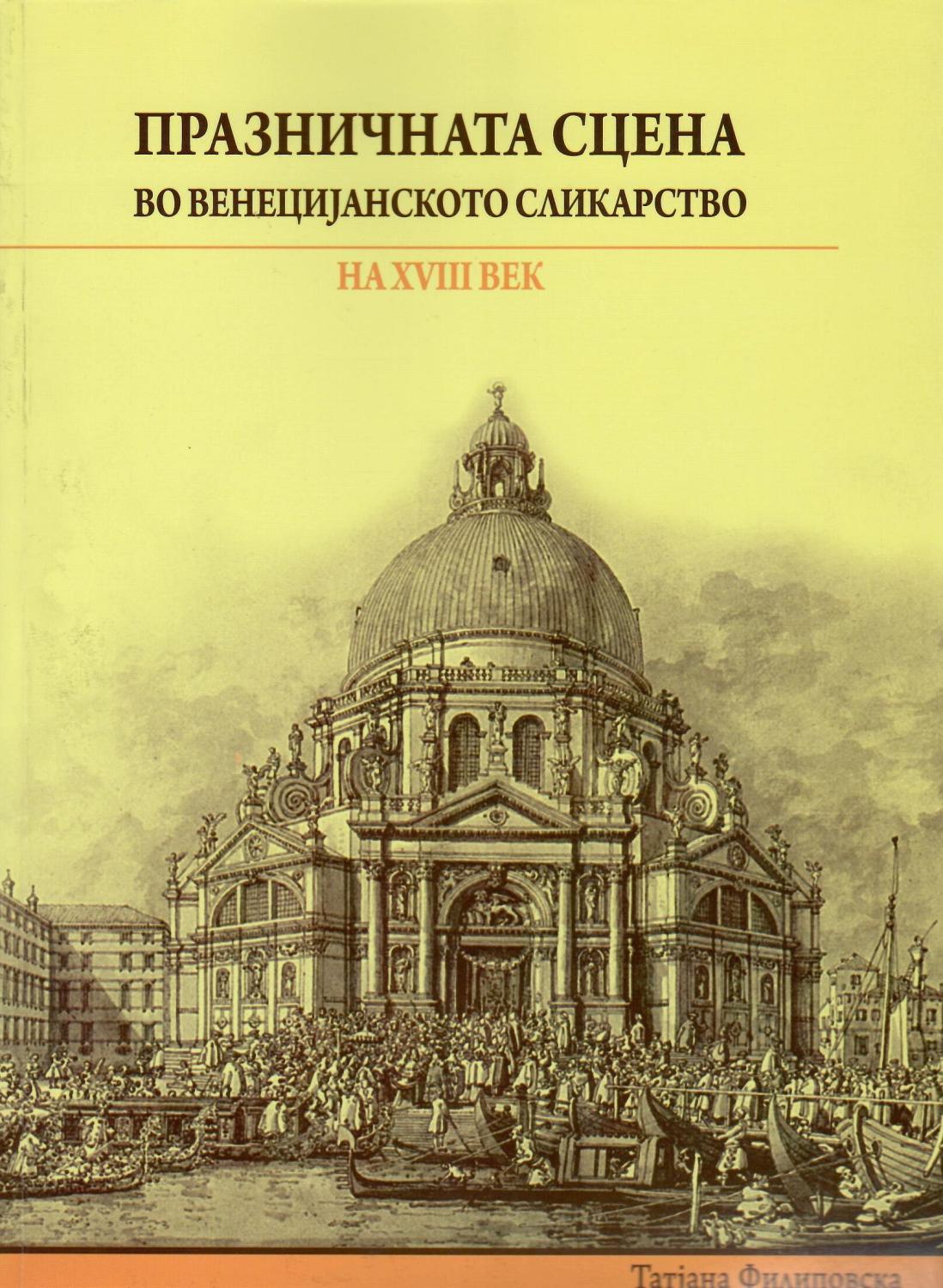
Photo credits: Tatjana Filipovska.
IAB: Mythology, Eroticism, and Performance: Is the Classical Body Always Acting?
TF: The nude figure is fundamental to Classicism. It is more a matter of idealizing the human body its proportions and poses than of action. This is an ancient concept, embraced once again during the Renaissance, when the ideal proportions of the human body played a significant role in architecture and in the understanding of space. Mythological subject matter and its free interpretation were likewise innovations of the Renaissance, a period marked by a profound fascination with the achievements of antiquity in all fields. The erotic component within mythological narratives reached a particularly pronounced culmination during the Baroque era, a time when movement became a defining characteristic of the Baroque style. By then, however, bodily proportions had lost their primacy to drama, that is, to action.
IAB: Your work on classical mythology as an erotic input in European art raises a fascinating question: can the mythological body ever be understood as purely pictorial? Or does it inevitably function as a performer on a symbolic stage, constantly enacting desire, power and identity? To what extent is European mythological painting fundamentally theatrical in its conception of the human figure?
TF: On the contrary, the classical nude has always had more sculptural aspirations, or else insisted on the purity of line. During the Mannerist period, mythological nude figures still carried a predominantly formal-aesthetic and symbolic significance. It was only during the period of the Inquisition in Europe that the mythological context became eroticized, serving as the only thematic discourse through which sexuality, hidden desires, passion, and jealousy could be freely expressed, naturally through the deliberate selection of particular motifs. Among those who enjoyed this kind of imagery and commissioned it for their residences were also figures from the highest ranks of the Catholic Church.
IAB: Did European art become theatrical because society became spectacular?
TF: Theatre is a reflection of life, while theatricality in European art is associated with the artificiality and elegance of aristocratic circles, which were the intellectual and cultural driving force of society. The nobility constituted the audience for both the visual arts and theatrical performances, and remained their principal consumers until the mid-nineteenth century. Initially, this involved a relatively narrow circle that enjoyed art and theatre in private residences and courts. During the seventeenth and eighteenth centuries, however, public exhibitions and public theatres began to emerge, yet, until the end of the eighteenth century, artificiality and elegance remained dominant not only in painting, but also in theatrical genres such as tragedy, opera, melodrama, and operetta.
IAB: Throughout your research from Venetian festivities and genre painting to sociological analyses of modern art, a recurring theme is the transformation of collective experience into visual representation. Looking across the longue durée from Byzantium to Rococo and from sacred ritual to urban spectacle, would you argue that the increasing theatricalization of European art reflects a deeper societal shift: the emergence of a culture in which identity itself became a performance?
TF: There is almost no distinction between ritual, performance, theatre, and life. The only exception is that life cannot always be directed; nevertheless, it is the driving force and inspiration behind all human activities, including those mentioned above. As sociological phenomena, they are deeply interconnected. Ritual, performance, including theatrical performance, is, in a sense, a simulacrum of life itself. More specifically, Venetian celebrations have an anthropological, religious, political, economic, and social background, while the need to connect all the protagonists in the celebration of this almost unchanging system also contributed to their roles being precisely assigned. These attractive spectacles, held within the unique urban space of the Venetian lagoon, attracted many foreigners as well, and were regularly repeated on an annual basis. Thus, as an important component of identity, they became part of the visual culture of the Veneto.
IAB: If a seventeenth-century Venetian scenographer, a Rococo painter, a Byzantine iconographer and a contemporary theatre director were placed in the same room, what single concept would allow them to understand one another and what would that reveal about the deepest relationship between image, ritual and performance in European civilization?
TF: Theatre is an ephemeral art form, limited in both time and space. If we seek the common denominator between the visual arts, architecture, and theatre, it is certainly scenography. Scenography itself, accompanied by the available means and the aesthetic sensibilities of its time, aims to create an illusion, regardless of whether this is an illusion of reality or an illusion of an imagined world.
IAB: Thank you very much, Prof. Tatjana Filipovska.
(Skopje 2026)
This post was written by the author in their personal capacity.The opinions expressed in this article are the author’s own and do not reflect the view of The Theatre Times, their staff or collaborators.
This post was written by Ivanka Apostolova Baskar.
The views expressed here belong to the author and do not necessarily reflect our views and opinions.