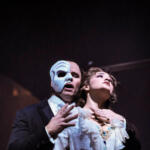
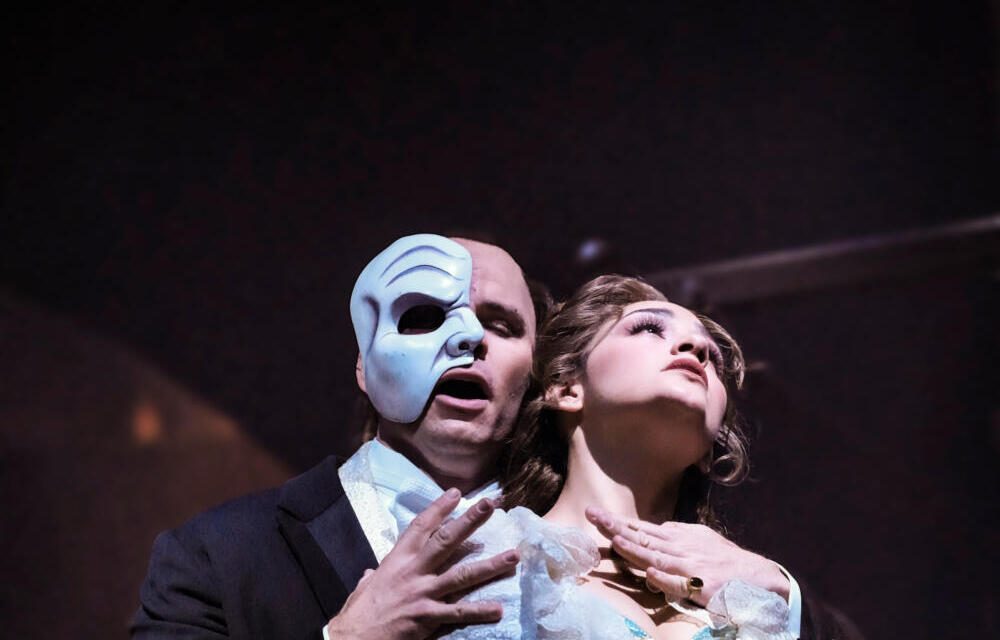
Mexico City becomes once again the stage for a major musical-theater event. After more than a year of preparation, casting, and meticulous creative development, the Insurgentes Theatre raised its curtain on November 6 for the Mexican premiere of The Phantom of the Opera, Andrew Lloyd Webber’s legendary masterpiece that forever transformed the global history of the genre.
Produced by Morris Gilbert, Claudio Carrera, OCESA, and LETSGO, in association with Alfonso J. González and María Elena Galindo, this new staging arrives as one of the most ambitious theatrical productions of the year in Mexico.
A classic reborn with global DNA
Since its 1986 debut in London and its arrival on Broadway two years later, The Phantom of the Opera has mesmerized over 160 million spectators across 205 cities and 21 languages, securing its place as one of the most successful and longest-running musicals in the world. More than a show, it is a cultural phenomenon that has earned over 70 major awards and continues to expand its legacy.
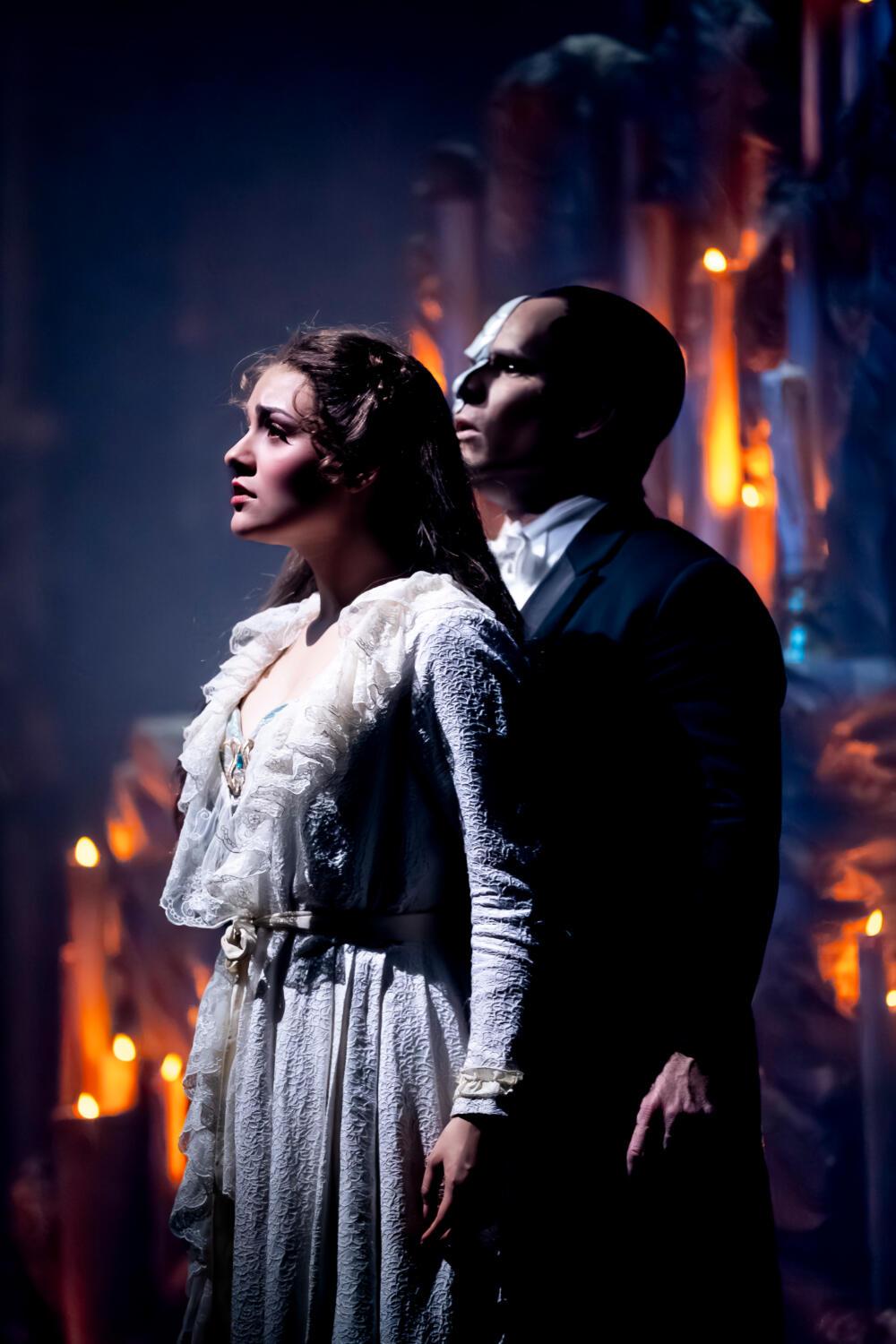
The Phantom of the Opera, by Andrew Lloyd Webber, directed by Federico Bellone, Spanish-language adaptation by Silvia Montesinos. Produced by Morris Gilbert, Claudio Carrera, OCESA, and LETSGO, in association with Alfonso J. González and María Elena Galindo.
From Madrid to Mexico: A new phantom with a European pulse
This version has an unusual lineage: conceived in Italy, celebrated for two critically acclaimed seasons in Madrid, and now touring Spain, it offers a fresh, cinematic, and visually bold reinterpretation of the classic. Its arrival marks The Phantom’s return to Mexico 26 years after the last local production.
At the helm is director and set designer Federico Bellone, one of Europe’s most influential contemporary musical-theater creators. Known for his daring visual language and his integration of cutting-edge technology, Bellone deepens the emotional and psychological layers of the story, offering a more agile, modern, and electrifying experience.
A darker, more intimate atmosphere
In Mexico, the staging adopts a darker and more introspective tone than its London predecessor. The design blends Baroque elegance with Expressionist distortion, creating an unsettling, shadow-filled environment that reveres both Gaston Leroux’s original novel and the Gothic Romantic tradition.
This production embraces theatricality and cinematic rhythm in equal measure, using innovative lighting, projection mapping, and special effects to heighten the tension, mystery, and emotional impact.
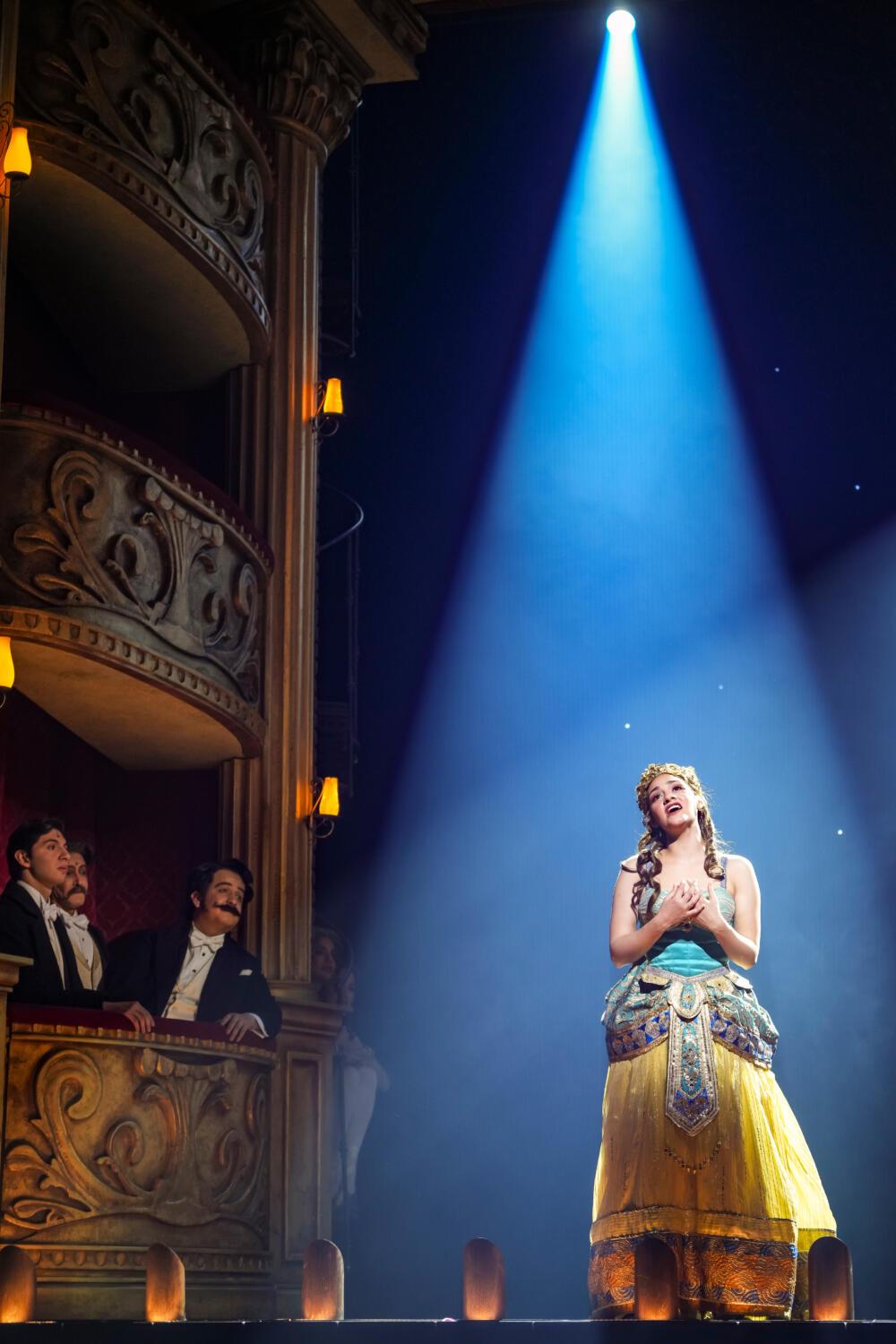
The Phantom of the Opera, by Andrew Lloyd Webber, directed by Federico Bellone, Spanish-language adaptation by Silvia Montesinos. Produced by Morris Gilbert, Claudio Carrera, OCESA, and LETSGO, in association with Alfonso J. González and María Elena Galindo.
A cast of powerful voices
The Phantom of the Opera demands extraordinary vocal and dramatic precision. Casting became one of the production’s greatest challenges: nearly 1,000 performers auditioned, including many emerging talents who now make their debut in major roles.
- Edward Salles delivers a Phantom who is powerful yet vulnerable, technically demanding and emotionally raw.
- Lina de la Peña portrays a Christine with exceptional vocal finesse and expressive sensitivity.
- Luis Anduaga brings warmth, nobility, and elegance to Raoul.
- Cristina Nakad embodies a commanding, fiery Carlotta.
- Alicia Paola gives life to the enigmatic Madame Giry.
A robust ensemble upholds the musical’s complexity with precision and vigor. Remarkably, 65% of the cast had never worked with the company, reflecting a strong commitment to nurturing new Mexican talent and diversifying the nation’s theatrical landscape.
The power of a live orchestra
While the iconic score remains intact, the Spanish-language adaptation by Silvia Montesinos allows Mexican audiences to connect more intimately with every emotional inflection. The live orchestra—reduced to 15 musicians but arranged with careful intention—preserves the grandeur and immersive resonance essential to Webber’s sound.
The carefully engineered acoustics envelop the auditorium, from the explosive force of the main theme to the delicate, haunting exchanges between Christine and the Phantom.
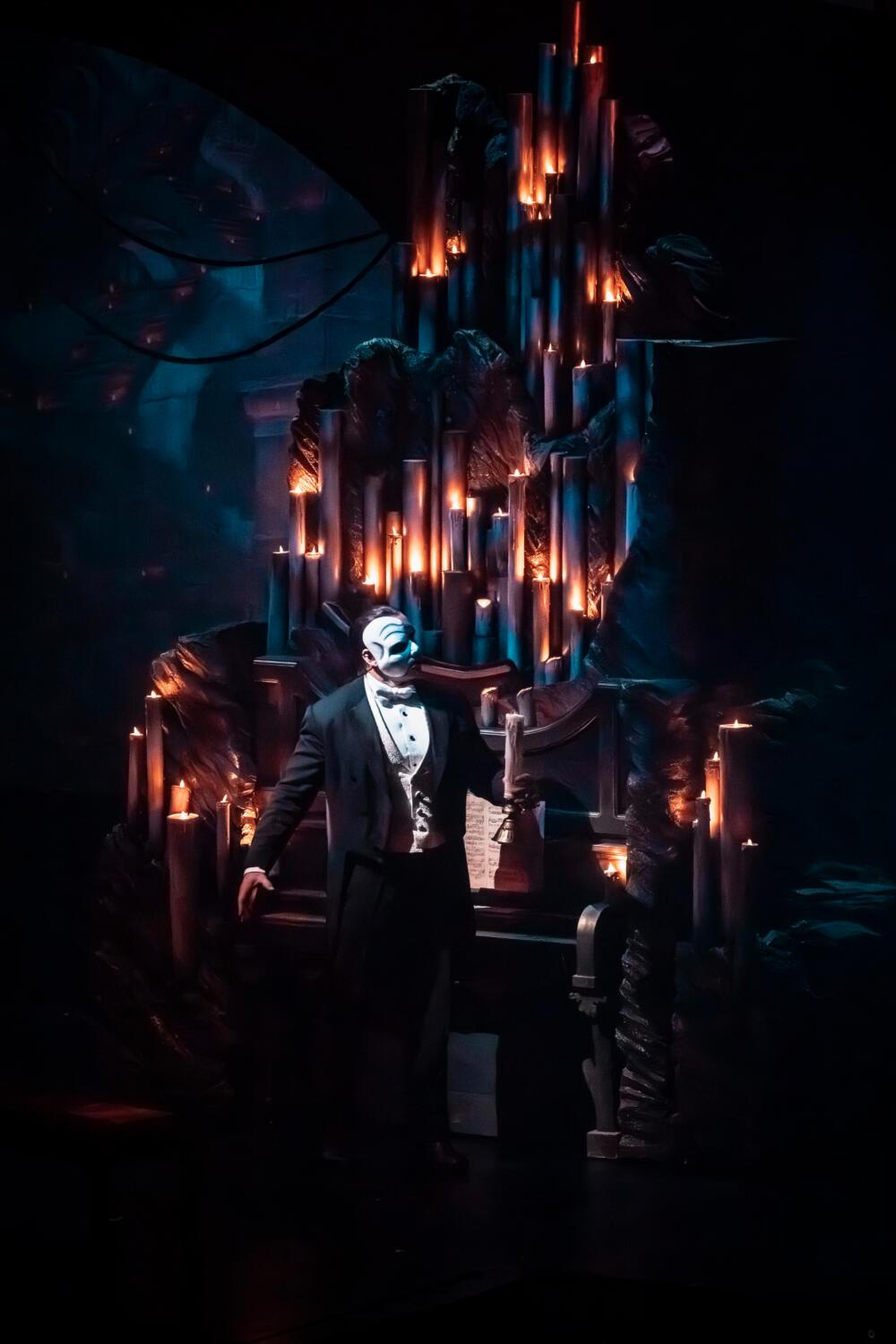
The Phantom of the Opera, by Andrew Lloyd Webber, directed by Federico Bellone, Spanish-language adaptation by Silvia Montesinos. Produced by Morris Gilbert, Claudio Carrera, OCESA, and LETSGO, in association with Alfonso J. González and María Elena Galindo.
A renewed narrative approach
Based on Gaston Leroux’s novel, the musical narrates the story of a mysterious figure who dwells beneath the Opéra de Paris. His obsession with Christine Daaé—a young soprano on the rise—sparks a tale of passion, genius, manipulation, and tragedy.
Bellone’s direction infuses the narrative with new emotional layers, emphasizing the human conflicts behind the legend: a Christine who is more empowered and psychologically complex, and a Phantom who becomes less mythic monster and more tormented man.
The Lloyd Webber universe arrives in Mexico
The production is supported by LW Entertainment, the global organization that manages and preserves Andrew Lloyd Webber’s creative legacy, overseeing works such as Cats, Evita, Jesus Christ Superstar, Sunset Boulevard, and School of Rock.
The premiere also introduces The Box Five Club, a new international platform for Lloyd Webber fans, offering exclusive content, unreleased materials, previews, and special benefits for upcoming productions.
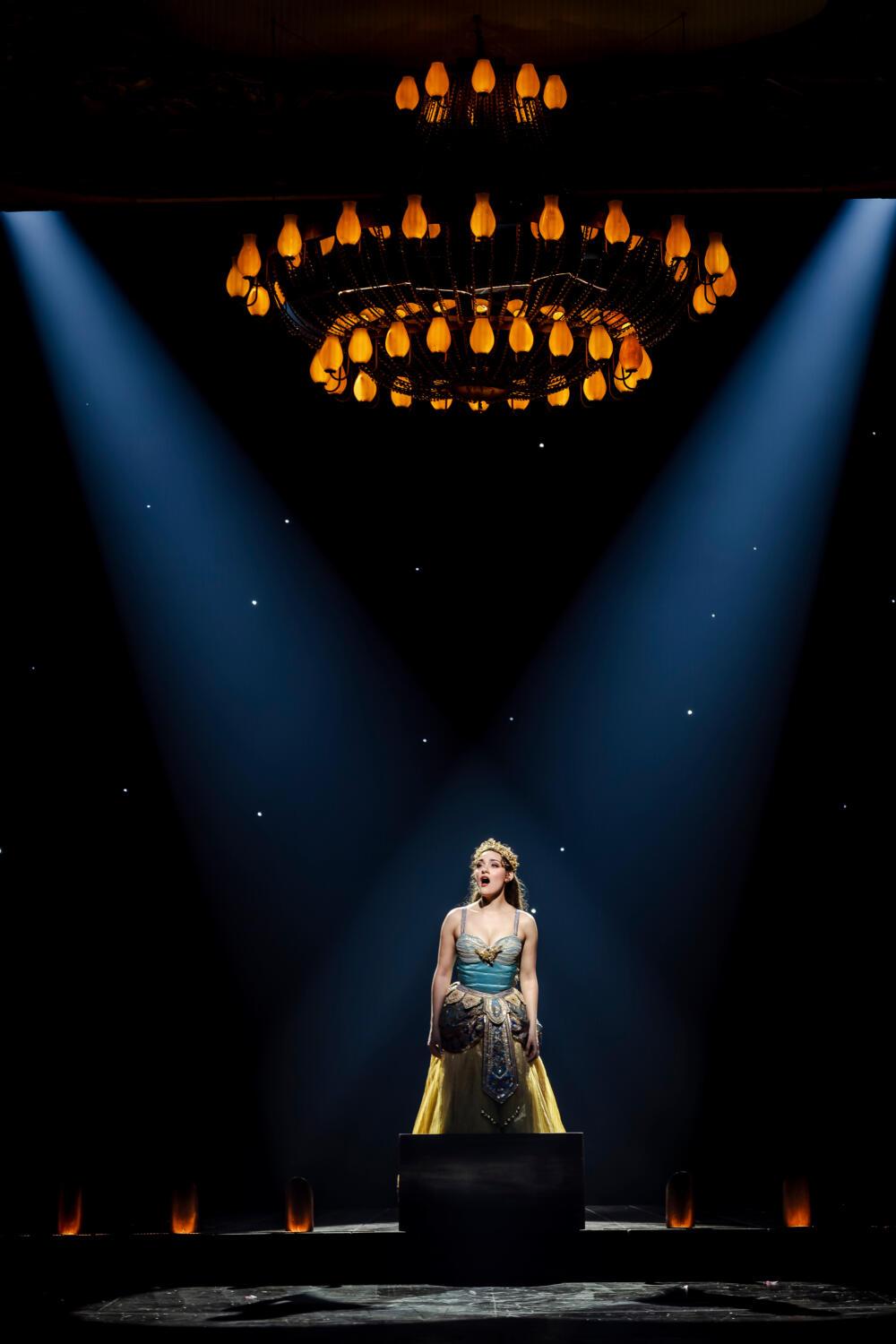
The Phantom of the Opera, by Andrew Lloyd Webber, directed by Federico Bellone, Spanish-language adaptation by Silvia Montesinos. Produced by Morris Gilbert, Claudio Carrera, OCESA, and LETSGO, in association with Alfonso J. González and María Elena Galindo.
What sets this version apart?
| Element | Original London & Broadway (Harold Prince) | Federico Bellone – Spain/Mexico Version |
| General Style | Opulent, grand, heavily Baroque; rooted in operatic tradition. | More agile, psychologically driven, cinematic in rhythm. |
| Set Design | Large painted backdrops, massive rotating structures, detailed 19th-century realism. | A new hybrid aesthetic: Baroque + modern digital design; fewer physical elements, greater use of projections and mapping. |
| Effects & Transitions | Heavy machinery; slower transitions using traditional theatrical devices. | Fast, immersive transitions using video art, automation, and illusionism. |
| Chandelier | Giant ornamental centerpiece dramatically descending over the audience with complex machinery. | Smaller but faster; relies on light, mapping, and kinetic effects for a modern cinematic shock. |
| Narrative Focus | Mystery, terror, and sweeping romantic tragedy. | A more contemporary focus on Christine’s perspective and a multidimensional Phantom. |
This post was written by the author in their personal capacity.The opinions expressed in this article are the author’s own and do not reflect the view of The Theatre Times, their staff or collaborators.
This post was written by Lorena Meeser.
The views expressed here belong to the author and do not necessarily reflect our views and opinions.