To read PART I of this essay, go to this link.
Having consulted with mana whenua[1]People with with authority over a certain area, in this case the people with authority over the area local to the University of Otago., and with Puketeraki Marae, a local papatipu[2]Ancestral Māori land held under customary title. marae north of Ōtepoti/Dunedin, we scheduled the class wānanga as a course requirement for the class. Thirty-two students, along with teachers and a handful of supporters, were welcomed onto Puketeraki Marae early on a Saturday morning in the first weekend in August, and a full weekend of immersive wānanga activities followed. The students and staff all slept, ate, took part in workshops, and lived the life of the marae for the weekend. For Peter & David Jansen, “The marae…is more than a place but also a “process” and a world view that dictates the way in which people interact.” (260). Teachers’ and learners’ relationships are very different in a marae context than in a traditional university classroom. Jansen and Jansen go on to state that, “in a Māori paradigm, students and teachers have interconnected interchangeable and complementary roles” and that “[t]he marae environment reflects this interplay of complementary roles and reciprocity“ (p. 261). Teachers are also learners and in some contexts learners become teachers.
For our wānanga we invited performance teachers who were also deeply immersed in the Māori world to teach workshops – ranging from movement and dance incorporating Māori ideological approaches – to the practice and philosophy of taonga pūoro (traditional Māori musical instruments). These workshops were interspersed with talks about the whakapapa or genealogy of the marae and the area, and with the daily activities of the marae: food-making, story-telling, rituals, eating, sleeping and cleaning. Students worked with each other, with their teachers and lecturers as well as with local people from the marae on all of these activities. The wānanga ended late on the Sunday afternoon.
We argue that the students engaged with aspects of kau-wae-runga or higher-level knowledge on the marae, attained deep learning, and were highly affected by the wānanga. For Jansen and Jansen the marae environment and modes of learning of wānanga support the mana (or status) of each learner by the fact that, “the diverse spiritual and cultural views of each person are treasured and encouraged” (Jansen and Jansen 262).
One of the pedagogical tools we used during the wānanga was tū taha kē ai (McCallum, Halba & Holmes 2011). Tū taha kē ai – loosely translated as ‘standing in a different perspective’ – is a southern Māori learning device sometimes used as an alternative to wānanga and sometimes used within wānanga. In the tū taha kē ai experiential learning model “an exchange of knowledge” takes place in an embodied way and often in the natural world or landscape, where “the learner walks alongside the teacher on multiple journeys…with a deeper layer of learning being facilitated on each journey” (Halba, McCallum and Holmes, 2011, p. 71). Tū taha kē ai is employed to teach creation stories, whakapapa whenua (genealogy and its relationship with land) and other knowledge as the student accompanies their tohunga (spiritual expert) and or kaumatua (respected elder) while travelling the land. On each consecutive journey, as they traverse the footsteps of their ancestors, more information will be disclosed, absorbed, remembered and understood. Knowledge transmission and understanding become a way of life between teacher and student, student and teacher (McCallum, Halba & Holmes 2011). This form of embodied, contextualized and emplaced knowledge transmission is consonant with theatrical rehearsals where actors and directors collaboratively explore and uncover meaning through an embodied engagement with place and space.
At our wānanga, traditional narratives to do with Puketeraki Marae itself and its surrounding landscape were told by experts from the marae and provided a theme for the students’ activities, which were taught through the principle of tu taha kē ai. Those stories of the marae were re-told in several contexts, each time with a deeper level of immersion and it provided a spine for performance-based activities, which, themselves, were a further means through which students understood and engaged with the tikanga of the marae.
The class wānanga provided an unexpected result: modes of learning at the wānanga provided specific, disciplinary benefits for Theatre Studies. The ways in which the wānanga promoted integrated learning had the effect of developing in students core theatrical skills of complicité, partner-centricity, adaptability, playfulness, sensitivity to others and an ensemble focus – all key elements of what Dick McCaw characterizes as aspects of the actor’s crucial quality of “presence” (in Evans. 172). For Zazzali, Toi Whakaari’s “Noho Marae”, whose processes are similar to the wānanga we undertook with our students, was “a pedagogical experience that was as communal as it was personal” (82) for the students; he goes on to remark that “[e]ach individual reflected on their growth as the group’s dynamic deepened throughout the week” (ibid.).
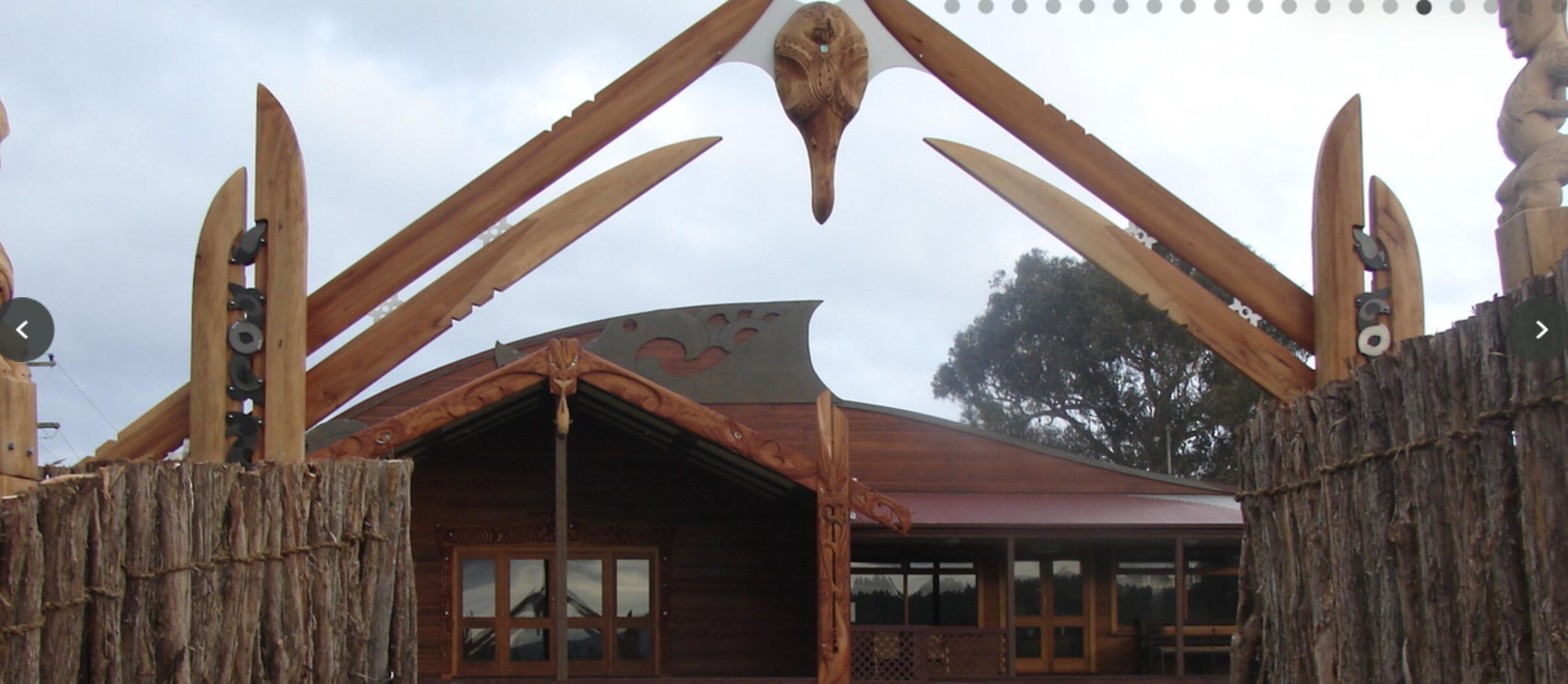
Puketeraki Marae. Photo credit: Kāti Huirapa Rūnaka ki Puketeraki.
Our students provided feedback to us about their responses to the wānanga in a number of forums and contexts including in the poroporoaki or departure ceremony on the marae, and later in the classroom, in written reports, and through interviews. We acknowledge that we were both teachers and researchers in this project (so there is a risk that students told us what they perceived we wanted to hear), but we argue that the triangulation of data collected from multiple sources accords it validity. A number of ideas came to the fore in our data collection. Firstly, although several concepts had been introduced in the classroom, it was at the wānanga where they were experienced in context and hence deeply learned by students. One student said,
“The mihimihi [statement of introduction] was taken more seriously on the marae. We did it in class but we didn’t do it so seriously. On the marae, it was as if we were introducing ourselves for the first time. We ‘understood’ the concepts from class but they came more naturally into context on the marae.” (Wānanga interview)
Another said “We were surrounded by the culture on the marae so we really understood what we learned in class.” (Wānanga interview)
Secondly, teaching and learning were facilitated in a more holistic way in the wānanga environment. A student interviewee remarked that,
On the marae we learned from our peers as well as from the teachers. We embraced the need to make our own decisions. There was a different hierarchy from the classroom. Passing or failing was taken away. We had the choice to participate on our own terms. (Wānanga interview)
Another student stated, “The relationship with the teachers was different on the marae. We had a more personal connection and shared the same space.” (Wānanga interview). Although most were in an unfamiliar situation (more than half – including the international students – had never been to a marae before), one interviewee noted that they felt less intimidated on the marae than they did in a more traditional university classroom, saying:
“I never felt like ‘damn, I should have known that’.” (Wānanga interview) Another stated that they felt they could speak up on the marae, because it was not so spatially formal as a western classroom, and remarked “space and place inform how we interact.” (Wānanga interview). Another student told us “I’m worried that questions in the classroom might be met with derision. On the marae, people were ok to ask and others were interested in the answer. People wanted to share information and give things.” (Wānanga interview)
As previously noted, we argue that the wānanga provided the students with deep and life-long learning. Although our students’ experiences of the wānanga were to do with pedagogy, they also traversed that more potent territory of the heart. One interviewee said
Words contain knowledge but practical knowledge empowers you even more. It creates more meaning for the knowledge – how to share it, how to use it. Experiencing immerses you in knowledge so deeply. (Wānanga interview)
That student went on, “It encouraged me to question, ‘Why can’t it be like this when we go back to university?’ I look for more, even now; I look for more experience.” (Wānanga interview) Another student remarked,
“At uni, knowledge is piled on you and you have to sift through it. At the wānanga, you follow the crumbs. There is respect. You acknowledge where you are going and what you want out of it.…It changed my course of study for the future.” (Wānanga interview)
This particular student remarked that they were ‘fed’ rather than ‘led’ on the marae (Wānanga interview), and this idea aligns with Paringatai and Wharerau’s point that in the tradition wānanga context “expert or elder (pūkenga) took a candidate under their care and “fed” them knowledge” (41). The same student noted that they gained an insight into their own learning process from the wānanga; they found reasons for doing things, rather than ‘floating’ through the system (Wānanga interview). Another said: “The wānanga carved into status gaps. The teachers still had status, but a fluid status. At the wānanga we were guided rather than being pulled along.” (Wānanga interview) And later that student remarked, “You can ask for help at the wānanga; you can’t ask for help in the same way when you get back to uni.” (Wānanga interview)
In a similar vein, upon the class’ return to university, familiar signifiers and behaviors gradually seeped back in. On the marae, a self-determining agenda prevailed; students took responsibility for pushing mattresses aside to begin practical sessions, saw a job that needed doing and did it – be it setting a table, doing dishes, taking notes, helping a peer, working alongside staff and tāngata whenua[3]People of the land. at the wānanga. However, upon returning to the classroom they waited for us to reassume to our roles as lecturers in a more traditional western academic sense. When we enquired about this behavior when we interviewed students for this project, the interviewees acknowledged this situation had happened. One of the students we interviewed said, “The further we got from the wānanga some strands of connection start to untwine. The complexities of uni life take over.” (Wānanga interview). Another said, “Coming back disconnects you from that environment” (Wānanga interview) and hence from the way of being that the wānanga encouraged.
This project has sought to add to knowledge and understanding to do with the place of immersive wānanga processes that focus on deep, subject-specific learning within western pedagogical institutions such as the university. As we summarize the process, we resist ‘spinning’ the wānanga into a utopic world of idyllic bliss; we were troubled by the possibility of the wānanga being seen as a site where privileged Pākehā seek – as it were – to ‘know the other’. However, the wānanga was not so much about ‘knowing the other’ as knowing oneself, and what one is capable of – one’s own potential. We compare the wānanga model to the conventional university classroom, not as a mechanism for divisiveness but to grasp what can be learned through re-evaluating existing educational and social structures. Wānanga represents a process of revival of, and reconnection to, knowledge, whose outcome may be a new understanding – a hybrid model, perhaps, underpinned by mātauranga Māori (Māori knowledge and scholarship). Applying wānanga principles to teaching and learning is a way of imagining a more hopeful future in which the remnants of colonial hierarchies are traded for a more immersive and inclusive learning environment, no longer a contested territory but a hopeful harmony. Our challenge would be for every university course in Aotearoa to include wānanga as a teaching and learning strategy, not a ‘marae weekend’ as an embellishment to the curriculum – a grace-note, if you will – but as the underlying beat itself. We argue that learning from the past through the medium of wānanga has a significant place in contemporary society. Hence our work on wānanga (cor)responds to Te Ahukaramū Charles Royal’s call for scholars to “position cultural retention and revitalization within a larger paradigm of cultural creativity, one which looks to the wisdom of the past to inspire responses to the challenges of the present and future” (Royal 2005, 134), and for wānanga as “a process by which we can come to some kind of new idea or understanding” (Royal 2005, 141)
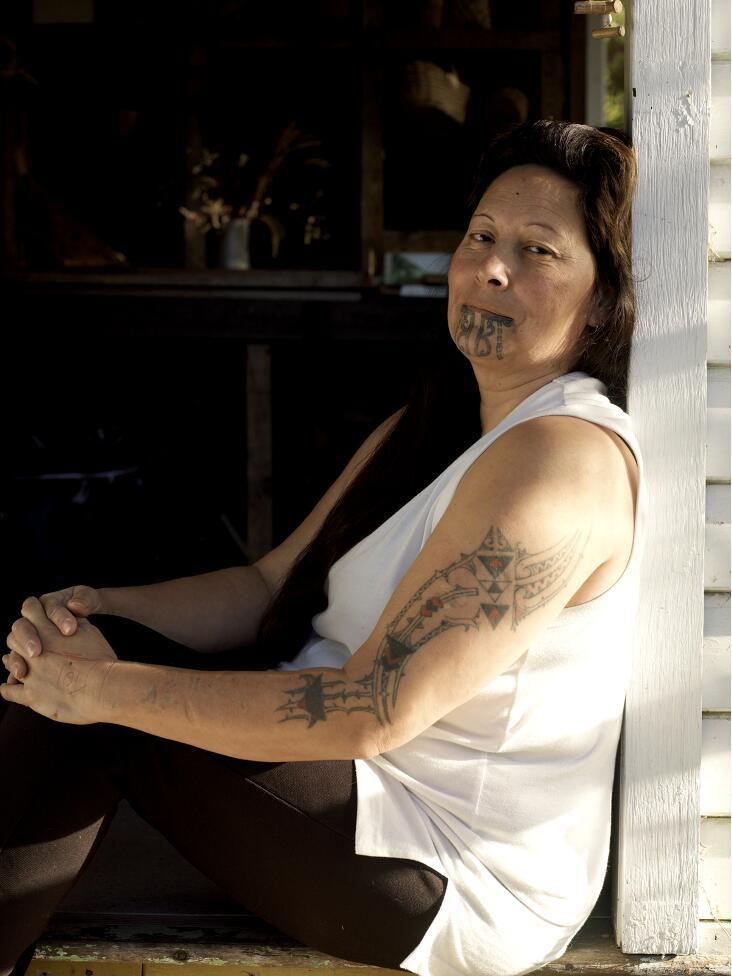
Rua McCallum
This article is dedicated to the memory of Rua McCallum – teacher, kaitiaki, scholar, performance practitioner, and playwright – who passed away on May 9th 2024.
Works cited
Edwards, Shane. “Ako Wānanga: The Art, Science and Spiritual Endeavour of Teaching and
Learning in a Wānanga: A Localised Approach.” International Journal of Pedagogical Innovations, No. 2, 2013, pp. 69 – 73.
Halba, Hilary and Rua McCallum “Wānanga Interviews” survey, 2015 – 2017.
Halba, Hilary, Rua McCallum and Huata Holmes. “Tū Taha, Tū Kaha: Transcultural
Dialogues.” Australasian Drama Studies, 59, pp. 60-87.
Jansen, Peter and David Jansen. “The Influence of Place and Culture on Practice-Based
Learning.” Realising Exemplary Practice-Based Education, Vol 7, 2013, pp. 257 – 264.
Johnson, Jay T. “Biculturalism, Resource Management and Indigenous Self-Determination.”
PhD thesis, University of Hawai’i, 2003.
Jones, Alison. “The Limits of Cross-cultural Dialogue: Pedagogy, Desire, and Absolution in
the Classroom”. Educational Theory, Vol. 49, Issue 3, 1999, 299 – 316.
McCaw, Dick. “Introduction to Part V: Presence, Physicality, Play and Communion.” In Evans,
Mark (ed.). The Actor Training Reader. Oxon. And New York: Routledge, 2015.
Paringatai, Karyn and Marcelle Wharerau. “Tūnga ki te Marae, Tau Ana: Culturally
Transformative Learning in Universities.” In Schick, Kate and Claire Timperley (eds.). Subversive Pedagogies: Radical Possibilities in the Academy. London and New York: Routledge, 2022, pp. 40 – 61.
Potiki, Roma. “A Maori point of view: the journey from anxiety to confidence.” Australasian
Drama Studies, Vol. 18, 1991, pp. 57 – 63.
Ritchie, James. Becoming Bicultural. Wellington: Huia, 1992.
Royal, Te Ahukaramū Charles. “Exploring Indigenous Knowledge.” Proceedings of the
Indigenous Knowledges Conference Reconciling Academic Priorities with Indigenous Realities, 2005, pp 133 – 148.
Te Aka Māori Dictionary. < https://maoridictionary.co.nz/> Accessed 31st March 2026.
Zazzali, Peter. “Culture, Identity and Actor Training: Indigeneity in New Zealand’s National
Drama School.” Theatre Research International, Vol. 46, Issue 1, 2021, pp. 71 –88.
We gratefully acknowledge the support of University Teaching Development Grant from Ōtakou Whakaihu Waka/the University of Otago, which made this research possible.
This post was written by the author in their personal capacity.The opinions expressed in this article are the author’s own and do not reflect the view of The Theatre Times, their staff or collaborators.