In March, FOG – Milan’s annual performing arts festival – hosted Handle with Care, a production by Ontroerend Goed, the well-known performance-group from Ghent in Belgium. Ontroerend Goed, its name can be roughly translated as “Feel Estate”, creates self-devised work triggered by the here and now. Consequently, during a Ontroerend Goed show, ‘participants’ are usually invited to take part as well as observe. I use the word “participant” deliberately, since the idea of a spectator who sits in a theatre and watches the performance of an actor or actors onstage, as in much postdramatic theatre, is turned on its head.
The collective first emerged on the international scene in 2007, with The Smile Off Your Face, a one-on-one show in which audience members are tied to a wheelchair and then blindfolded. Instead, the production that brought them international fame, Once and For All, explored issues of adolescence.
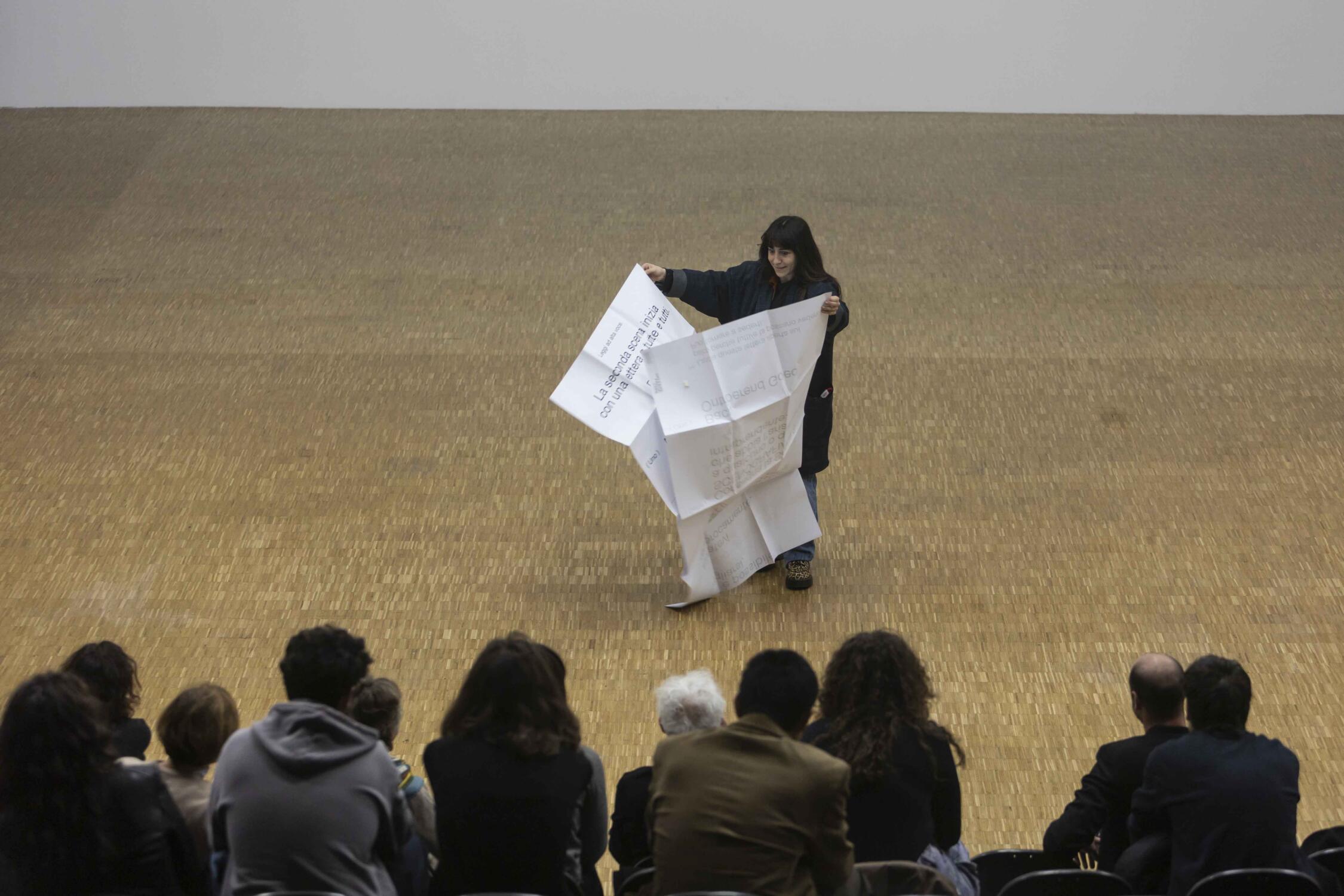
Handle with Care, by Ontroerend Goed. Photo credits: Lorenza Daverio.
Developed during the Coronavirus period, Handle with Care, has been translated into many languages and seen in diverse parts of the world. In a program note, Alexander Devriendt, one of the group’s founder members, indicates that the work completes the trilogy, An Hour Spent with Others, made up of After Funeral and Thanks for being here.
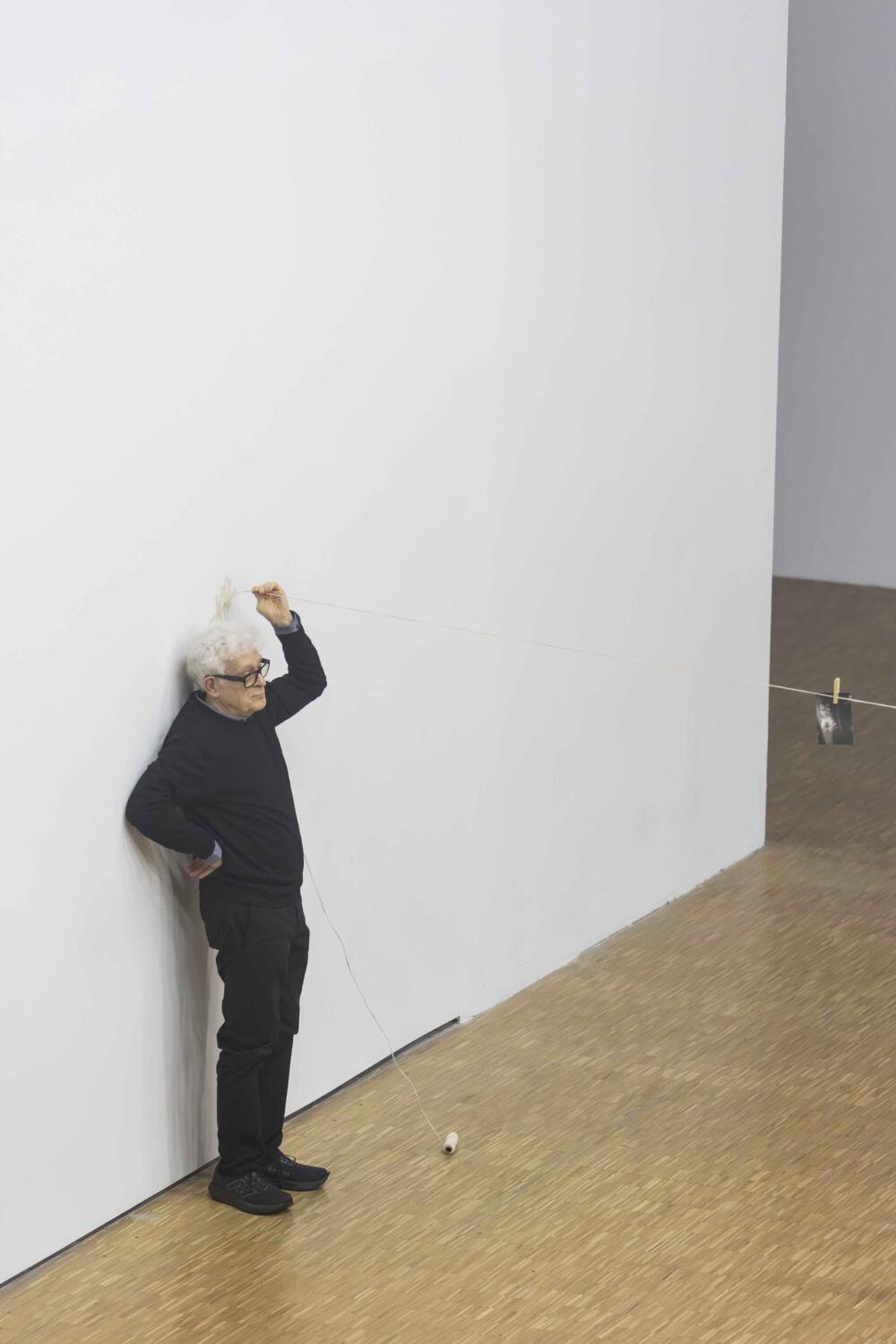
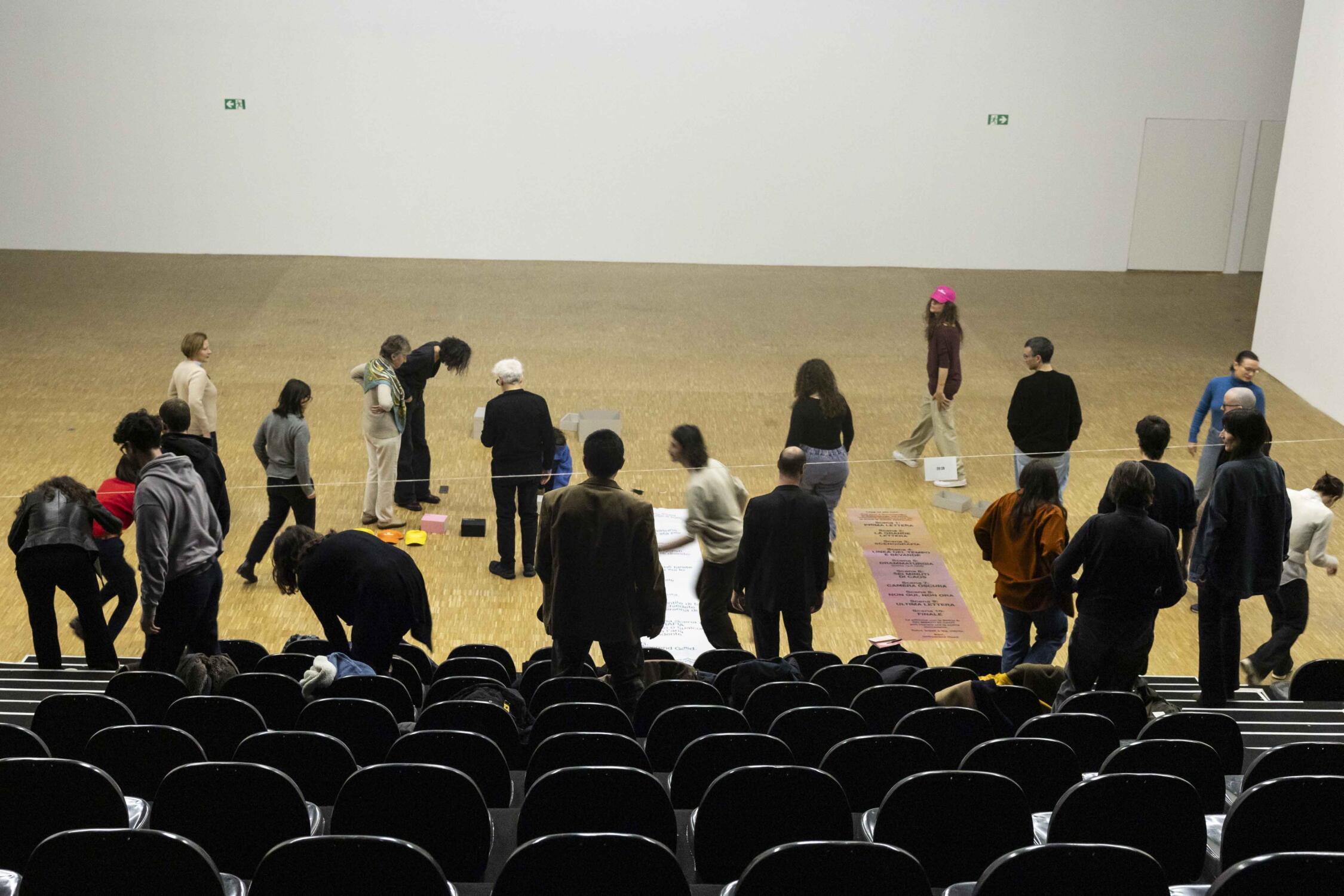
On the evening I attended Handle with Care, the audience of about thirty were shown into the fully-lit Gallery space of the Triennale and invited to choose a seat in the front rows of the raked seating area. A large cardboard box, with a label, saying “Handle with Care”, stood centre stage. This had been previously sent to the theatre, with the instructions that when the show was about to start, an audience member would open it, take out a piece of paper and read the instructions aloud for the benefit of the group. This meant there were no actors, no technicians, just a box and the theatregoers who had come to see the show.
Handle with Care, by Ontroerend Goed. Photo credits: Lorenza Daverio.
Proceedings kicked off, with a participant, leaving his seat, duly opening the box and reading the instructions to the rest of us. Another audience member pulled out a clothes line and tape from the box, as well as a card telling her to hang the line across the stage. Another written instruction indicated that this was a collaborative enterprise, and the woman called upon somebody to help her. We watched as the pair of them set about fathoming where and how exactly to hang the line. As things warmed up, participants flocked into the acting area, retrieving small paper cards with further instructions from the box. I drew out a card which told me to count my fellow participants and tell them the result. For a moment, all eyes were pinned on me as I spoke in a loud voice, stating the number of people in the room. I drew another card from the box, with a crayon attached to it. This time I was told to sketch a picture of my great-great grandmother and show it to the other participants, asking for their feedback. This, like other exercises, prompted increased interaction among the group. A group photo, which entailed deciding where exactly we would stand and sit, was another device, making one feel part of a shared experience. After about an hour, somebody pulled out a card from the box, inviting the rest of us to take away whatever we wanted of the paper and props scattered around the stage area. By this time, participants had begun to socialise, the various games and tasks having broken down many barriers. The noise grew louder as we talked and mingled together, deciding which props to choose as a souvenir.
Handle with Care, by Ontroerend Goed. Photo credits: Lorenza Daverio.
In the presentation of FOG, the curators state that “the selected productions radically explore themes that are poetic and surprising, urgent and necessary”. It isn’t hard to see how this production fits into their programming. From the word go, the choices participants made and the way we handled our tasks proved unpredictable, keeping one constantly alert to find out and watch what was happening. At a time, when live human interconnection and interaction are becoming less frequent, this form of theatre places them squarely at the forefront. For just an hour, one is invited to interact in the here and now, with total strangers; an interaction, which should hopefully be carried out ‘with care’.
Watch out for more reviews from FOG in the coming weeks.
This post was written by the author in their personal capacity.The opinions expressed in this article are the author’s own and do not reflect the view of The Theatre Times, their staff or collaborators.
This post was written by Margaret Rose.
The views expressed here belong to the author and do not necessarily reflect our views and opinions.