Dostoevsky is hard to read, harder to translate, and even harder to adapt for stage. The Mutt by Streetcar Productions and Art Against Humanity (run from September 10-21, 2025 at IATI Theater, New York) is a bold new attempt to stage The Brothers Karamazov. Albeit an adaptation of one small chapter, just over a dozen pages from the two-volume novel, this production captures, re-imagines, and presents the full breadth and depth of Dostoevsky’s epic including its key theme—relationships between God, the devil, and humans.
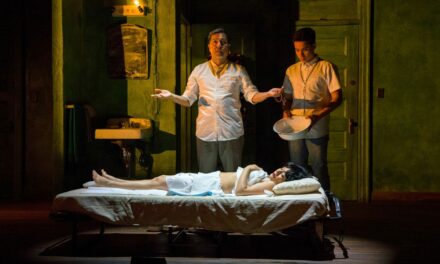
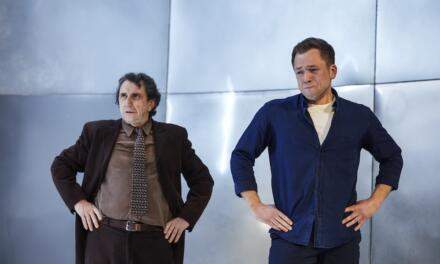
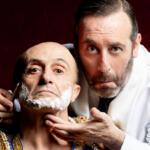
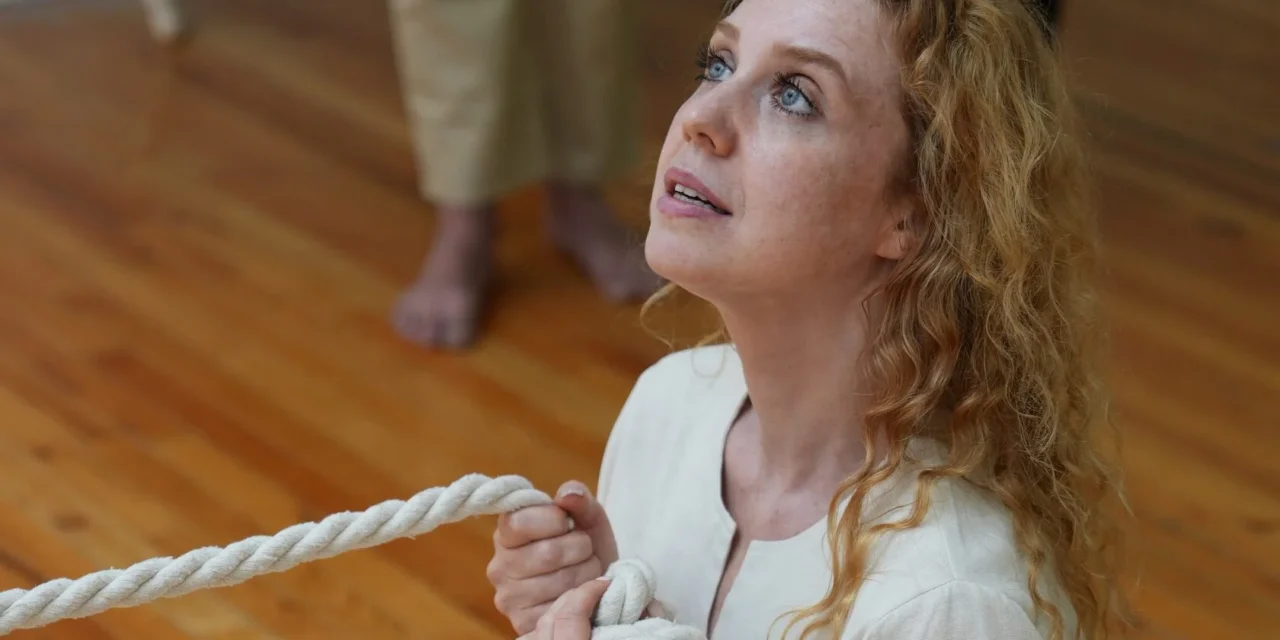
Two adults—Alyosha Karamazov (Fabio Bernardis) and Captain Snegirev (Marcus Troy and Sasha Litovchenko)—and three teenagers—Kolya Krasotkin (Benjamin Nowak), Smurov (Tommy Dougherty), and Ilyusha Snegirev (Jaden Cavalleri)—engage in dramatic interactions centered around a stray mutt named Zhuchka (Alina Mihailevschi and Anoushka Nesterova). However, those interactions are provoked by Zhuchka, and developing drama is propelled by her. Zhuchka is a driving force behind the characters’ actions, a dark force, the black dog of Goethe’s Faust, Mephistopheles, the devil.
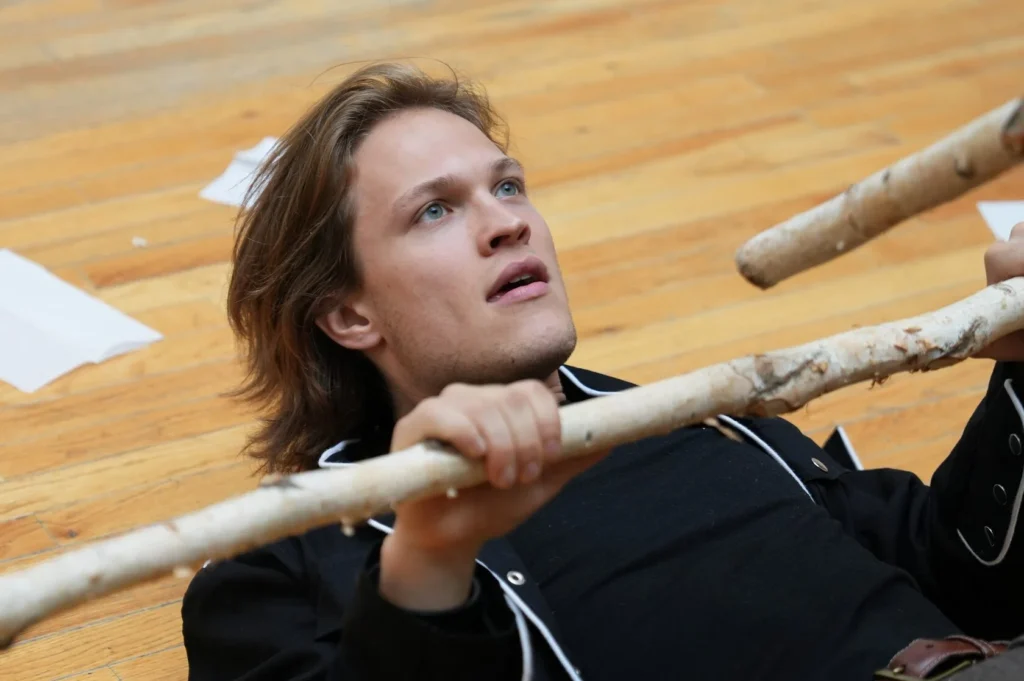
Benjamin Nowak (Kolya Krasotkin). Photographed by Alexander von Busch.
Zhuchka’s challenge to Kolya Krasotkin and Alyosha Karamazov parallels the Grand Inquisitor’s challenge to Christ in the “The Legend of the Grand Inquisitor,” an important part of the Dostoevsky’s novel. The Inquisitor blames Jesus that by giving humans freedom of will (that is, freedom to make mistakes and creating chaos), he deprived humanity from redemption and doomed it to suffer. However, Zhuchka, the devil, blames Krasotkin of not using his free will to the fullest, even if it denies God and leads to suffering “for suffering is life. Without suffering, what pleasure would there be in it—it would all turn into one endless prayer: it is holy, but rather dull.”
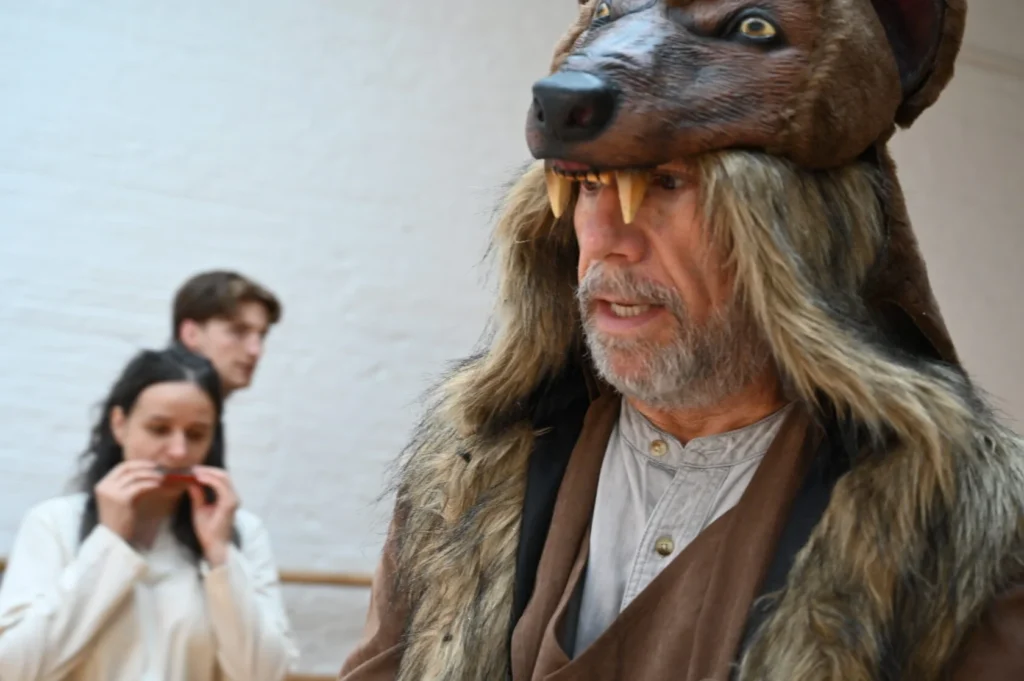
Marcus Troy (Captain Snegirev). Photographed by Alexander von Busch.
Zhuchka plays the role of the devil presenting herself as a cute animal and a helpless creature who gets killed by Ilyusha only to get resurrected and serve him obediently. Yet, arrogantly, she believes to be a better devil than Mephistopheles himself. If Mephistopheles “desires evil, yet does only good,” Zhuchka boasts that she “perhaps the only one in all of nature who loves the truth and sincerely desires good.” Here, creators of “The Mutt” make a bridge between The Brothers Karamazov and Crime and Punishment where Kolya Krasotkin with his boyish bravado instigated by Zhuchka meets Rodion Raskolnikov who carries his own Zhuchka deep inside his soul.
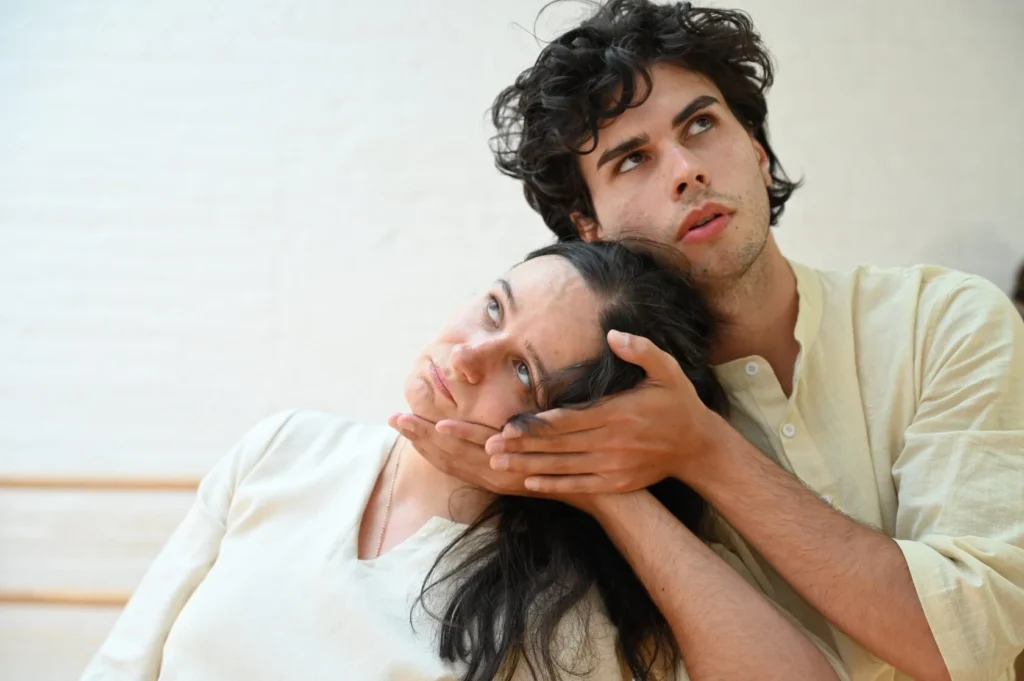
Alina Mihailevschi (Zhuchka) and Jaden Cavalleri (Ilyusha Snegirev). Photographed by Alexander von Busch.
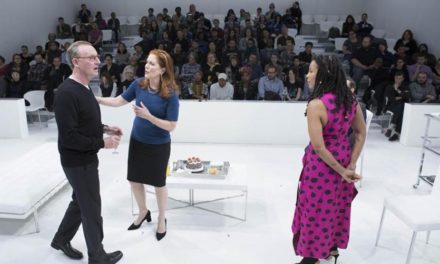
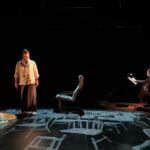
The story of Zhuchka is told in a unique, mystical language of symbolist theater that reinforces Dostoevsky’s prose. The script (by Anoushka Nesterova) is a collage of legends and stories which frame the Dostoevsky’s text. The show as a whole (directed by Anoushka Nesterova and Elena Che) is a rich multimedia event that synthesizes a minimalistic set (by Alyona Sotnikova), music (by The Jazz Pilgrim), meticulously choreographed movement (by Gisela Quinteros), singing, puppetry, and film (by Anastasia Slepchenkova).
This post was written by the author in their personal capacity.The opinions expressed in this article are the author’s own and do not reflect the view of The Theatre Times, their staff or collaborators.
This post was written by Vassili Schedrin.
The views expressed here belong to the author and do not necessarily reflect our views and opinions.