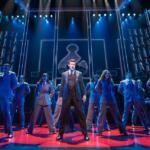

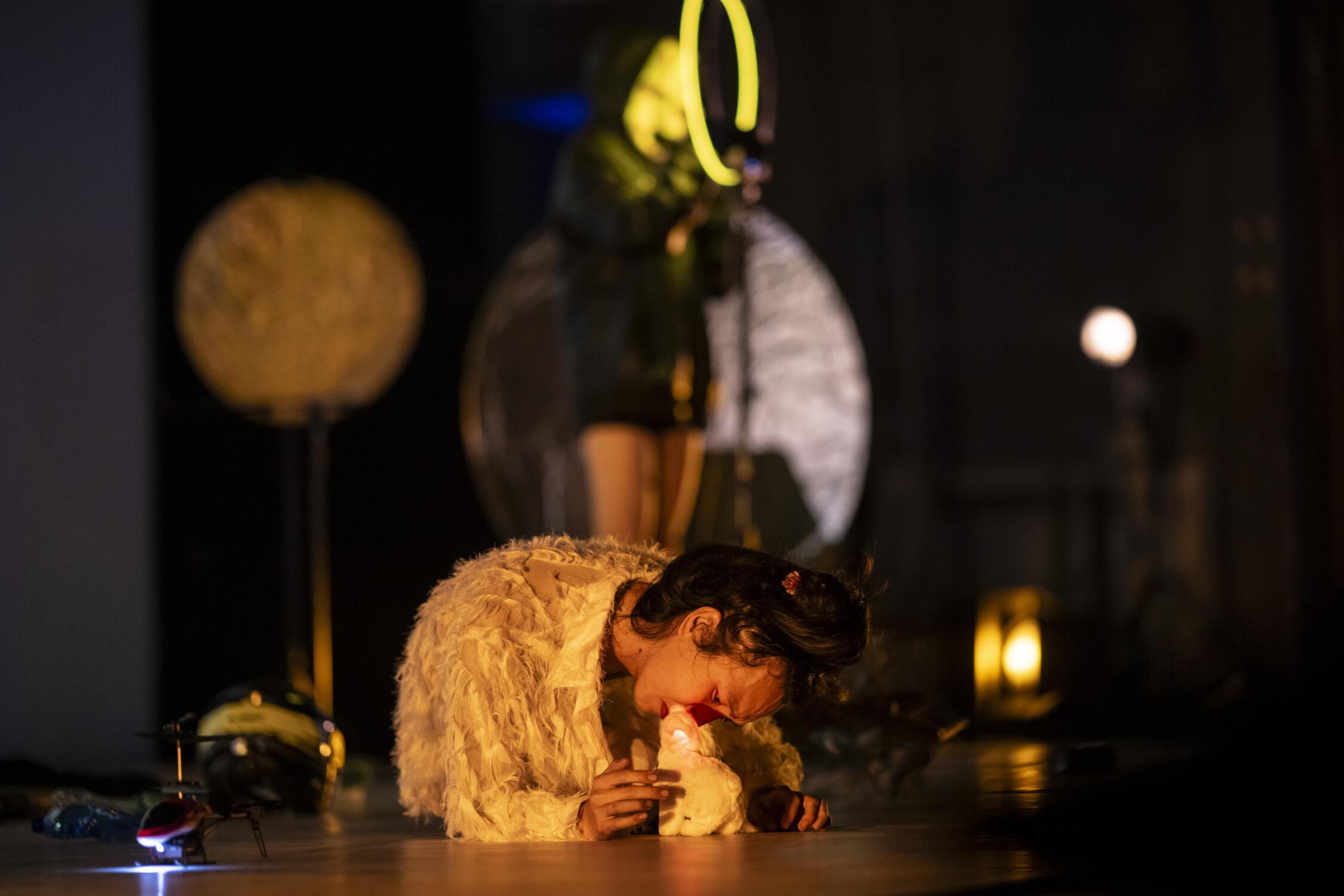
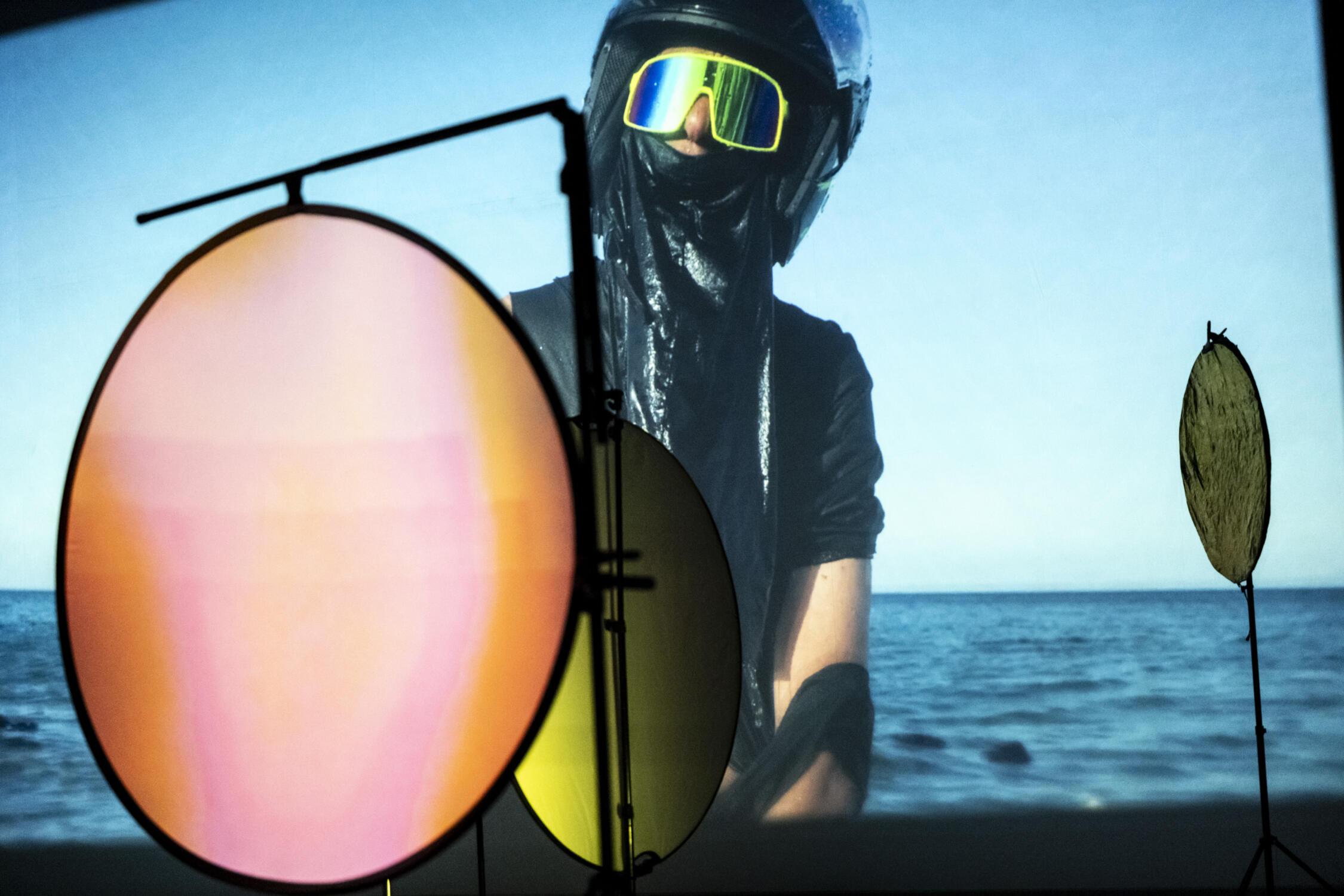
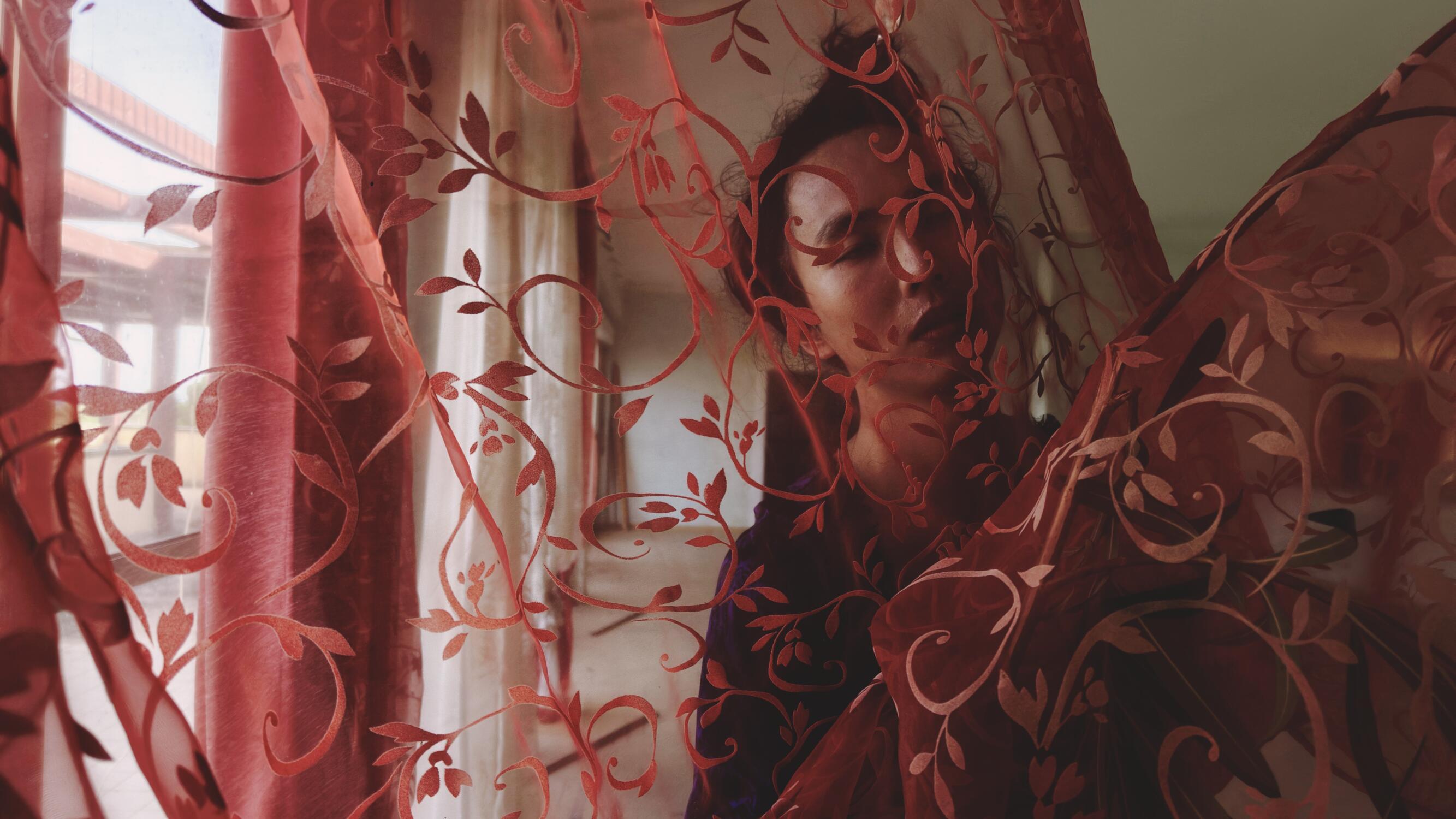
Milan’s international festival, FOG, continues with productions from Italy and many parts of the globe. In late March I caught Frankenstein (History of Hate), a production by the much-acclaimed company, MOTUS, founded in Rimini, central Italy, in 1991 by Enrico Casagrande e Daniela Nicolò. From the outset, these innovative practitioners included musicians, designers and sculptors in their creative process in order to develop hybrid theatrical forms, characterized by a strong social and political intent. The present show, mixing film and live theatre, continues their audacious research. Motus define the present work as ‘a performed film’, during which the onstage action is in constant dialogue with sequences running on a large upstage screen as well as small screens right and left, so providing multiple perspectives on Mary Shelley’s classical story, Frankenstein; or, the Modern Prometheus (1816).
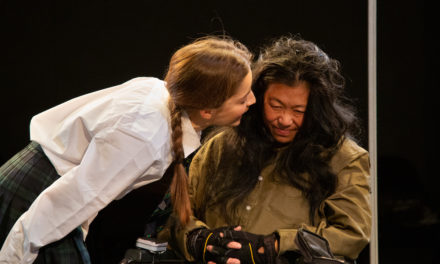
Frankenstein, concept and staging Daniela Nicolò & Enrico Casagrande. Photo Credits: Andrea Macchia.
Still, given the abundance of film, television and theatrical adaptations of Shelley’s Frankenstein, one might legitimately ask why make another? The answer lies in Motus’s wish to explore and respond to the question: “what happens when we don’t feel listened to, when otherness is seen as a threat and not an opportunity?” And they present their findings in the form of a diptych, made up of Frankenstein (A Love Story) and Frankenstein (History of Hate), of which I saw the second part.
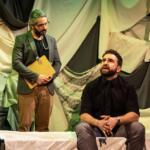
Daniela Nicolò, with research and dramaturgy by Ilenia Caleo, has adapted Mary Shelley’s story, deploying the novel’s narrative frame, consisting in letters, which Robert Walton, a ship’s Captain, addressed to his sister Margaret. Onstage, in a desolate No Man’s Land, Walton (a charismatic Tomiwa Samson Segun Aina) tells Margaret (Yuan Hu) Victor Frankenstein’s story. Walton met Victor at the North Pole, where the latter told him how he had succeeded in bringing a Creature to life and about the relationship that developed between them. The Creature’s transformation stands central to the adaptation: “I was benevolent and good; misery made me a fiend.” (Mary Shelley, Frankenstein), and in this second part of the diptych, themes of isolation, hate and marginality are explored as the Creature changes from feeling love to feeling overriding hate towards Frankenstein. Enrico Casagrande, dressed in a hood, heavy boots and contemporary motorbike gear, offers a superb interpretation of the Creature, while onscreen Silvia Calderoni, a longtime associate of Motus, embodies a fascinating androgynous Doctor Frankenstein. The Creature’s monologues incite our pity as he explains how he is forced to carry hell inside himself and so is involved in an eternal war.
Frankenstein, concept and staging Daniela Nicolò & Enrico Casagrande. Photo Credits: Andrea Macchia.
Later in this ‘performed film’, film sequences transport us to a remote inland place in Calabria, where Victor doggedly pursues his ‘hideous progeny’. The final moments unfold in a rough sea and on a beach, where Creator and Creature are reunited. Here the latter offers Victor flowers (both on screen and onstage), a gesture that might be interpreted as a final gesture of reconciliation, when the hate they had felt subsides.
Bringing this probing exploration to its conclusion, onscreen, several people of different ages try to define what hate means for them. Their statements are part of Motus’s award-winning documentary, HATE, 2024.
Frankenstein, concept and staging Daniela Nicolò & Enrico Casagrande. Photo Credits: Isabella Marino.
Concept and staging: Daniela Nicolò & Enrico Casagrande
With Tomiwa Samson Segun Aina, Yuan Hu, Enrico Casagrande
In video: Silvia Calderoni e Alexia Sarantopoulou
Dramaturgy: Daniela Nicolò
Research and assistant dramaturg: Ilenia Caleo
Video: Vladimir Bertozzi
Sound: Demetrio Cecchitelli
Assistant directors: Astrid Risberg e Juliann Louise Larsen
Video assistant: Isabella Marino
Set and costumes: Daniela Nicolò & Enrico Casagrande
Sound: Martina Ciavatta
Lighting and video: Simona Gallo
Video technician: Theo Longuemare
Production: Elena Marinelli
Produced by Motus, with Emilia Romagna Teatro ERT / Teatro Nazionale, Teatro Nazionale di Genova, Snaporazverein (CH) and Romaeuropa Festival.
Video contribution from the documentary [ÒDIO], winner of the ITALIAN COUNCIL award, 2024.
This post was written by the author in their personal capacity.The opinions expressed in this article are the author’s own and do not reflect the view of The Theatre Times, their staff or collaborators.
This post was written by Margaret Rose.
The views expressed here belong to the author and do not necessarily reflect our views and opinions.