For Lincoln Center for the Performing Arts, home to the New York Philharmonic, the Metropolitan Opera, and the New York City Ballet, redefining the modern stage is a delicate dance: honoring rich heritage while expanding how storytelling lives both under the spotlight and beyond the proscenium.
Behind this cultural engine, powered by eleven resident organizations, Laura Ives Colony, senior vice president of Advancement & Innovation, and Jordana Leigh, senior vice president of Artistic Programming, break down what it takes to evolve a global cultural destination while reshaping accessibility and artistic belonging. In doing so, they bring the healing, restorative power of the arts into sharper focus.
Long defined by its classical roots and high-art traditions, Lincoln Center is dismantling the subtle velvet ropes that historically projected an aura of exclusivity. From the massive Summer for the City festival to augmented reality, haptic wearables, the Collider Fellowship, and alliances with Chanel and JPMorgan Chase, Lincoln Center is expanding storytelling frontiers while preserving the core power of shared, live art.
ALEXANDER FATOUROS: Arts institutions today aren’t just competing with each other, they’re competing with streaming and digital entertainment for share of time. What non-traditional channels or brand partnerships are proving most vital for Lincoln Center to stay relevant?
LAURA IVES COLONY: “Yeah, this one is so interesting. You know, we talk a lot about this word relevance, right? What I see emerging as the most critical point of relevance is this strong desire for shared human experience. I do not think that anything can replicate that, and our audiences can truly feel that when they’re in the room together, they’re coming together to have this shared experience. We’re living in a world where we have fewer and fewer shared experiences on a daily basis.
I think, you know, that is something that the arts uniquely can offer. Even going back to the point about well-being and the positive impact that it has on you from a mental health perspective—audiences statistically leave the hall with lower heart rate, lowered blood pressure, a calmer sense of breathing, stress relief. All of these things, and that’s certainly felt.
So that shared human experience, creating spaces for community in many different senses of the word—that will always be relevant. And I think, if anything—and I’ll go out on a limb and say this—that’s going to become more and more rare as different forms of technology are embedded in our lives in different ways. So this power of coming together as people, as humans, in person for these experiences—you know, there’s only really like one way to stay [relevant]… that will be the most relevant thing that people want, I think, moving forward—in terms of consistency and what ecosystems and environments like performing arts centers can offer, and maybe someday only they can offer—you know, so that’s a big piece of it for me.
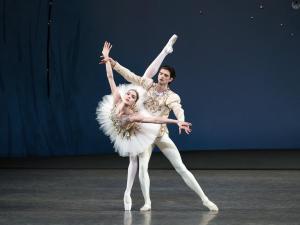
Mira Nadon and Peter Walker in George Balanchine’s Jewels, New York City Ballet at the David H. Koch Theater. Photo: Erin Baiano.
In terms of partnerships—I mean, and we can interpret that in a lot of different ways too. From brands, you know, when we’re looking from a business development standpoint, to be very focused and literal, it really does come back to audience often. I mean, we really value our partners, and we really do a thorough job of thinking through what partners make good sense for Lincoln Center, so that we are aligned. We’re either aligned or we’re complementary in ways that, you know, we’re partnering and collaborating to bring their audiences to our campus. You know, they are offering something unique and special like this shared human experience to their audiences.
So it’s definitely audience development and the value that we place on new audience members and bringing people to the campus. A great example of this would be a partner like JPMorgan Chase from a business development standpoint, because they are also an iconic, major New York institution. They have businesses and customers across the entire funnel; they really do a beautiful job in helping us to amplify our message from a commercial standpoint. But they also are huge funders and supporters of Summer for the City. So again, making this free programming possible and helping us to push the envelope on some of the other experiences that people are afforded through their support—like culinary arts experiences and partnerships with The Infatuation, making sure that a lot of different cultures are represented in our culinary arts experiences, and they’re aligned with our artistic programming.
So partners that really are very additive to our guest experience too, and what the audience feels when we’re hosting them—really, that really matters. It goes a really long way, and they offer expertise in ways that, you know, we really benefit from. We have incredible teams here who run that, but we are doing things at such scale that having partners to help us and to support those efforts is just tremendous. The other thing that we think about—I’ll give two other examples. One is in storytelling and sort of the narrative, right? Like, so that reach through beautiful content—whether it’s editorial or video content or social content—really helping us to tell the story to different audiences, and also creating content together.
So, you know, one example of this that is top of mind—because it happened last week—is our BAAND Together Dance Festival, and the work that we do with Chanel, who makes that festival possible. They really work very closely with our teams and the artistic directors to create content around all five companies who participate. It’s a major editorial moment for us in huge publications, both digitally and in print, which is great. So that storytelling piece is really important to us when we’re thinking about partnerships and who, you know, we trust to align our brand with as Lincoln Center for the Performing Arts.
And then another one I would say that’s just a standout for us—it’s been a long-standing partnership that’s evolved a lot around well-being—is NewYork-Presbyterian, and the authority that they offer from a wellness perspective. So wellness and health and well-being… for some reason, when you say wellness, sometimes it feels a little light. It’s like really core well-being.
So for us to have that expertise as we move into this space of being, you know, leaders in well-being and in the arts field, and really looking at the science and the research—I talked a little bit about this before, but the actual outsized positive impact on our guests through these arts experiences—and demonstrating that through partnerships with not only NewYork-Presbyterian, but others and leaders in the space, that’s a really meaningful space for us, you know. We have a responsibility to steward that work to make sure that impact is reaching our audience members. But we are an arts and culture center, right? So we want the authority and the science and the doctors to help us shape that and back that, and so that type of expertise is something else that we really look for, right? The trusted partner.

A scene from the Metropolitan Opera’s revival of Strauss’s Der Rosenkavalier, opening March 24, 2027. Photo: Karen Almond / Met Opera.
AF: You mentioned Chanel, but Louis Vuitton also comes to mind. While in Europe, I noticed an ad for an art exhibition at Espace Louis Vuitton in Venice, where they collaborate with the city’s Civic Museums (MUVE) to display historical masterpieces alongside contemporary art. It’s fun to see fashion houses engaging in such inventive cultural partnerships today.
LC: Absolutely, it is. I mean, truly, and I think it’s so interesting because people can look at sort of the surface level, like, ‘Oh, I guess it makes sense, fashion and art.’ But if you really look, it’s not surface level for a lot of these organizations. They have valued and supported the arts since their inception—for Chanel, it’s Coco Chanel, and dance. Dance has been ingrained in that house for decades and decades, if not centuries.
So yeah, we think about those partnerships again. The organizations that have a really deep, inherent understanding of the work that we do, and who have demonstrated their respect for and support of our dream—it’s amazing to get to work on a project together. So yeah, it’s interesting. Vuitton is in the same wheelhouse for sure.

Rufus Wainwright performs at David Geffen Hall during Lincoln Center’s inaugural Heartbeat: Arts and Wellbeing Summit, February 2026. Photo: Lawrence Sumulong.
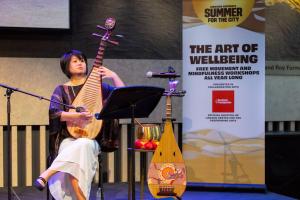
The Art of Wellbeing with NewYork-Presbyterian. Photo by Jenna Bascom, © Lincoln Center.
ALEXANDER FATOUROS: During a talk at Columbia, Laura Ives Colony noted that Summer for the City brought in over 400,000 visitors, breaking down what many New Yorkers previously saw as “insurmountable barriers” to the campus. The vibe has shifted from a thoroughfare to a civic backyard. Can you share how audiences are interacting with the space now, and what programming choices are breaking down the historical barriers that have traditionally made major arts institutions feel so exclusive or intimidating?
JORDANA LEIGH: “You know, I think over the last five or so years, we have really thought about Lincoln Center’s purpose: how we support our community, how we support the city, and how we support the other organizations on campus. In addition to Lincoln Center for the Performing Arts, there are ten other organizations on campus. So you have New York City Ballet, you have the Philharmonic, the Metropolitan Opera, and you also have two schools—Juilliard and the School of American Ballet. And we have Jazz at Lincoln Center, we have Film, we have the Library, Chamber Music Society, and I might have touched on all of them.
What we really look at—and what’s special about Lincoln Center for the Performing Arts versus, say, the opera—is that we’re not genre-tied. We can present works from all different backgrounds, cultures, and styles. During our summer festival, one night might be dedicated to salsa music, and the next night is dedicated to disco music on that exact same stage. We really think about who we’re serving at Lincoln Center, and how our programming can make people feel like they belong—making sure the communities that make up the demographics of New York City feel a genuine connection to the work.
We had a beautiful performance about a week ago by Tabou Combo, an amazing Haitian band that has been around for over 50 years. The Haitian community came out, and it was so meaningful to them. People arrived really early to guarantee they could get in. Many came up to me during the performance saying, ‘I listened to this music growing up. It feels so good to have this here as part of my community—and that it’s free.’ The next day, a woman even stopped me on the subway in Times Square and said, ‘I just have to thank you. It was so special to have that band there. I got to have bragging rights with all my friends, and it was really meaningful to the Haitian community.’ To me, that is our measure of success. That is one of our core pillars: we want the programming to celebrate all of the diversity of New York City and make people feel connected.
Another big part of breaking down barriers to the institution is how we handle access. All of our summer programming outdoors and indoors is free. Throughout the rest of the year, anything presented by Lincoln Center for the Performing Arts is ‘Choose What You Pay’—with ticket minimums starting at around $5. It’s a very low threshold because we want you to feel that you can come to Lincoln Center and access this great art.
We’ve had artists like Rubén Blades, who was just in Italy playing to two million people—where indoor tickets usually cost hundreds of dollars—and we presented him for free, as well as a Choose What You Pay concert with him and the Philharmonic. So that is a really important pillar: we’re breaking down economic barriers. Not only does the programming reflect the diversity of our city, but we’re making sure everyone feels welcome through an economic element as well.
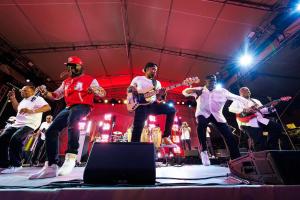
Haitian konpa band Tabou Combo, part of Summer for the City. Photo: Sachyn Mital © Lincoln Center.
Fresh off a talk with Museum of Modern Art (MoMA) CFO Jan Postma on “Branding in the Arts” at Columbia Business School, Laura Ives Colony weighed in on the exact same question I put to Jordana Leigh:
LAURA COLONY: To look back at Summer for the City as a product, it really started during the pandemic when we looked at how we presented arts differently by taking up space outdoors. We were looking to our campus more broadly. Part of the intimidation factor of Lincoln Center was the stature of the buildings and sort of the cold feeling of the architectural aesthetic. Because of the pandemic, we were looking for ways to bring people together for artistic experiences—whatever that meant at the time. We were really meeting New York at that moment in time with what was needed: creating a space for people to gather to experience art after being isolated for so long. And so that was one major milestone—one major transformational moment was our entire team saying, organizationally, ‘What can we do? We are Lincoln Center. We have this responsibility to shift the tone because the city is different. So how do we meet that moment?’ Summer for the City was our major moment in meeting those needs.

Silent disco set by The Illustrious Blacks at Lincoln Center’s Summer for the City, 2026. Photo by Alexander Fatouros.
Simultaneously, we looked at our business model. The arts are not accessible to everyone. The arts are very expensive, which is something often associated with major institutions like Lincoln Center. ‘Free and Choose What You Pay’ was the next major shift where we decided our business model had to change. Everything Lincoln Center presents is accessible to all New Yorkers, whether it’s free or ‘Choose What You Pay’ starting at $5. Our latest stats show that while tickets start at $5, the average price paid is $12—and in fact, 37% of audience members choose to pay more than the minimum. People want to give what they can. They want to participate. They want their philanthropy to count. They want skin in the game. So that’s been a really beautiful success story. But that’s really how we shifted our fundraising, too. We were able to say to everyone out there, ‘We’re making it accessible. We’re offering the landscape. We have the programming. Look at all of those.’ It was a ‘build it and they will come’ moment. The 400,000, the 500,000 every year—that’s only possible because we shifted our model, and people really responded to it. Individuals, corporations, foundations—they’re really responding to Lincoln Center taking on this responsibility of making the arts accessible. And it’s something truly that’s also a core value to us, right? We want the arts to be accessible to everybody, so that was our commitment in walking the walk.
Our artistic programming team—Shanta Thake, Jordana Leigh, and everything they are doing to innovate in this space—are saying, ‘Our stages must reflect the DNA of New York City.’ We want our audiences to see themselves represented in every sense of the word. People are gravitating toward us not only because the programming is more accessible from like a cost standpoint, of course, but like because they can identify with who we’re presenting and what we’re presenting, in again every sense of the word.
And so, coupled with our decision to make it accessible, coupled with Summer for the City, we’ve got this major opportunity and a huge funnel and a huge magnet to bring everyone through. And that’s just led to the transformation of our audience demographics. From a development standpoint, we can now say, look at how we’ve expanded our audiences. Look at how multigenerational they are. Look at how diverse they are. Look at how young they are. We look at our dance floor on any given night, and we see three generations dancing together at a silent disco—it’s the most beautiful thing. And so, that’s how we’ve been able to really reach all these multitudes of people who are coming to Lincoln Center for the first time because they feel like they can identify with it, and they feel like—to use your language—it’s like their backyard. It’s a civic backyard; it’s no longer this thoroughfare that feels cold and isolated. It’s quite the opposite, and broadening sort of the aperture of our artistic offering has allowed us to do that, and really allowed us to meet New Yorkers.
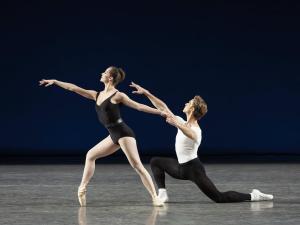
Unity Phelan and Adrian Danchig-Waring in George Balanchine’s Agon, New York City Ballet at the David H. Koch Theater. Photo: Erin Baiano.

Under the stars at Summer for the City 2026. Photo © Lincoln Center.
ALEXANDER FATOUROS: With the Lincoln Center Immersive series, you’re transforming the campus into a digital canvas through web-based augmented reality commissions. How is Lincoln Center curating or commissioning these pieces, and how are you experimenting with transmedia storytelling?
JORDANA LEIGH: “We at Lincoln Center are really here to serve artists and their vision. There are many artists now who are using new technologies because the technologies are catching up to them—they’ve been wanting to do this type of work, and they’re just now being able to do it because the technology is finally there. I can’t remember his name, but the man who actually helped create the mobile phone credited Star Trek for inspiring him to make the mobile phone in the first place. He saw Captain Kirk walking around with a little square to talk into, and he was like, ‘How do I make that happen?’ So artists and creativity inspire a lot of technology.
I see technology just as another instrument and another tool for artists to be able to do their artwork. I find it fascinating how artists are using things that maybe we’ve dismissed for other purposes and using that to create really impactful, meaningful storytelling that places you as the viewer in the center of that world—having a different experience that creates more empathy and connection.
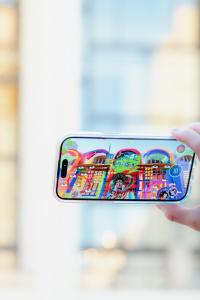
Lincoln Center Immersive: Safe Space by Miles Regis. Photo: Lawrence Sumulong, © Lincoln Center.
That’s something I found really intriguing about how artists are using new technologies, and I think it’s not going anywhere. In fact, artists are doing more and more of this. If you look at the last year and a half of how we all have had more technology in our world—good or bad—the question is: How do we participate in how it’s used? How do we participate in how people have access to it, and how do we think about how it’s used to actually represent everyone? A lot of technology only represents a small group of people, so artists are the ones who are making it way more inclusive.
We’ve done things where we’ve commissioned new projects and co-commissioned new projects. The project across the campus was an AR project that featured everything from poetry by Mahogany L. Browne—where you can walk around and actually experience her poetry in a real-life experience of walking through words and finding her poetry that way—to Miles Regis, who is a beautiful painter, and he painted in virtual reality a different interpretation of the Met Opera House facade. We also worked with the Library for the Performing Arts to celebrate the anniversary of their dance division and their archives of dance, using some of the very first film captures of dance in different ways across campus to do activations connected to it. Again, it’s about creating accessibility in different ways.

globalFEST at Lincoln Center’s Summer for the City 2026. Photo: Lawrence Sumulong.
ALEXANDER FATOUROS: You also oversee the Collider Fellowship, which brings vanguard artists together at the intersection of tech and performing arts. Looking at the prototypes coming out of this group, what has surprised you most about how these experiments are changing—or challenging—the future of live performance?
JORDANA LEIGH: The Collider Fellowship is really special to begin with, because it shows Lincoln Center’s dedication to supporting artists and the creative process, and it really is an R&D lab. It is a place where artists can go as wide or as deep as they want to do on a particular project or research.
Some artists have come in saying, ‘I have this project that I’m working on, and I want to see it come to fruition, or I want to do these three stages while I’m in residence.’ Or some are like, ‘I just need to rejuvenate and nourish myself, read lots of books, read new things, get inspired, so that I can make the next thing, and I don’t know what that next thing is going to be yet, so this is a time for me to slow down.’ Both of those approaches are completely wonderful uses of the fellowship, and it’s been really meaningful because it’s planted many seeds, even if you don’t know what those seeds grow yet.
We’ve only had two public-facing cohorts, and to see what they’re building—they’re all technology-based, but some are thinking about headsets, some are thinking about virtual reality or AR with your phone, and then some are thinking about how you can gather people and sync their movements and sync their storytelling through technology, but you don’t see any of that technology. They’re all expanding how I understand the use of technology.
One of our artists, James Sprang, works in sound. He’s one of the few people in America—and I think he was actually the first person in America—to have a 4DSOUND system. It is amazing because he can manipulate not just surround sound, but each individual track within a song, so you can make the strings move around the room and feel like you’re swimming in sound. It’s an experience I never had before—experiencing 4D sound.
Somebody like James is actually using that to inspire other artists to use 4D sound and have access to the system that he has to have them think about how to compose in that way, and it’s opening up so much more for the field and the entire ecosystem.
I don’t think we’ve had anything officially come out of the fellowship yet in terms of finalized projects, but I do know some things are on the horizon for the fall and further on, and there’s some projects that I think are very close to happening, but they haven’t been announced yet.
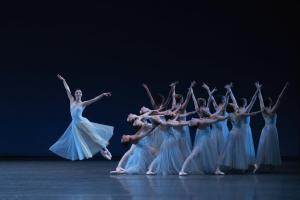
Indiana Woodward and New York City Ballet in George Balanchine’s Serenade. Photo: Erin Baiano.
AF: Are these projects helping to reshape your broader, long-term vision for Lincoln Center and its programming as well?
JL: Absolutely, they are. They’re helping us learn what we can do. They’re expanding our vision, expanding what an arts center can do, and showing us what type of work we can support. They’ve helped us see our spaces differently and more creatively.When artists hold open house studio visits where people can come in and experience works in progress, it just blows our mind. It really makes us think. We’re hopeful those artists will come back to us, but we’re also hopeful that they go to other big arts organizations across the country—or even within New York City—so that this work blooms and blossoms everywhere, not just here at Lincoln Center. We want to support their development and make an impact beyond our own venues.
ALEXANDER FATOUROS: In my earlier conversation with Jordana Leigh about the Collider Fellowship and Immersive Series, we discussed how Lincoln Center incubates experimental work, which highlights the shift towards tech. From a business development perspective, how do you monetize and scale emerging formats and non-traditional art forms?
LAURA COLONY: Fundraising around innovation is truly a gift because it allows us to talk to so many more different people: individuals, foundations, corporations. The Collider is like this brilliant R&D lab. So then I can go to technology companies, founders, executives, and they get what we’re doing because what we’re doing is similar to what they do with their product, but we’re doing it with the human experience. So it’s often very complementary to the work that they support, the work that they’re trying to do, and the impact that they’re trying to make.
Technology is one piece of it, and immersive technology has been very interesting for us, actually, because there’s also the data and the research side of things: how are we able to use technology to impact well-being? How are we able to use technology, like haptic wearables, for example, to allow more different audiences to come and experience the arts—and move on the dance floor and feel the beat of the music if they can’t hear the music? And so, technology has really allowed us to embrace different members of our community in ways that they may not be able to enjoy the arts otherwise.
It’s interesting—sort of like well-being, too. The goals are shared with different organizations and different people wanting to advance access and advance the way we share art, too, and the way we experience it. One of the best examples is a piece called Soul Paint that we presented at Heartbeat, which was our first inaugural well-being convening that we had this February. The creators, the artists, were using technology to allow people to articulate, rather, how they’re feeling physically. That data they’re now using to, again, articulate what’s going on with their bodies: how can we get a diagnosis, basically, through technology, art, feeling, and identifying through painting and color? So it’s this really immersive way for people to, again, articulate: ‘How am I feeling? What’s going on with my body? I can’t figure it out. I can’t pinpoint it when I’m in a conversation with a doctor. There’s a language barrier, a medicinal lack of understanding, or we’re speaking different languages in that way. If I use this technology and this experience to paint it, can we get to the bottom of it? Can we use this as a way to explore the world of medicine and the way that we diagnose things in America?’
Things like that have opened a lot of doors and conversation for us. With the Collider Fellowship, a lot of those creators are leading the way in terms of how we are embracing technology to do things like this, and at the same time, how our audiences are embracing technology. Not every audience member is comfortable coming in and using a VR headset. So it’s our job as Lincoln Center to be this container for this: to offer the ecosystem for the artists to create, for the Collider fellows to explore, and for us to learn from that and then say, ‘Okay, this is how we can meet our audience members,’ so that we’re leading in the space and bringing them along the journey. We’ve got every generation in every audience, basically, so there’s going to be an inherent difference in understanding and engagement with technologies just based purely on that.
From a funding perspective and a business perspective, it’s so interesting in the worlds of health, well-being, and technology, and what we’ve been able to do to fundraise in those spaces above and beyond the arts and culture foundation that we’re typically thought of for. So it just is unlocking a lot of interesting conversations.
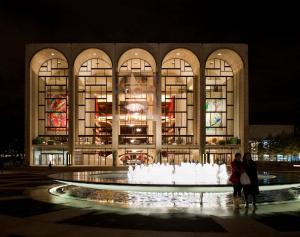
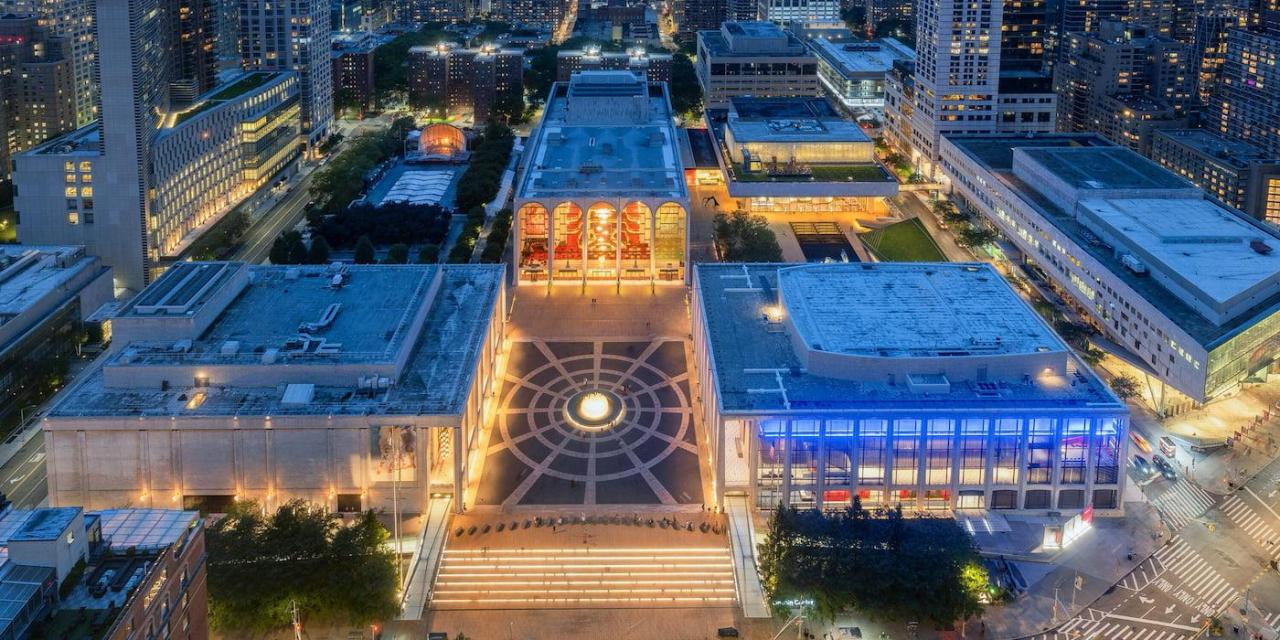
The Metropolitan Opera House at Lincoln Center Plaza. Photo: Jonathan Tichler.
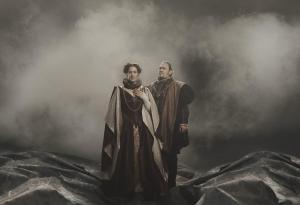
Lise Davidsen and Quinn Kelsey star in a new staging of Verdi’s dark masterpiece, Macbeth, opening the Metropolitan Opera’s new season on September 22, 2026. Photo: Paola Kudacki / Met Opera.
ALEXANDER FATOUROS: For audiences facing geographic isolation or physical disabilities, digital programming is a lifeline. How do you translate the localized heart of the New York campus into digital formats so a remote viewer feels a genuine sense of collective storytelling, rather than just looking in?
JORDANA LEIGH: I’m not sure anyone’s mastered that completely. What was really powerful to me during COVID, when we were all locked in and isolated, is that people turned to the arts for that inspiration and hope. We went online and did tons of amazing programs, and we saw that people were connected, sharing, and having conversations online about the work.
Seeing how artists were using those technologies influenced how we’re now working with artists with new technologies—period. To see the creativity people were doing online, from dancers at Ailey slicing up homemade videos to make a whole piece of Revelations, really inspired me about the desire and the connection that can be made, even within a disconnected physical space.
We still do some amazing streaming of our events. When we do live streams of our summer programming, that’s often internationally based artists, so folks from their homes will tune in, have a really deep connection, and feel very proud that their artists are playing at Lincoln Center. We get thousands of views that way. Everything we do in virtual or augmented reality is about bringing people together in a physical space, but we still have a very robust online presence and a lot of archives available. Other campus organizations—like Jazz at Lincoln Center and the New York Philharmonic—all have streaming as well, so we really amplify and uplift their work as well so artists are accessible to people globally.
If you are in New York and can get to Lincoln Center, we have an amazing accessibility program here for people of all different abilities. For a majority of our shows that have spoken word, we have ASL interpreters, closed captioning, audio descriptions, and assistive listening loops that tune into hearing aids to help amplify and connect to the sound. If somebody needs accommodation, they can reach out to our accessibility team and they’ll work to give them the proper accommodation so they can come and enjoy the performance.
We also have a program called the Big Umbrella Festival. In the summer it’s a one-day event, and in the spring it’s a multi-day festival for all families, but especially families who have children who are neurodivergent. Some of these performances are very intimate for children who have sensory issues with being overwhelmed by stimulus. Four or five families can experience something together that feels like a creative space and a deep connection to the work. We’re really dedicated to making sure inclusivity is considered through access as well.
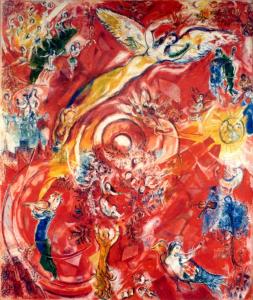
Le Triomphe de la Musique, an oil-on-canvas painting by Marc Chagall at the Metropolitan Opera House, Lincoln Center. Photo: Met Opera.
ALEXANDER FATOUROS: Stripping away the business frameworks and tech, what keeps people showing up for live theatre in a physical space, and why is that shared experience so crucial today?
LAURA COLONY: I come back every time to think about the places in time where you feel that powerful, magical feeling that you feel when the house lights go down and you’re about to experience theater, dance, or music, and the joy or emotion that experience brings. I don’t experience that in any other facet of my life in terms of large-scale shared experience and the community that brings. When you look at the world and other buckets that could replicate or offer that, it would be sports, religion, and arts and culture. Those are the places where people find common ground, and people need that, want that, and deserve it.
There is a unique formula that brings this to life for people and brings this out in people, and then they want more of it so that they return again and again throughout their life—not for the same kind of artistic experience, but for the kind of artistic experience or community that they need at that point in their life. Our job is thinking about how we curate to meet those moments—how our Chief Artistic Officer Shanta Thake thinks about it, how our education team thinks about it, and how our accessibility team thinks about it. We are trying to steward and really be a partner to our audience members throughout their lifelong journey with Lincoln Center, because so many people come here over the course of many decades for different emotional experiences and different moments of a need for connection.
Echoing Colony’s point, the campus, anchored by Lincoln Center for the Performing Arts, brings together a cultural constellation of stars: Lincoln Center Theater, Chamber Music Society of Lincoln Center, Film at Lincoln Center, Jazz at Lincoln Center, New York City Ballet, New York Philharmonic, School of American Ballet, The Juilliard School, The Metropolitan Opera, and The New York Public Library for the Performing Arts.
Spanning music, opera, theatre, dance, film, visual art, and arts education, this expansive network unites physical stages, community spaces, and digital channels to maximize reach and resonance.
Story by © 2026 Alexander Fatouros, Editor, The Theatre Times
This post was written by the author in their personal capacity.The opinions expressed in this article are the author’s own and do not reflect the view of The Theatre Times, their staff or collaborators.
This post was written by Alexander Fatouros.
The views expressed here belong to the author and do not necessarily reflect our views and opinions.