
Basra is shaped by louder forces such as oil, politics, and the constant negotiation of visible and invisible censorship. Against these forces, theatre appears fragile. And yet, it speaks.
Not through grand stages or permanent institutions, but through persistence: through small spaces, temporary gatherings, and moments that refuse to disappear quietly. I encountered its voice in three forms of persistence: a bookstore that endures, a festival that gathers, and a workshop that was silenced.
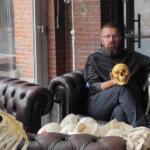
Dar Al‑Fonon, established by Dr. Hasan Al‑Nekhailah in 2013, is a theatre bookstore and small publishing house that remains one of the very few spaces in Iraq dedicated largely to theatre and drama. Stepping inside feels less like entering a shop and more like entering a rehearsal room for ideas. Shelves replace sets, and conversation replaces performance. Theatre here is not consumed; it is practiced.
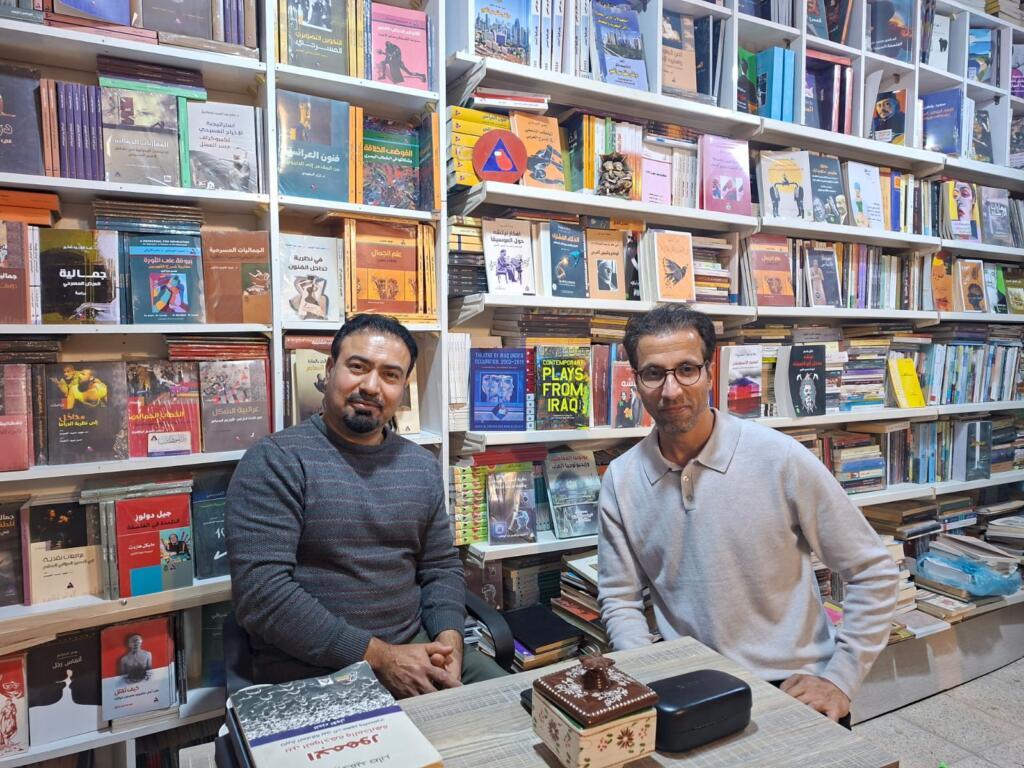
Al‑Nekhailah and Al‑Azraki at Dar Al‑Fonon Bookstore and Publishing House. Photo by the author.
Dr. Al-Nekhailah, a professor at the College of Fine Arts at the University of Basra, brings the same rigor he teaches (aesthetics, criticism, artistic thinking) into the bookstore. In a city where cultural gathering is increasingly constrained, this modest space carries disproportionate weight.
Sustaining it is an ongoing struggle. Theatre books are often printed outside Iraq, distribution remains fragile, and institutional support is minimal. Each publication requires negotiation across borders, budgets, and uncertainty. The bookstore survives not because conditions are favorable but because closing its doors has never been an option.
Basra has long been a city of crossings: of rivers, cultures, arts, and voices. Today, its artistic life and identity unfold under pressure from oil-driven economies, political uncertainty, and conservative religious frameworks. Theatre has not vanished under these conditions. It has learned to speak carefully, to occupy smaller spaces, and to persist through continuity rather than spectacle.
That persistence is constantly tested.
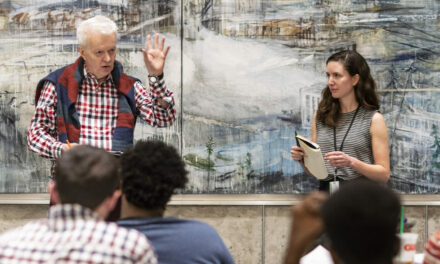
During a recent visit, a colleague asked me to offer an introductory workshop on Forum Theatre to a small group of students in the Department of Theatre at the College of Fine Arts. The aim was simple: to explore forms of institutional oppression through theatrical practice. The sessions were focused, rigorous, and deeply engaged. Then, midway through the process, the workshop was stopped.
The call came from the administration. It was not because of content but because of paperwork. We were told the workshop lacked proper authorization, even though the chair of the department was fully aware, had approved it, and had issued an official letter. Procedure overrode practice entirely. In a system structured around avoidance rather than allowance, bureaucracy becomes its own form of censorship.
The irony was exact. A workshop designed to examine systemic constraint was itself curtailed by it. Visible censorship arrived as a phone call, while invisible censorship had already shaped the conditions that made the call inevitable. The students’ frustration was quiet but unmistakable. The interruption felt less like a cancellation and more like a demonstration of the very systems we were examining. For them, the lesson required no further staging.
And yet, even in interruption, theatre spoke.
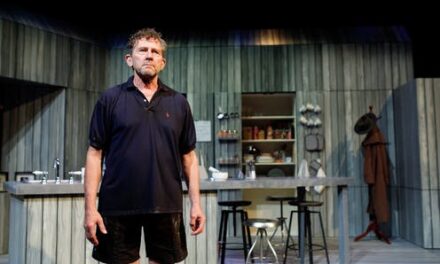
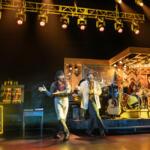
If Dar Al-Fonon sustains theatre through endurance, the Nazran Theatre Festival sustains it through gathering. Organized by the Iraqi Artists Syndicate, the festival brought together artists, students, and practitioners determined to keep theatre visible, even under strain.
The festival did not disguise its limitations. Resources were tight. Conditions were far from ideal. But performances happened. Conversations unfolded. Bodies insisted on occupying space. Persistence itself became part of the dramaturgy.
These gestures matter because theatre in Basra does not lack expertise, trained artists, or an audience. What it lacks is sustained, structural support. In its place, theatre survives through individuals who keep spaces open, festivals alive, and practices in motion.
Together, a bookstore maintained against the odds, a festival assembled under pressure, and a halted workshop reveal a single truth: theatre in Basra speaks through persistence, through endurance, through interruption, and through its refusal to disappear.
This post was written by the author in their personal capacity.The opinions expressed in this article are the author’s own and do not reflect the view of The Theatre Times, their staff or collaborators.
This post was written by Amir Al-Azraki.
The views expressed here belong to the author and do not necessarily reflect our views and opinions.