
On the opening night of Miracle in Milan at the Piccolo Teatro Strehler, the excitement of the audience, flocking into the 968-seater auditorium, was tangible. Seventy-five years after the eponymous, neorealist film came out, which shows a Milan, still in ruins after the Allied bombings in World War Two, and the Milanese in the process of recovering from the trauma of war, the Piccolo Teatro’s new stage production was about to unfold.
In the 1951 film, Miracolo a Milano, director Vittorio De Sica and screenwriter Cesare Zavattini created what has been described as “a beautiful fable”, with a happy ending. This artistic form was probably just what was needed, given the brutality of the Fascist era and the hardship of the Second World War. The present two-act play, penned by Paolo di Paolo, and directed by Claudio Longhi, uses material from the film and Zavattini’s well-known children’s book, Totò, the Good. A novel for children that can also be read by adults. The subtitle is significant, ironically pointing to the fact that the author wishes to address not only children, but a general readership. After all, the main themes of the story – good and evil, rich and poor, greed and generosity – involve all human beings.
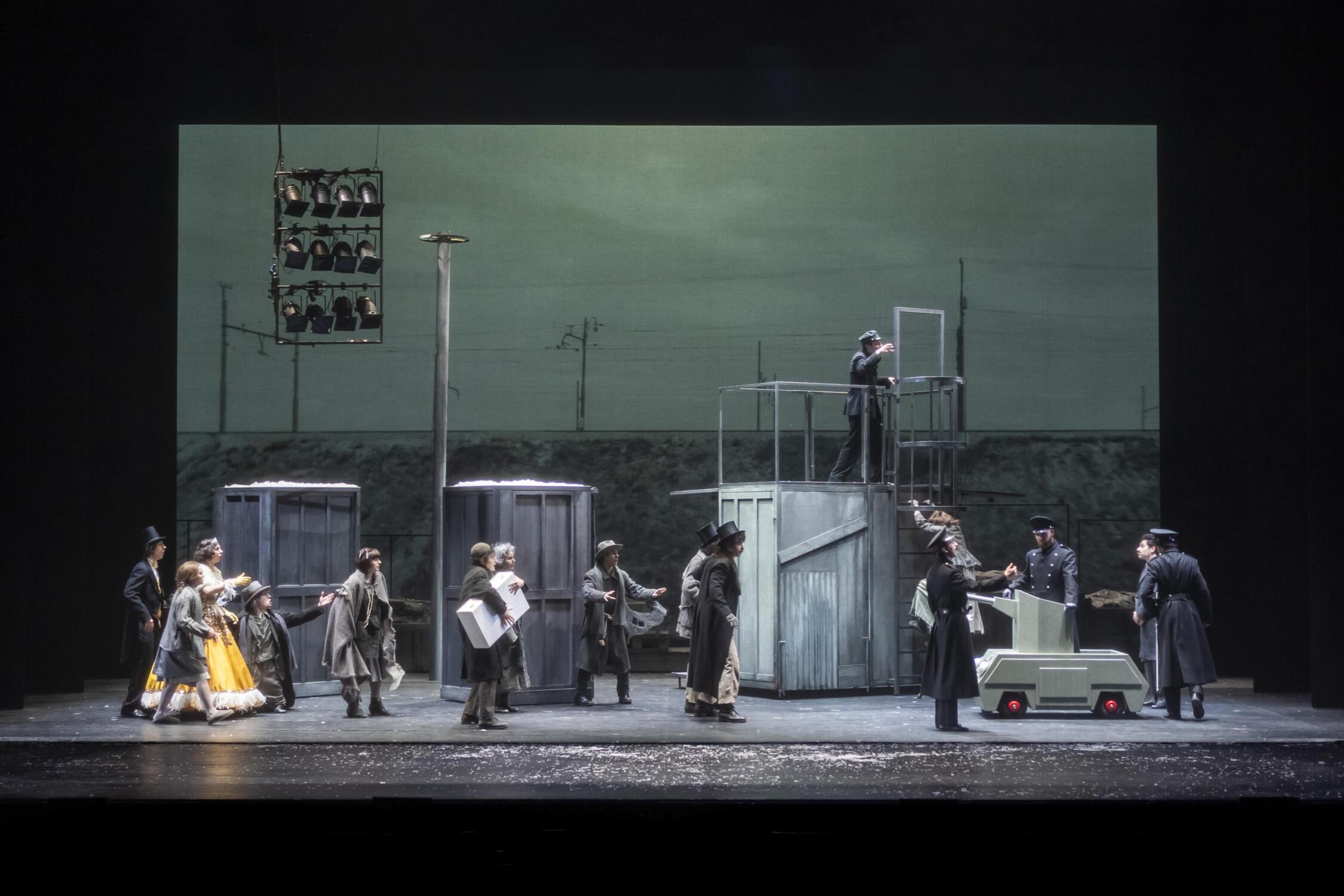
Miracolo a Milano [EN: Miracle In Milan], written by Paolo di Paolo and directed by Claudio Longhi, at Piccolo Teatro Strehler Milan. Photo credits: Masiar Pasquali.
The opening scene, in a gleaming white bedroom, shows Lolotta and Totò, the two protagonists of the story, saying their goodbyes. Flowers abound, and an aged Lolotta (played by Giulia Lazzarini), dressed in a white, lace nightgown and nightcap, lies on her death bed. Beside her, sits Totò, dressed in black (played by Lino Guanciali), whom she rescued from under a cabbage in her garden when he was still a tiny baby. A small cabbage patch at the foot of the bed, alludes to the vegetable garden in the film. Still this moment, tantamount to a black and white dream from the past, is immediately undercut, without explanation. Two doctors barge into the room, examining Lolotta and displaying a business-like efficiency in dealing with her imminent death. Immediately after, a film sequence shows a funeral hearse, wending its way along one of Milan’s canal roads, with Toto’s tiny figure, bringing up the rear. As at other times in the play, the De Sica film is projected onto a large screen, conjuring up a post-war Milan, still recognisable in 2026, but radically and irrevocably changed. The surreal, dreamlike atmosphere of this beginning continues throughout.
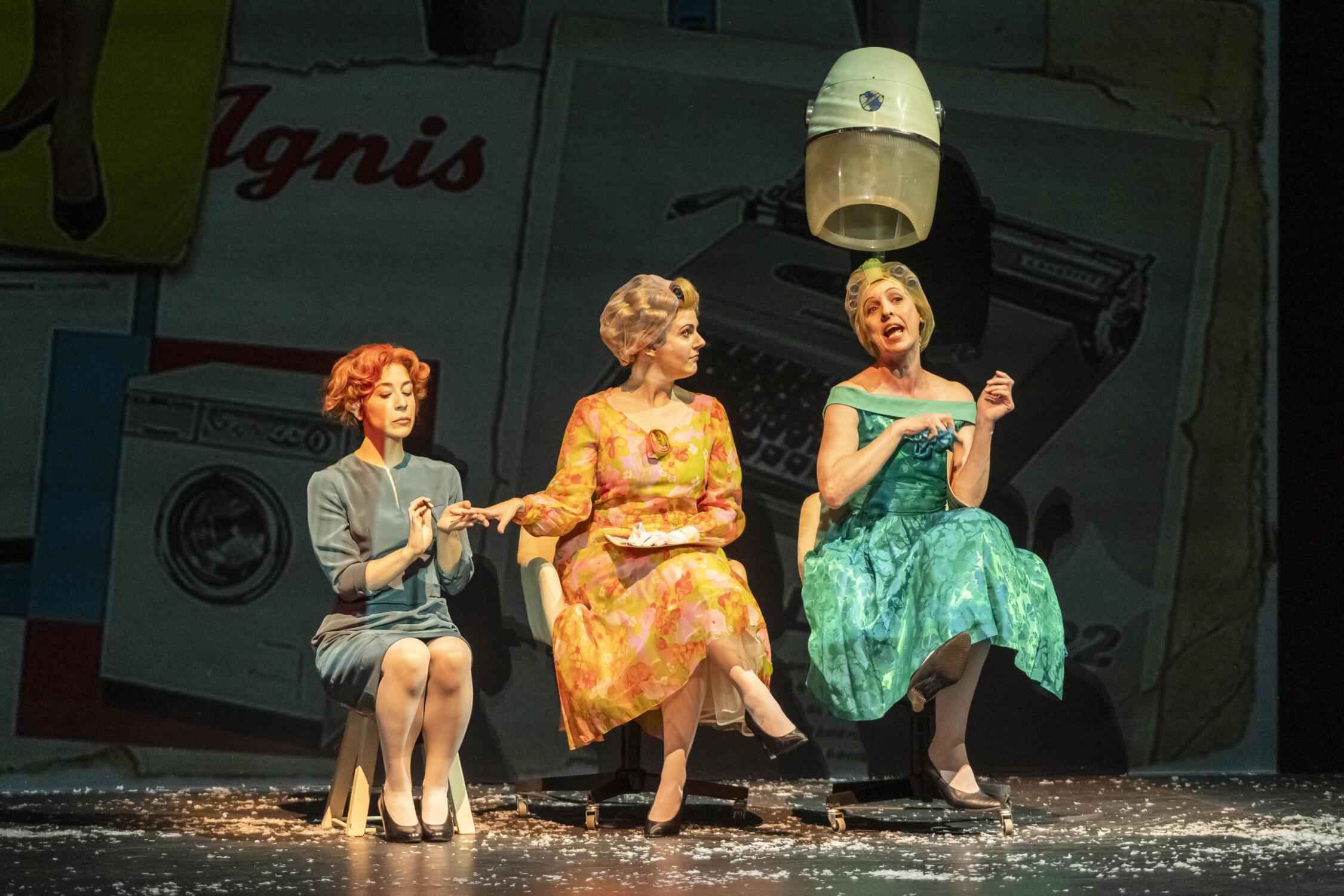
Miracolo a Milano [EN: Miracle In Milan], written by Paolo di Paolo and directed by Claudio Longhi, at Piccolo Teatro Strehler Milan. From left to right: Laura Palmiotti, Giulia Trivero, Diana Manea. Photo credits: Masiar Pasquali.
Totò experiences both sides of the ‘Miracle’, the good and bad, the generosity and greed. The scene of the shantytown, which this young man has managed to set up, shows him finding love, friendship and a home with other destitute people. Their peace is shattered, however, when a wealthy speculator, Signor Mobbi and the land’s owner show up in huge black cars, with an eviction order. The large cast, made up of professional actors and students from the Piccolo Theatre’s Drama Academy, come together to create a deeply dramatic confrontation, in which the wealthy speculators, dressed in elegant, fur trimmed overcoats and bowlers, threaten Toto and his dishevelled friends. Things turn nasty and tension rises as armed police arrive, the eviction seemingly averted by Mobbi’s sudden change of heart. Once again, we are reminded that we are in the world of a magic realism, where bad can turn to good and vice-versa in the wink of an eye.
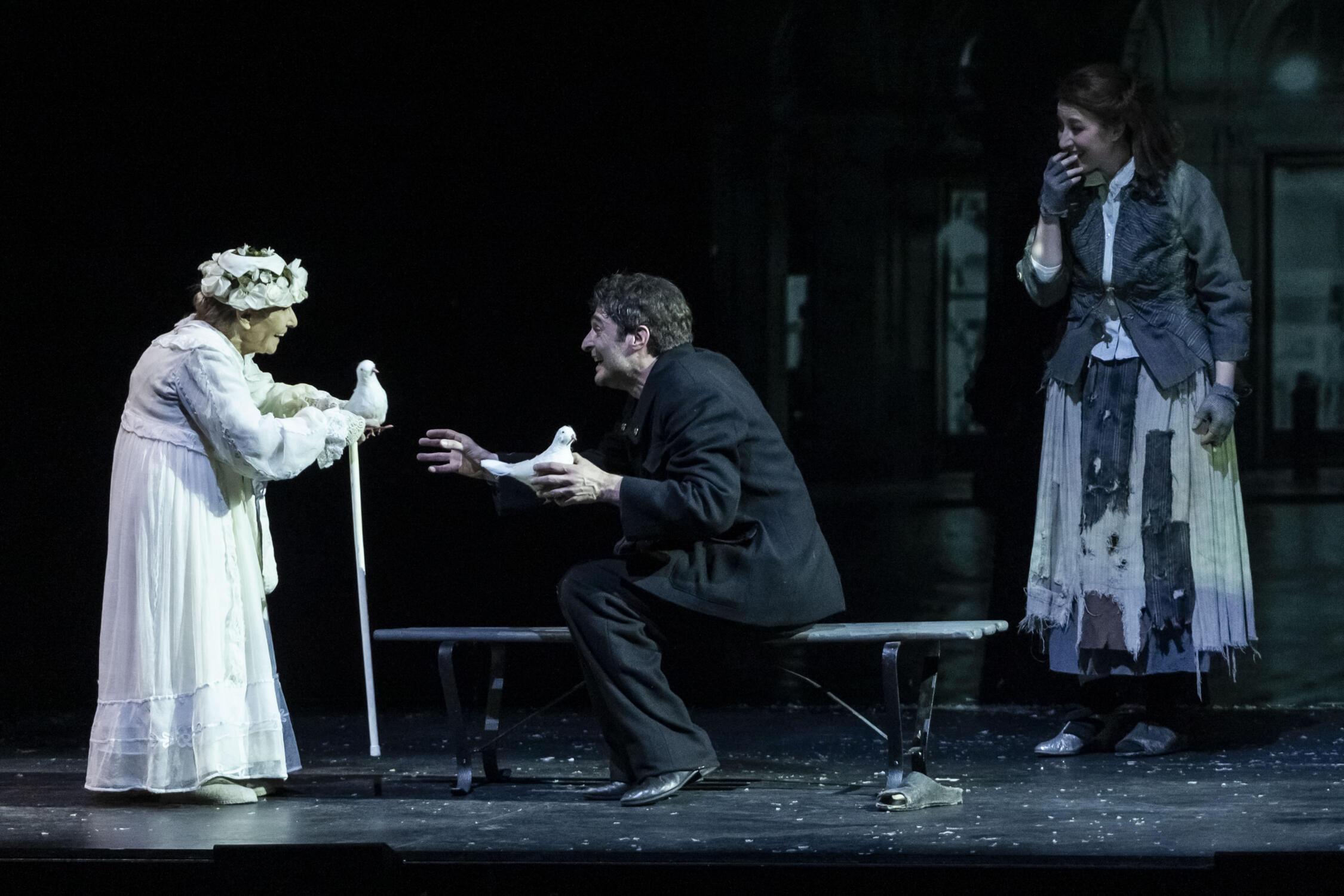
Miracolo a Milano [EN: Miracle In Milan], written by Paolo di Paolo and directed by Claudio Longhi, at Piccolo Teatro Strehler Milan. From left to right: Lazzarini, Guanciale, Putignano. Photo credits: Masiar Pasquali.
While for much of the three hours’ running time, Toto’s tragicomic story proved captivating, the last forty minutes felt drawn out. However, when the show finally came to a close, the spectacular flight of Toto and his new love, Edwige, on a broomstick, over Milan’s magnificent Cathedral and central square, gave the play the much-awaited exhilarating finale. There was a long, enthusiastic final applause, and a standing ovation for Giulia Lazzarini, a truly memorable Lolotta, much of whose long career – the actor is 92 – has been spent at the Piccolo Teatro.
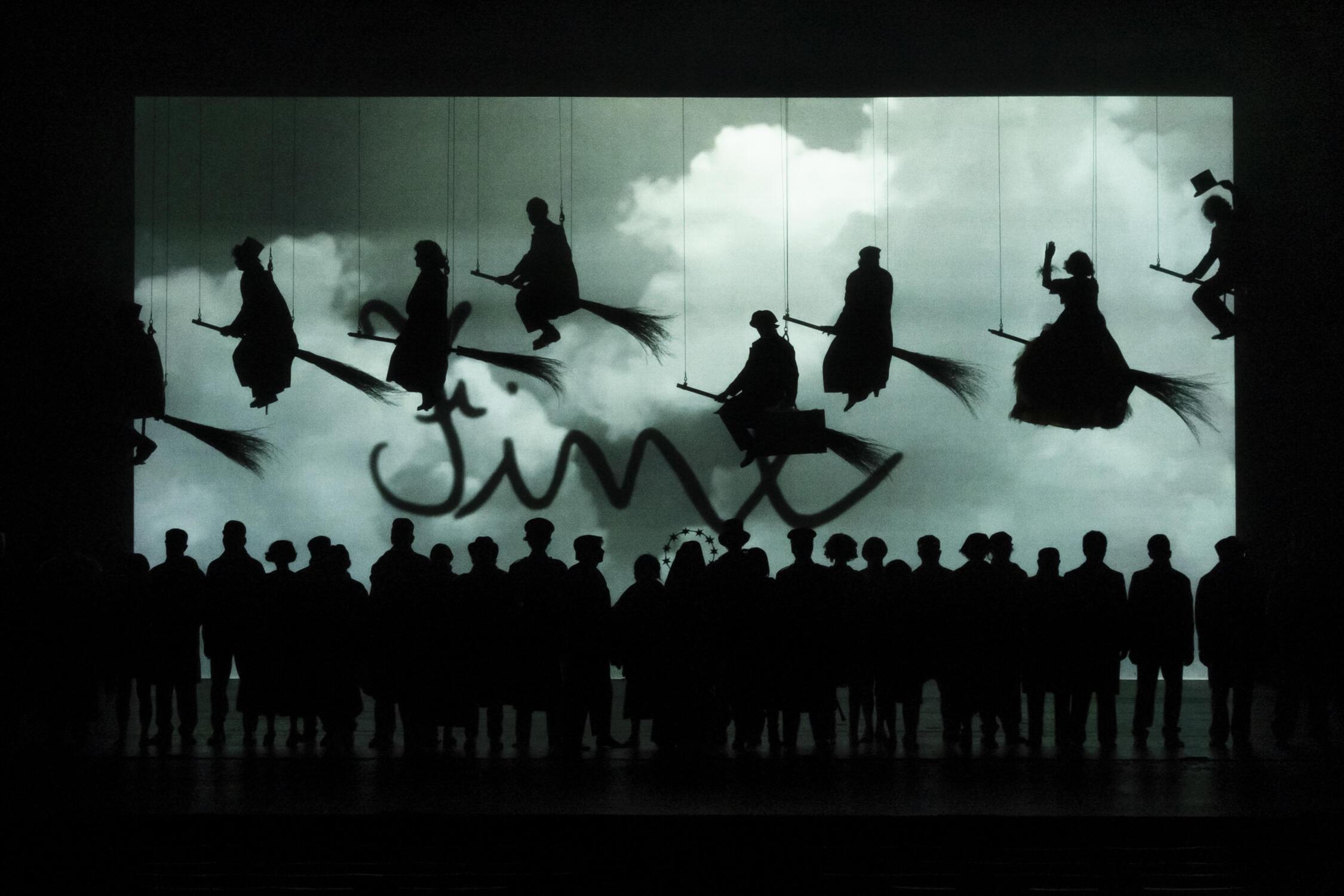
Miracolo a Milano [EN: Miracle In Milan], written by Paolo di Paolo and directed by Claudio Longhi, at Piccolo Teatro Strehler Milan. Photo credits: Masiar Pasquali.
Miracolo a Milano runs from 4 March to 1 April at the Piccolo Teatro Strehler Milan.
This post was written by the author in their personal capacity.The opinions expressed in this article are the author’s own and do not reflect the view of The Theatre Times, their staff or collaborators.
This post was written by Margaret Rose.
The views expressed here belong to the author and do not necessarily reflect our views and opinions.