
An Interview with Mr. Denni Dennis, internationally renowned dancer, performer, educator-trainer (Denmark/Russia/Kazakhstan).
Denni Dennis is born in Denmark/based in Almaty, Kazakhstan. Trained as a dancer and physical performer, he graduated from The Commedia School in Copenhagen, Denmark. Denni has extensive training in the Jacques Lecoq style, the Russian character clown, and the Pochinko method (Native American spiritual clown) which he has been studying with Sue Morrison in Canada. Denni is also a student in mime, taught by the Russian theater professor Elena Markova. His work has taken him around Europe, Canada, Australia, USA, Russia, Africa, and Asia, both as a clown, workshop leader, and director. He combines clown, mask, dance, acting, and improvisation to create unique and dynamic characters. His clown work has been featured in theatre, circus, dance performance and art installation. For more information, please see here and here.
Ivanka Apostolova Baskar: How does the knowledge of Meyerhold’s biomechanics shape the way you create contemporary lyrical circus pieces?
Denni Dennis: After my first years of working in Russia from 2006, I was introduced to the Biomechanics system of Meyerhold. It worked very well with my classical ballet training; I was also studying in Russia at that time, and together with my connection with my students at The Russian Institute of Performing Arts in Petersburg, and a private theatre school for actors, Leudi, also in Petersburg, I got the possibility over almost 13 years to devise and explore this system of Meyerhold. I was first asked to teach the students the Lecoq system at the academy. I worked on connection and clowning with the students. We explored that the Lecoq connection system with the audience and Meyerhold’s biomechanics method worked very well together. Over the years, I had worked with the technique of Jerzy Grotowski and Japanese Butoh dance for the combination of spoken words on stage and movement, but it never worked out. But with Meyerhold’s Biomechanics system, I found the key for connecting movement with the spoken word a problem I had tried to resolve for years, as I needed a way to bring this together. How to work from Stanislavski spoken words into physical scenes with dance in 6–12 seconds, and back again into spoken word on stage a very difficult situation to handle as a director. But with Meyerhold’s Biomechanics system, we found the key. I have now since created performances worldwide with this key from Shakespeare classical performances to immersive theatre productions. Even in circus productions, I have been using the Meyerhold Biomechanics system.
IAB: What distinguishes your approach from other circus artists and pedagogues using Meyerhold’s method?
DD: I don’t really know anyone outside Russia who uses Meyerhold’s method in their work as a performer, choreographer, or director. But when I see work by Slava Polunin, or the clowns from Licedei, or a ballerina at the Mariinsky or Bolshoi Theatre, I immediately see how Meyerhold’s method is integrated or influences the work all the time. This method gives us the tool for telling stories about life from our heart, which very often gets lost when we use the Stanislavski method. In circus, dance, and physical theatre, Meyerhold’s method creates the space where magic brings the audience into the story. And especially in clown and mime, of course, the performer’s body expresses the emotions for the audience to understand and connect with.
IAB: As a performer trained also in mime under Elena Markova, how do silence, gesture, and physical precision become tools for emotional storytelling in your work?
DD: Well, I have been using 40 years now to understand how movements, eye contact, connection with the audience, and words can best connect the audience with the performer’s storytelling. Remember, it’s the audience who needs to recognize and feel the emotions, not the performer. The performer is only a medium for that connection. And very often you watch a Stanislavski actor living the moment, but the audience doesn’t feel anything. There is no connection with the audience from the performer, only showing off.
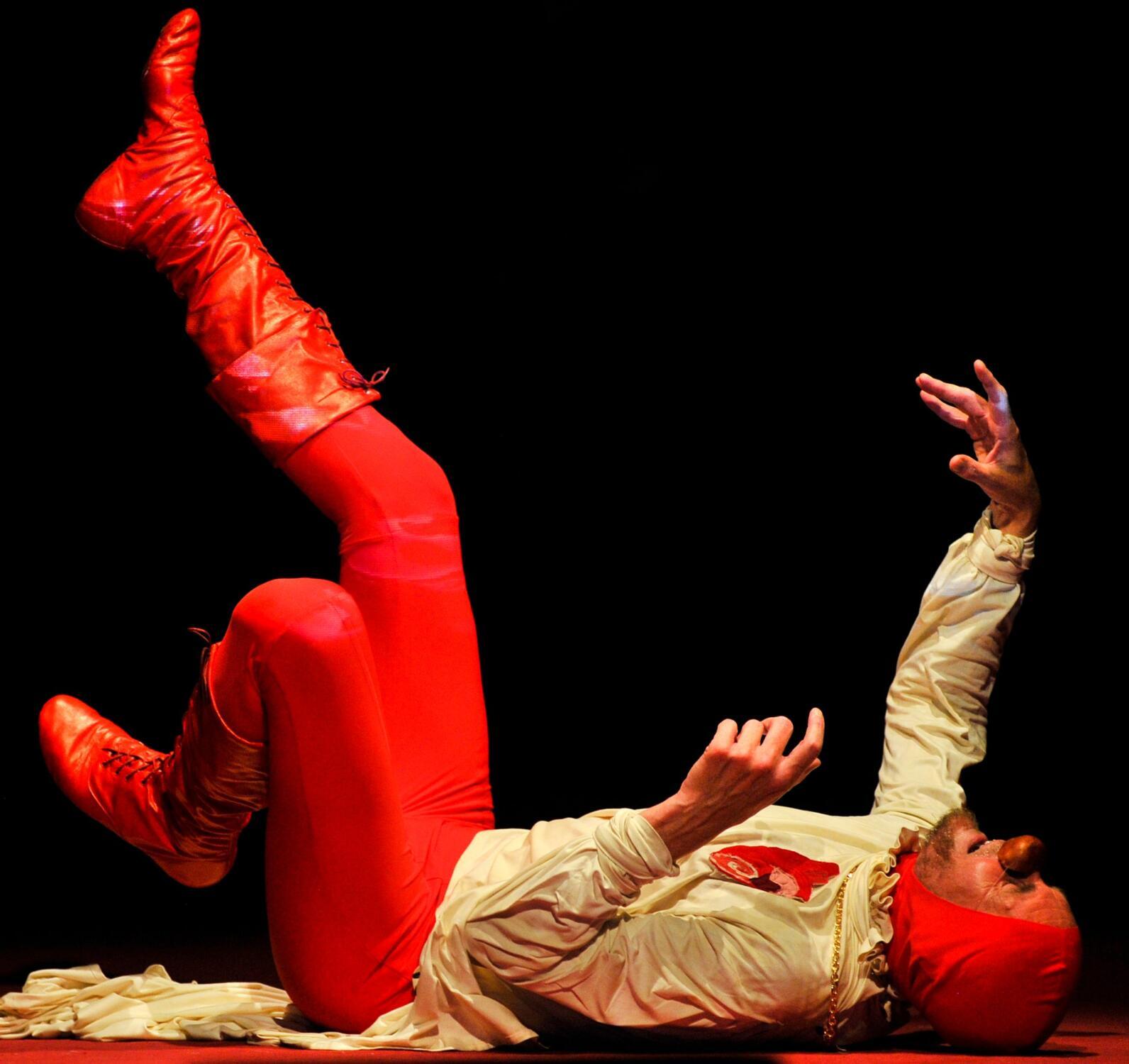
Denni Dennis © Shadab Shahrokh Hai.
IAB: How do you translate deep emotional and physical expression into performance that connects with the audience?
DD: So, I have developed together with my students at the academies, especially in Russia, over the years, a new system based on Meyerhold’s method. Where it is the body, the heart that remembers the emotional connections, from your life experience, and not your brain. A system we have given the name GPS M S Biomechanics system. This system teaches the performer to connect with their own emotions and provides the tools for expressing the story from the heart and not the brain. Let the audience feel the emotions and get the space to connect the performer’s work with their own emotional experiences in life. A powerful space to work from.
IAB: How have your experiences in Denmark, Russia, and Kazakhstan influenced your artistic voice?
DD: Over the last 20 years, I have been traveling, living, and working all over the world. I have been teaching and working with humans from all kinds of cultures, religions, and life experiences, and we are all the same. Whether we are born in Siberia, the Sahara, or New York, we have two things in common: how to get the most pleasure out of life and how to avoid pain. Humans are all the same wherever you live; it is only global capitalism that makes us different. I have been so lucky to be allowed to work with performers all over the world and especially in clowning, where speaking from your heart is the only way to work. And when I’m sitting as an international jury member at festivals, watching performances from all over the world, it’s so easy to see the story is always the same: life and death, and everything in between.
IAB: Can you share insights on working with large immersive casts, like your upcoming production in Almaty?
DD: At the moment, I’m working on a large-scale immersive theater production with over 50 people in the cast: mime clowns, dramatic actors, and ballet dancers all put together in the same world of 2050. We are using Tennessee Williams’ plays from 1950–60, focusing on relationships and especially unhealthy relationships. Marilyn Monroe is also present, and she will have her 123rd birthday party in the performance. Shortly before the end of the performance, we will return to the night of August 4th, 1962, when she left the world. This immersive theater piece is exploring the differences between men and women and how they might change over 100 years. We are in a nightclub in 2050, no gender, everyone has the status of “THEY” in their passport. As the audience, you will see the same scenes acted in a Stanislavski style from the 1950s, and in the future of 2050 expressed through physical movements; an interesting topic for our world today. This production can only succeed with the use of the GPS M S Biomechanics system, as we combine the spoken word in a Stanislavski movie style with physical storytelling and dance, which includes mime, clown, and classical ballet.
IAB: What are the challenges and rewards of bringing Meyerhold’s techniques to different cultural contexts, including Africa and Europe?
DD: As I described before, wherever you are in the world, we have the same basic stories; only global capitalism changes the scene. And that’s why Meyerhold’s method brings people together: working from the body, working from the heart. It’s beautiful when I’m running a master-class or workshop at an international festival to see how this brings people together and breaks down barriers in telling stories.

Denni Dennis. Photo credit by Svetlana Sviridyuk.
IAB: Which national and international awards or recognitions have most affirmed your artistic vision and why?
DD: It has been absolutely important and necessary after my graduation that I was supported by the Danish Art Council for my work and connection with the international art world. If I had not received funding for the development of my training as an artist, I would never have been able to upgrade and learn new tools and methods. If I had not received support over all these years from the Danish Institute in Petersburg, Russia, I would never have gotten the connections and support to become the artist I am today. Also, my two solos that I travel worldwide with have had full support from the Danish Art Council and the Arts Council of Wales. If they had not supported me in developing this work, it would have been impossible to create. This is especially true for my last solo, created in Kazakhstan, “JEG HAMLET”, with six other artists involved without international funding, this work would have been impossible to realize. And without all these nationalities involved, it could never have reached so many cultures, religions, and communities. Not only the artistic impact, but also the technical impact for example, in the video backdrop, which includes six different languages simultaneously, allowing me to perform in my own language, Danish, as a soundtrack connecting my roots to the production. This support has been crucial for my journey in the international art world and for presenting my work today in a global context. I have also received awards at festivals for these solos, which, of course, give me the opportunity to sell my work to other festivals. Today, posts from festival awards nights on social media help me connect with other festivals. It is hard work in today’s world to get around as an artist with your work without public or global funding. And, mostly, festivals don’t support international travel or pay you a fee for being part of the festival. I don’t think that’s fair. What other business would allow that!?
IAB: How do such honors influence your motivation and experimentation as an artist?
DD: Of course, it gives me the drive to continue pushing and exploring my artistic path, creating new ways of working especially in my work connecting mime, clown, classical ballet, and dramatic acting together in the same productions.
IAB: How do you critically address themes of narcissism, ego, and artistic self-expression in/via your work as artist and mentor?
DD: Narcissism is a very difficult problem in our society today, especially in the clown and acting world. Social media, I guess, has created this problem. Over the last 10 years, many students have enrolled in my summer clown school, master-classes, and workshops to explore clowning and many of them should not have been there. They disrupt everything for the students who truly have talent for clowning. Clowning is more than making faces to get attention; it is a healing, transformative toolset. If you cannot create that transformation with your audience, you are not a clown. Over the last 10 years, I have often had students who had nothing in their hearts to share or connect with. Shouting, making faces, and being crazy is NOT enough to be a clown. And if I ask them to create something or speak from their heart to share stories, they just freeze or resist. Of course, sometimes a student needs help to express themselves. But too many students have nothing to give the world. This new trend, where clowning is seen as the same as being an idiot or a fool, is completely wrong. It is not the same.
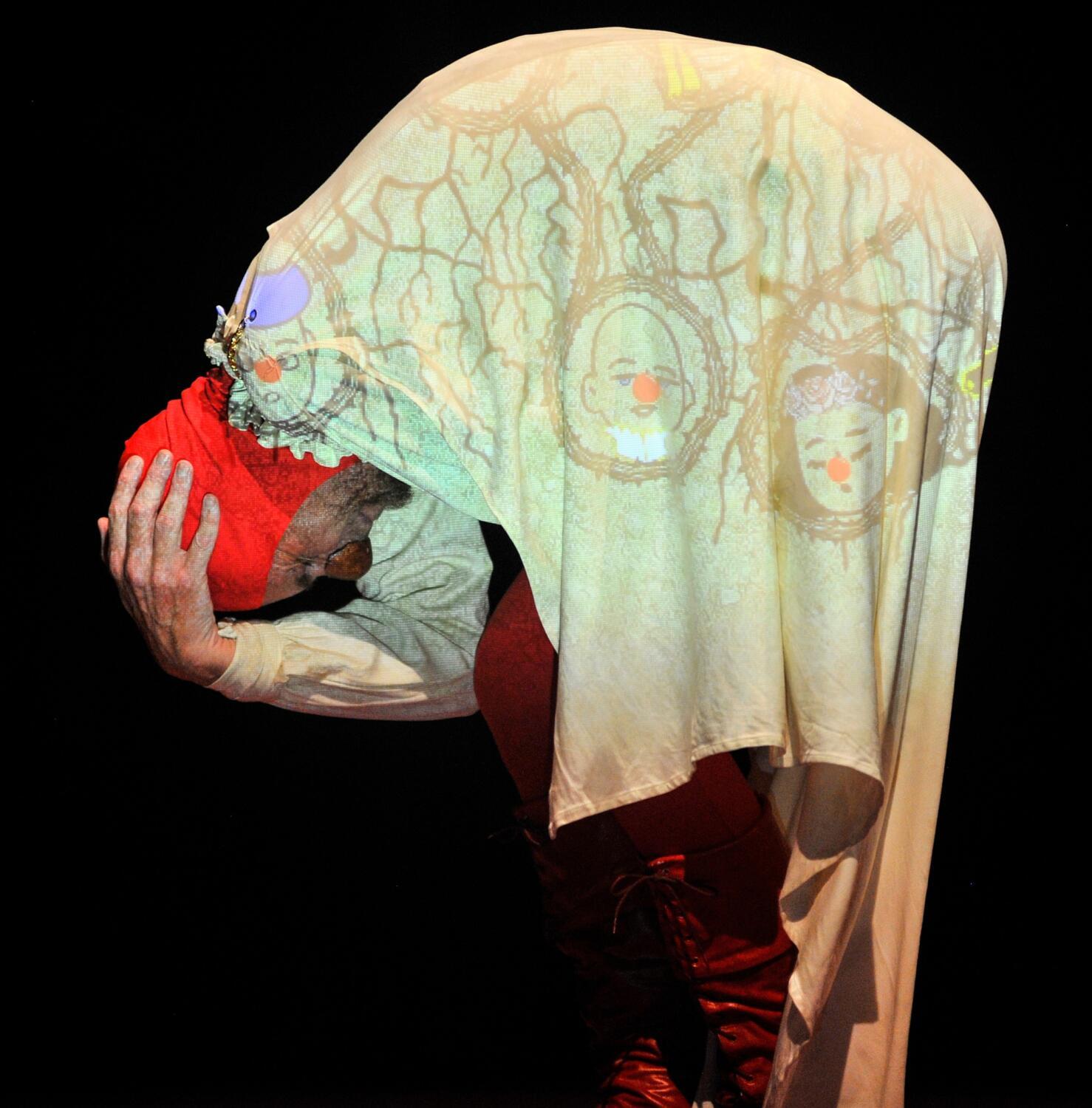
Denni Dennis © Shadab Shahrokh Hai.
IAB: What role do you see in lyrical circus and clowning playing in international contemporary theatre today?
DD: Life is so hard and difficult for everyone; the time now in 2026 is so exhausting and insecure. So many people live with stress and depression because of the world situation and global capitalism. Social media destroys our peace and connection. When I’m running a class and we have a break all, and I mean all, go to their phones during the break, and I have to drag them back to continue the class or rehearsal. And no one has spoken or connected privately during the break. We need to slow down in our performances we need to create the heart-to-heart connection. And here we have the tools of clowning and visual emotional expression, without telling people what to think or what to feel. Let them think for themselves as they explore the world we create with our hearts in that connection. Here, we can give the audience a connection through clowning and circus skills. We can create a moment of visual magic where the audience forgets their own life for a moment, their egos or struggles, and just connect as humans, recognizing something forgotten that is important to remember about love, peace, and life in general. As an artist, you need to bring the audience into your world and bring them back with a new awareness remembering something forgotten that connects them with the world they are living in at this moment. Bring together communities, cultures, and religions. That’s what I have done with my JEG HAMLET, by putting six languages from across the globe together in my animated video backdrop, and twenty-four languages woven together in my scene of “To Be and Not to Be.” So all religions, cultures, and communities can watch it together in the same room, with the same support and understanding, wherever they are coming from in the world.
IAB: How do you balance spectacle, emotional depth, and physical precision in your performances?
DD: This is a very long process. First, I analyze all the text. I create 99 movements from 12–16 emotions, which will feed the text. Then I start the process of understanding and creating the movement. And this is a three-year process, where Meyerhold’s Biomechanics system starts to create the choreography around the text. All movements have: preparation, action, and ending. In this process, the movements start to tell me where to go with the story. It’s a very hard and exhausting process, but the result always surprises me; the brain would never have come up with such a perfect solution. Every morning I do my homework for the 99 movements, a three-hour process. It takes an hour just to report the 99 movements, working from my spine, my bones, and not from the brain. And then, when the performance goes on, I aim to let the body tell the story and keep my brain from taking over. The movements and the soundtrack guide me. All the hard work in the studio then creates the space for that. It has taken me three years to develop JEG HAMLET, and I’m still far from where it needs to end. And when I’m there, it’s time to stop this performance. I believe that when you stop changing and developing your work, it’s done. It’s not important for you to do more as an artist. Your soul has left the performance. Moved on.
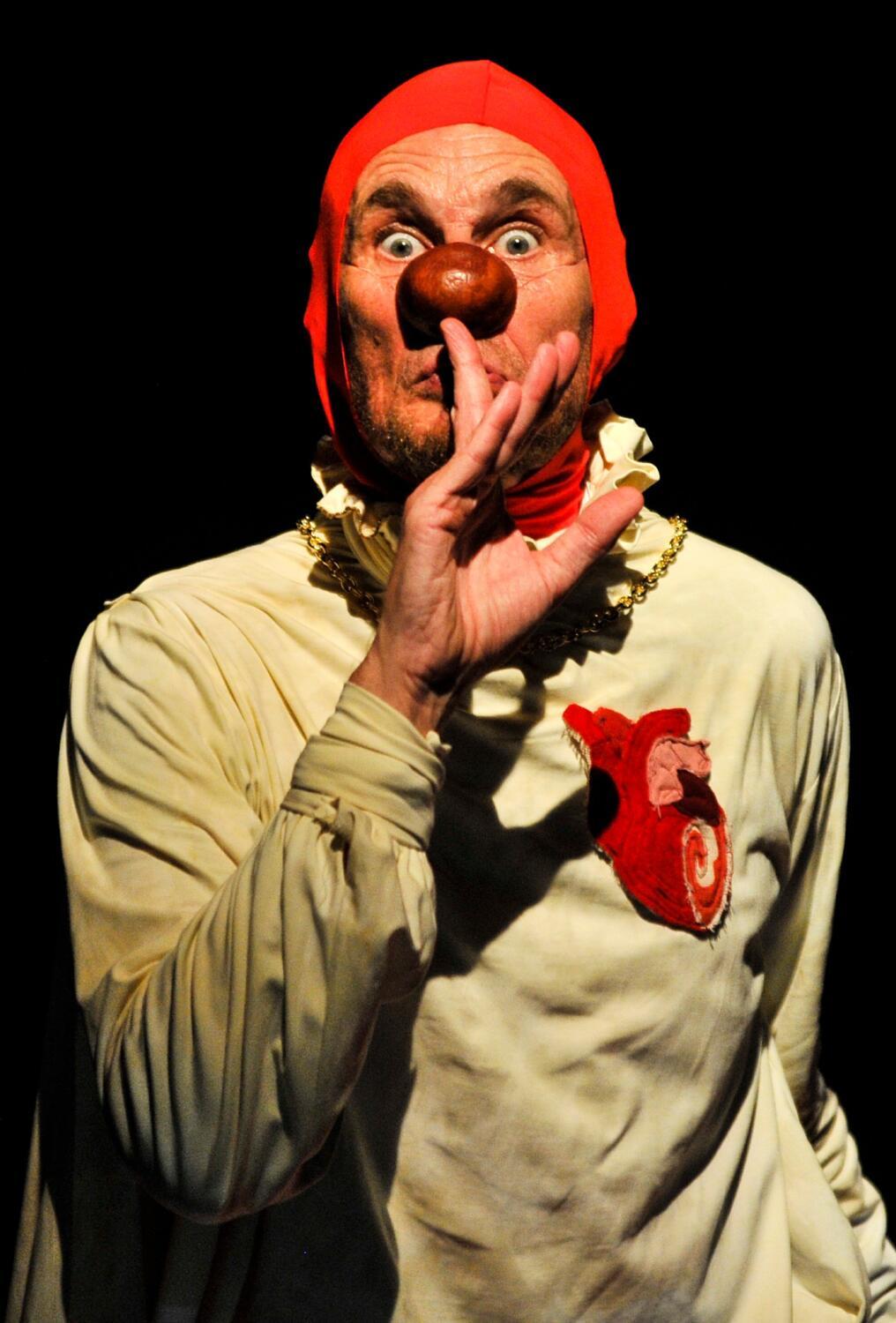
Denni Dennis © Shadab Shahrokh Hai.
IAB: How could your methods and performances resonate with new audiences at festivals like in Sahara, Adrar in Algeria?
DD: As body language is universal, and the text in JEG HAMLET has been transformed into melodramatic movements by the GPS M S Biomechanics system, it gives the audience the connection they need to understand the topics of the story I’m expressing in my performance, wherever they are in the world. JEG HAMLET is quite abstract in its storytelling style, but as all movements in the performance are created from emotions, the audience receives all the support they need to understand what is happening and has the possibility to form a connection for transformation through the performance. And whether you are an audience member from the Sahara, Siberia, or New York, it does not matter; the GPS M S Biomechanics system speaks the language of humanity.
IAB: Do you see opportunities for cross-cultural residencies or workshops bridging Europe, Asia, and North Africa versus currents wars in the world?
DD: Yes, of course; this is where we can all work together in the same room, on the same stories, the same topics. I always find it so interesting when I bring my GPS M S Biomechanics system to a festival in a new part of the world, and again and again see how it connects with all cultures how it can bring all cultures and religions together in the same room and tell stories that are important for all of us to remember. Over the years, I have been so happy to bring students from different parts of the world together in the same room and let them create together exactly what the world needs today, especially with all this fear and political propaganda.
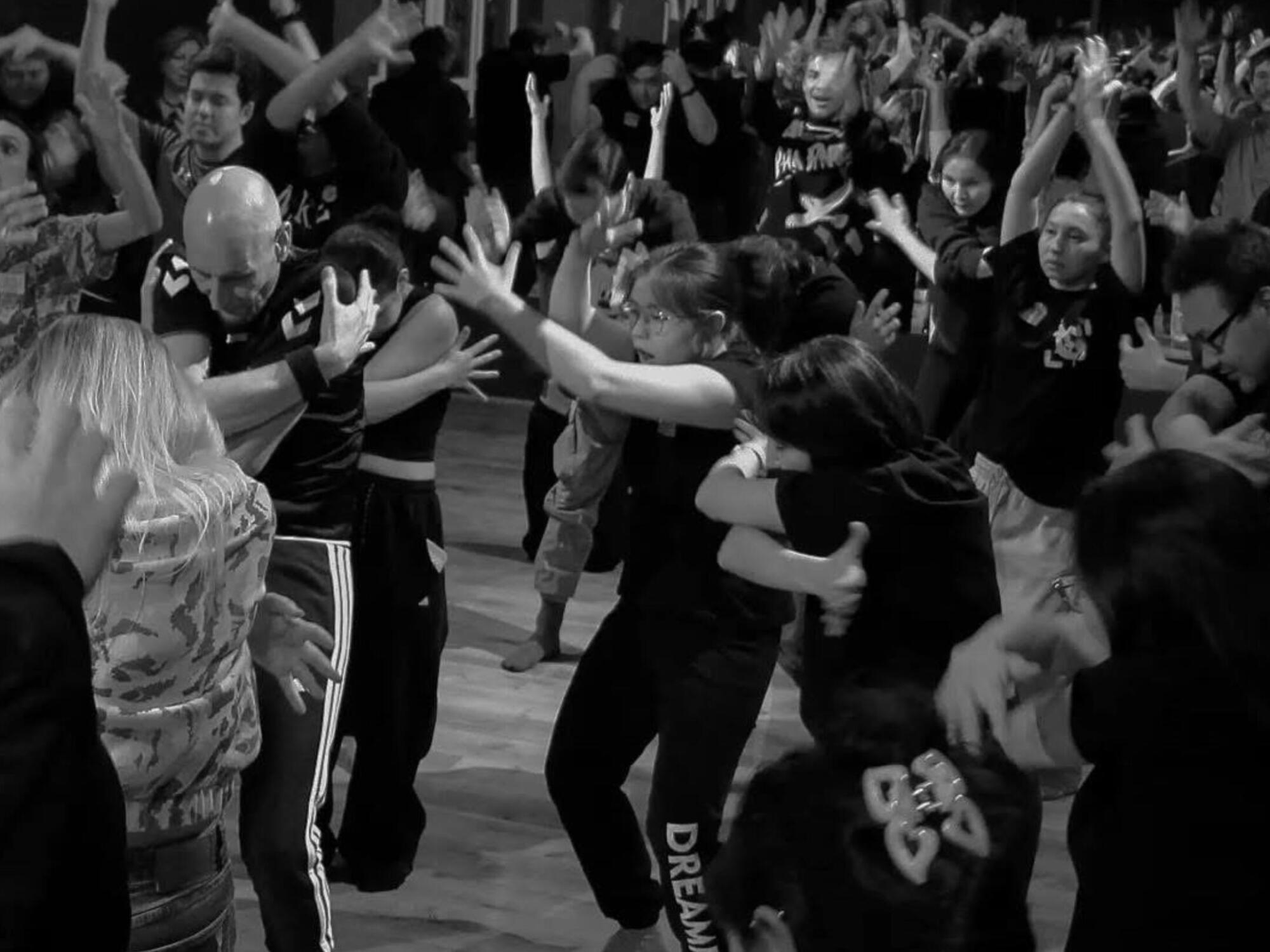
Photo credit: Noface.
IAB: What do you hope your students and collaborators carry forward from your interpretation of Meyerhold’s methods?
DD: It’s so good to see when the heart connection opens up all doors for creating work together, and Meyerhold’s methods hold that key. I do hope that we can change the way things are going at the moment, where the world is becoming more and more isolated and losing connection. Money for cooperation and festivals has been taken away from so many art councils around the world to be used for war and building up military power. Countries are closing borders to artists from other parts of the world, other religions, and cultures. So sad. So toxic for humanity. Before COVID, my schools were full of students from all over the world working together. Now they can’t even get a visa to come to the country where my schools are. So sad.
IAB: Looking ahead, what ideas, projects or experiments are you most passionate about pursuing internationally?
DD: Well, I keep going, and I do have some great invitations from different parts of the world to create new work in the future. But the way the world is going, it makes everything so difficult with traveling and funding. Still, I am looking forward to bringing performers together from different parts of the world and creating new work, speaking from our hearts about dreams and desires for our world.
IAB: Thank you very much, dear Denni Dennis.
Skopje/Almaty, 2026
This post was written by the author in their personal capacity.The opinions expressed in this article are the author’s own and do not reflect the view of The Theatre Times, their staff or collaborators.
This post was written by Ivanka Apostolova Baskar.
The views expressed here belong to the author and do not necessarily reflect our views and opinions.