Dedicated to the composer’s 25th Broadway anniversary
David Yazbek burst onto Broadway a quarter century ago with the musical “The Full Monty” and immediately gained recognition as a composer, writer, musician and lyricist. All of his subsequent musicals, such as “Dirty Rotten Scoundrels” (2004), “Women on the Verge of a Nervous Breakdown” (2010), “The Band’s Visit” (2017), “Tootsie” (2019), and “Dead Outlaw” (2025), have earned Tony and Grammy Awards.
The musical “Dead Outlaw,” which opened last year, was nominated for seven Tony Awards.
It so happens that all of David Yazbek’s musicals, without exception, have become stage adaptations of previously released films of the same name. The composer’s latest work is an exception: a film adaptation of the musical “Dead Outlaw” is only planned.
Recently, we’ve observed an emerging trend: the transformation of films into stage musicals and vice versa. These different media versions of the same works, on the one hand, attract more audiences to Broadway, and on the other, make stories told through the language of musical theatre accessible to a wider audience.
We discussed the prospects for further interpenetration of these forms of artistic creativity with David Yazbek himself.
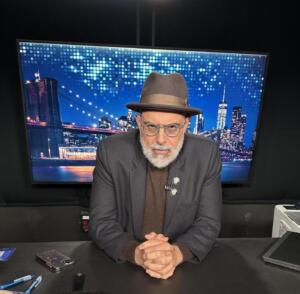
David Yazbek/ Photo from Mr. Yazbek’s personal archive
Lisa Мonde: You have extensive experience with musicals based on movies. Creating musicals based on famous movies is becoming increasingly popular these days… Out of the shows that you’ve written: “Dirty Rotten Scoundrels,” “Women on the Verge of a Nervous Breakdown …” I remember seeing “Women on the Verge…” on Broadway, and, of course, the amazing “The Band’s Visit,” “Tootsie,” which came before “Dead Outlaw” – now, all those musicals are based on movies. Why did you choose these movies specifically?
David Yazbek: You know, the first show I ever did was “The Full Monty.” That story chose me, I didn’t choose it. I made a little enquiry about doing musical theatre because I was sick of touring, and I got very lucky; I got approached to do it. And I had some albums out, so people could hear what I did.
It was a hit, a gift that keeps on giving, and I’m thinking, “This passive-income thing is sweet. I can write a show, but I don’t have to play it,” so I stayed on that horse and did “Dirty Rotten Scoundrels” – it’s not the greatest movie in the world, but it is really good, and I thought maybe we could make it even better for the stage.
“Women on the Verge…” came very naturally because my collaborator on “Scoundrels,” Jeffrey Lane [book], was on fire to adapt it as a musical. Initially, I wasn’t sure, but I am such a big Pedro Almadóvar fan. We went for it – we got the rights; we spent time with Almadóvar talking about it. It was such a great experience until we hit Broadway, where we hadn’t had enough time to work it out- no out-of-town, not enough rehearsal, too much set and staging- it was really a “magnificent disaster.” So, Jeffrey and I decided to spend a few weeks doing a total fix of the thing. In the meantime, the cast album was getting all kinds of attention and raves, so a London production with the new book and some new songs was set up. The original Broadway director, Bartlett Sher, spent a lot of time with us working out the new version, and the London production was great.
With “Tootsie,” well, I said no seven times and then finally the advance got to where I had to say yes, especially because it was 2008 and I really needed the dough. Then there was a really hard slog for a couple of years with an author who didn’t understand musicals. But then came a great couple of years of writing with Robert Horn, laughing constantly and problem-solving joyfully. And I think the finished product really reflects that.

Santino Fontana (C) and the cast of Tootsie/ Broadway/ Photo Credit by Matthew Murphy
LM: Again, talking about a movie being turned into a musical… The movie “Tootsie” was popular when it came out in 1982… When you’re choosing to work with a movie that has been there for a while, the time has passed, life has changed, how much can you and do you want to update the story to make it more relatable and appealing to the audiences of today? How much leeway is there when you’re adapting a famous story from a movie for a musical?
DY: With Tootsie, we worked so hard on that adaptation. Because the movie really didn’t age that well in certain respects. The characters were there, but from a feminist point of view, there were these weird flaws that Robert Horn [book] and I didn’t like. So, we did a deep dive- spoke to a bunch of famous feminist authors and sussed out all that stuff. What we didn’t realize was that the trans rights movement was picking up, and whenever you start seeing traction with a movement like that, there are always a few writers, essayists, who try to make their name, and there were two who, without even seeing the show, were profoundly against it. We did have trans friends who saw the show and loved it. Even before the show was on stage, we were talking to people about it – Robert’s gay, I’m straight, neither of us is trans, and neither of us is a woman, so that’s the research you must do.
We made many changes to the original. We spent six months just talking about structural issues before we even got to work on the actual songs and scenes, consolidating characters, changing the main character, and adding a whole new twist at the end, and I think we nailed it pretty well.
You know, with “Women on the Verge…” – there had to be some adaptation, especially because the movie had a very Spanish sensibility and we had to somehow make it work for us, for American audiences.
With “Scoundrels,” we did a little adapting too, but that movie is pretty solid, and the same goes for “The Full Monty” – you don’t have to do much.
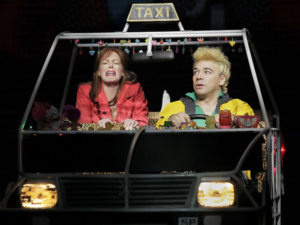
Women on the Verge of a Nervous Breakdown Musical/ Sherie Rene Scott (L) and Danny Burstein (R)/ Broadway/ Photo Credit by Paul Kolnik
LM: It’s interesting, it really works both ways: if we’re watching the musical “The Band’s Visit,” we become curious about it, and we’re going to watch the movie, so now the movie will get a new life. Just like with the “Women on the Verge…” – I saw the musical first, and I didn’t even know there was a movie. You mentioned that you are working on some new project now, which is loosely based on something, or is it “inspired by”?
DY: No, the project I’m doing with Jeffrey Lane is not based on any kind of movie, and the show I’m working on with Itamar and Erik is based on a historical figure. There’s one title- a comic- that I keep looking at – it’s on my bookshelf, it keeps haunting me, and I was approached years ago to adapt it for a musical, but at the time, the producers who approached me didn’t have all the rights involved. If they were to come back to me, I might say “yes, it’s too interesting not to do it, let’s do it!”. Or who knows, I might pivot to a different career. Broadway’s become so frustrating.
LМ: Can the musical “The Band’s Visit” also be considered an adaptation?
DY: Doing adaptations is often easier than starting from scratch. The impulse to adapt “The Band’s Visit” started with a feeling- the feeling I had immediately after seeing the film, a quiet feeling of Joy and Devastation. It was so powerful, and I wondered if there was a way to convey that in a musical. That’s why I said yes to that show.

The Band’s Visit Musical/ Broadway/ Tony Shalhoub (L) as Tewfiq and Katrina Lenk (R) as Dina/ Photo Credit by Matthew Murphy
LM: I would assume it helps when you use a famous movie that people have seen and love as the basis for a musical? It attracts more audience members to come see the show, right?
DY: Well, that’s the thing. “The Band’s Visit” didn’t feel that way because nobody really saw the movie. Honestly speaking, I’m not that interested in adapting movies anymore; there’s one or two I would consider turning into musicals, I guess. Creating “Dead Outlaw” was probably the most satisfying experience of all. It’s very personal – it felt like making one of my albums. But of course, I was writing the songs with Erik Della Penna, who I’m in a band with, and Itamar Moses wrote the book, and then David Cromer [director] worked the same kind of magic he did on “The Band’s Visit” and the finished project is pretty much perfect- says what we wanted to say and does what we wanted it to do.
Most recently, aside from my one-man show, I have another project with Jeff Lane, we’re trying to get going called “Whiz – Bang”, not an adaptation. We’ve done a couple of workshops, David Cromer directing, and I’m very excited about it. Can’t wait to put it up.
Itamar, Erik, and I are just digging into a new show, also not an adaptation that, like “Dead Outlaw”, covers a century of American history but from the point of view of those in power.
LM: From what I’ve heard in some of your other interviews… You mentioned that you prefer to cast singers who are not necessarily musical theatre trained, and you pay great attention to drama within the story, the “feelings” part of the story…What are your preferences when casting a show?
DY: It all depends. Sometimes you want someone who’s musical theatre trained. The new show I am doing with Jeffrey Lane, “Whiz-Bang,” has me hearing certain legit trained voices and thinking: “Oh, that’s right for the show.”
What I really like are voices with character. Sometimes a certain kind of training gets in the way, and you end up with a cookie-cutter vocal type. You know what, though, it all comes down to the Story; everything must serve the Story. You can’t go wrong if you just remember that principle. Especially if you’re a composer. This means choosing voices that work for the characters. Incidentally, it also means cutting songs that don’t advance the story. Even if it’s the best song you’ve ever written and the audience is in tears, if you realize that they’ve lost the thread of the story, you must cut the song.
LM: When it comes to transforming movies into musicals, talking about those adaptations… with some creations that we’ve seen like “Charlie and the Chocolate Factory”, or “The Addams Family”, the composers used a little bit of the music from the movie score. Probably for the same reasons, to give the audiences something they would recognize…
DY: Well, in something like “The Addams Family,” you’ve got to use the theme song!
LM: Absolutely, but in the shows that you’ve done, you haven’t used any of the tunes from the movie scores, right? Was it intentional?
DY: There was only one show I did that had a compelling reason to possibly do that, and that’s “The Full Monty.” And even with that show, nobody really remembers the song at the end when they strip, in the movie it’s Tom Jones singing “You Can Leave Your Hat On…”, which is a Randy Newman [composer] song – and it’s great, but not to the extent that you can’t cut it from the show.
But when I’ve talked about other shows that I was thinking of doing, at one point, I had a meeting about “Shrek the Musical”. I was really interested in writing that show because I had all those ideas to make it almost like the movie – very disruptive. But Jeffrey Katzenberg from DreamWorks [film producer] sort of loomed over that production; his presence was everywhere, and I remember the director saying: “Katzenberg insists that we use the ‘All Star‘ song,” and I didn’t want to go up against a platinum record. That and the idea of Katzenberg micro-managing my work had me fleeing after that first meeting.
There are situations where I can see that you absolutely HAVE TO use the song, but it must be justified. In “The Addams Family,” that title song is part of our culture at this point!
LM: I’m curious, with the shows that you have done, with “Dirty Rotten Scoundrels” or “The Band’s Visit”, there was other music in the movies, the composers that wrote the score for the movies, have they ever reached out to you once your musicals came out?
DY: No, I have a couple of friends who are film composers, and great composers at that, but I haven’t heard from the folks who scored the films I’ve adapted. Somehow that’s not so surprising, is it?
LM: When it comes to the other musicals based on movies that are out there on Broadway, which ones did you think were most successful? Which ones did you like the most? For example, “Matilda’, “Waitress”, “Mean Girls”, “Burlesque”…
DY: I thought there was something really great about “Matilda”. They captured the spirit of the original story. Overall, I don’t like talking about other people’s shows; I’m not that big a student of other shows in general. I have my favorites, but we can discuss that some other time.
LM: What do you think about the reverse process when we take the musical and turn it into a film? We know some examples of that, like “Hairspray” and “Annie”. There were some successful attempts. Personally, I believe the original musical is usually better than the movie adaptation – as it happened with “Phantom”, “Les Miz”, “Sweeney Todd”…
DY: Oh, I thought the movie “Sweeney Todd” sucked…it’s one of my favorite musicals, and the movie didn’t live up to it. There were all kinds of choices that really didn’t work. But I agree with you. I think “The Sound of Music” is a great movie and musical, but the others you mentioned are terrible movies. “Hairspray” is a really good show, and it’s based on a movie. But the movie isn’t that good. “The Producers” – the movie musical is terrible. I loved the original Zero Mostel movie so much; it was very inspirational to my comedy writing career. So, for me, the stage musical paled in comparison, and the movie-musical was the final, pale xerox.

The Band’s Visit Musical, The Cast/ Broadway/ Photo Credit by Matthew Murphy
LM: These days, drama and the story are becoming more important in musical theatre than anything else. We’re not interested in a fun or simple story; we strive for something deeper. From your point of view, as the musical theatre composer, do you think musical theatre is leaning more in that direction, of bringing serious and deep stories to the stage?
DY: Not in this country, not in the US, at least not right now. Things feel kind of vapid to me. So much of what I’m hearing seems manipulative and surface-y to me. I know a few people who are working on a deep level, but I don’t see it represented that much. I see it more in plays than in musicals. Broadway has become a very expensive proposition for everyone, for the audience, the producers, and everyone but the theatre owners. So, if you want to do art, you’re taking a big “roll of the dice” … I’m glad I can afford to do that at this point.
LM: During the COVID-19 pandemic, another interesting genre emerged: a staged performance shot cinematically. There was a team from Canada that did “Sherlock Holmes: The Musical” in such a way. The musical didn’t do well during the actual live performances before COVID, but during COVID, the creative team shot it, and that really took off. They put the video out on YouTube, and it became very popular. Both elements of the theatrical performance and the movie have merged into one – that is an interesting approach, don’t you think?
DY: Yes, we were discussing that exact approach for “The Band’s Visit,” with David Cromer directing. I close my eyes, and I can see how amazing that could be. There was a moment when it seemed like the funding was together, but I don’t know what happened to that. Now they’re talking about a “Dead Outlaw” feature film, but I’m not holding my breath. It could be great, though.
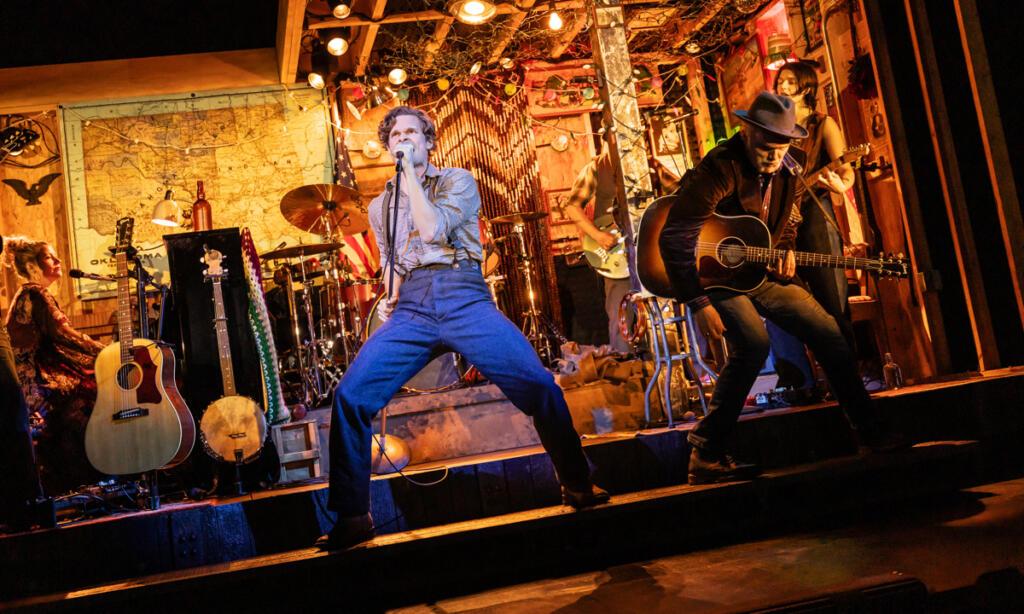
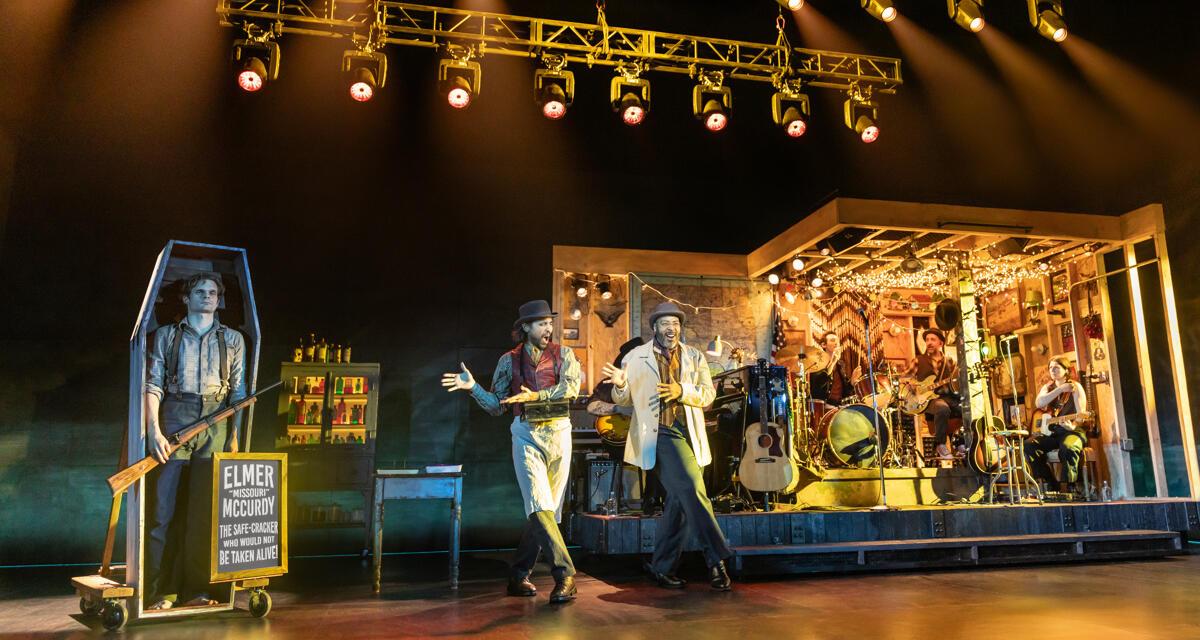
Dead Outlaw Musical/ Broadway, 2025/ Andrew Durand (C) as Elmer McCurdy and the Cast/ Photo Credit by Matthew Murphy
LM: Out of all the musicals you’ve written, do you have a favorite?
DY: My favorite, no question, is “Dead Outlaw”. It has everything that I would want in a show. It’s a true story that I’ve been obsessed with for thirty years, and I got to work on it with brilliant collaborators who are also good friends, not to mention a very special cast and group of musicians. I wish it were still on Broadway so I could go see it!
LM: How did the COVID-19 pandemic impact the creation of “Dead Outlaw” and the outcome?
DY: When David Cromer [theatre director] came to see one of our early presentations of “Dead Outlaw” he said: “I love this, but I am not the kind of guy who ever goes out to see bands. I need something happening along with just the songs…” and I said, “Let’s do something for the stage!” By then, COVID was winding down, and Itamar [Moses, book] started writing the show as a play featuring eight characters… That’s how it evolved. And now there’s a theatrical version, which is no longer on Broadway… There is an Audible’s Theatrical Version, which is the entire play with music, and amazing Atmos sound effects – it is fully immersive. There’s nothing like it, and you can listen to it; it’s streaming now.
LM: Tell us about your future plans for this project.
DY: There will be a full-cast album recording coming out soon, and there is this documentary we’ve been making since the beginning of the project; it’s probably 3/4 finished. In the meantime, there’s been discussion about moving the theatrical piece back to Off-Broadway, where it probably belonged to begin with, and where it could have a nice, long life, I believe.
There’s also talk of doing the production in London because one of our producers is Sonia Friedman… I wouldn’t want to do it on the West End at first, I’d like to do it first at the National, the Donmar, or the Young Vic- someplace like that.
We’ve been getting a lot of requests from regional theatres who would like to do “Dead Outlaw,” and then there is a world where maybe we go back to the original concert version, just a band and a narrator, and tour a little- perform the songs along with the story. But I don’t want to be the narrator this time. I’d rather have someone like Jeb Brown, who played the narrator and other characters on Broadway- a real actor who is always engaging. There are options for how this show can live on.
LM: I was about to ask you: when the show started, and I saw the setting with the band and the narrator, how the band and the narrator transform into various characters as the story evolves… I was looking at Jeb’s character, and I kept thinking of you. Am I right that the narrator’s character is inspired by you, technically?
DY: Here’s the thing, I have a pretty good stage persona when I play out with my band, and I’m comfortable talking to an audience. In fact, I’ve been touring a one-man show at regional theatres around the country, but I am not an actor. So, what you get when you get me is – me. And in some ways that was interesting when I narrated “Dead Outlaw” because Itamar wrote narration that included parts of my personal life – that answers your initial question which is “What interested you in this story?”- it involved anxiety, Zen training, psychotherapy, my obsession with Elmer McCurdy’s story, all kinds of interesting things … When we started performing “Dead Outlaw” as a play, I knew that I couldn’t act and didn’t want to sink into a character that wasn’t in my wheelhouse… Maybe that’s the way to do it in the future: to have a strong narrator who can maybe play guitar or some other instrument.

David Yazbek/ Photo Credit by Myles Aronowitz, LUSH Photography
LM: Do you enjoy being part of your shows and being on stage?
DY: I don’t enjoy doing the same thing repeatedly. I play music with a band because I like hearing them surprise me, and I like surprising them. With this one-man show I’m doing, it’s a whole different story: instead of me relating to the band and occasionally relating to the audience, I’m solo- just me and the Steinway. I’ll have a set list, of course, but there’s plenty that’s off the cuff, so maybe I’ll be able to entertain myself enough to want to do it for a while. So far, audiences love it, and I like it, so let’s see…
LM: Is the show coming to New York?
DY: I started it at the Writers Theatre in Chicago in September. Since then, I’ve played in San Jose, Montreal, and Miami. I’m going to do a one-night show at 54 Below in NYC in May. The guy who convinced me to do this, Hershey Felder, has mastered that market with his own shows, and he and I are exploring the idea of something extended.
Lisa Monde (L) and David Yazbek (R)/ Miami New Drama, FL, March 7 2026/ A Few Cheery Songs About Death Concert/ Photo from Lisa Monde’s personal archive
A couple of months after this interview, we met with David Yazbek in Miami, Florida, where he performed his solo concert, “A Few Cheery Songs About Death.” For two hours, the theatre audience witnessed a one-man musical performance, during which David Yazbek performed numbers from all his musicals, talked about their creation, and about who inspired and supported him through it all. And much more, including some very personal stories and memories. The composer plans to bring this show to New York in May and tour several states.
LM: Are there any new projects in your immediate plans?
DY: Aside from my one-man show, I have another show with Jeff Lane coming up, called “Whiz – Bang”, not an adaptation. We’ve done a couple of workshops, David Cromer directing, and I’m very excited about it. Can’t wait to put it up.
Itamar, Erik, and I are just digging into a new show, also not an adaptation that, like “Dead Outlaw”, covers a century of American history but from the point of view of those in power.
LM: Any special projects that you’ve accomplished lately that you’d like your audience to explore?
DY: You know, we spent a great deal of time and effort making the Audible Original audio version of “Dead Outlaw”. It’s totally immersive, 3-dimensional, you close your eyes with your headphones on, and you’re fully in that world- all the songs, the whole show. To me, it’s such a great way to memorialize the piece. I think it suggests how great a feature film version would be.
LM: The stories that you tell in your musicals are very moving and touching. Is there anything personal in them to you?
DY: Yes. For example, there is a line in one of the songs of “The Band’s Visit”: “…they say music is the food of love. Music and love, who can tell them apart?” For me, music in my life is not even like food; it’s more like water. Or air. That line got me. But the story is also about loss and connection, connection at the deepest level. You can see pieces of it in every show I’ve written. But “The Band’s Visit” fully swims in those waters. “Dead Outlaw” goes perhaps even deeper, but in a very different way. It makes you think about mortality and identity, and you come away with questions that don’t leave your mind- it works like a Zen koan.
LM: I was able to witness your latest show – “Dead Outlaw,” a few days before it closed. It’s always sad when the show closes that fast. Could you please share your feelings about it?
DY: It came out during a very crowded season, at the very end of the season, it didn’t have any room, any runway to market the extremely original piece that it is… Like “The Band’s Visit”, it’s a real outlier, and people who saw both of those shows became very obsessed by them in a good way; it touched them on a deep level. But when you have a show like that, you have to market it properly, and you have to be smart about managing the audience’s expectations. I don’t think that was handled correctly. Now, “The Band’s Visit” was also a complex show, hard to explain through marketing, but it was handled perfectly, so it ended up winning all the Tonys and running into profit. Whatever else went wrong on Broadway with “Dead Outlaw”, it was not marketed well – the social media was mostly terrible, and it needed to be perfect; there was no room for error, so the show closed, which was very frustrating, especially for the cast and the band, who loved the show and loved each other.
LM: It’s always a gamble with the shows.
DY: I usually have a sense of whether the show I’ve written is going to keep running, and after getting the best reviews of any show I’ve been involved with and after winning all the Off-Broadway awards the year before, I believed we were going to run. I guess that’s what the Serenity Prayer is for.
This post was written by the author in their personal capacity.The opinions expressed in this article are the author’s own and do not reflect the view of The Theatre Times, their staff or collaborators.
This post was written by Lisa Monde.
The views expressed here belong to the author and do not necessarily reflect our views and opinions.